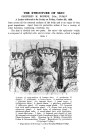
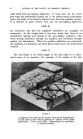
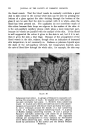
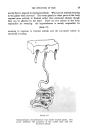
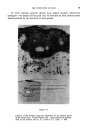
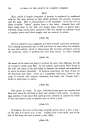
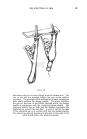
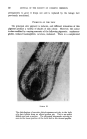
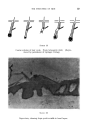
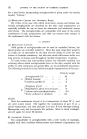
THE STRUCTURE OF SKIN GEOFFREY H. BOURNE, D.Sc., D.Phil.* A Lecture delivered to the Society on Friday, October 5th, 1956. Stax covers all the external surfaces of the body and is an organ of very great importance. Apart from its protective action it has a variety of other functions, cushioning, excretory, etc. The skin is divided into two parts: the outer--the epidermis--which is composed of epithelial cells, and an inner--the dermis which is largely Slide 1 . .:... ::•-•i" . '* .'*• "'•ø• ' Scheme of cross-section o• human skin. A, e•idermis B, dermis C, subdermis a, horny layer b, stratum lucidurn c, granular layer d-e, mucous layer f, basM layer g, collagenous fibres h, elastic fibres i, papillary capillaries ], sebaceous gland II, eccfine swezt gland III, terminal hah with smMl sebaceous gland I F, downy hMr wi•h large sebaceous gland 1, basM layer of sebaceous gland 2, sebaceous-gland cells &, sweat-gland duct with capillaries 5, sweat-duct pore ?, hair 9, external root sheath of hair 10, internzl root sheath of hair (•r,nsitoriM layer of hair follicle). From Rothman (122). (Drawing by B. •eilitz, Chromolith. Urban • Schwarzenberg, Vienna. Reproduced by permission of Sprb•ger-Verlag.) * Dep&r•men• of •is•ology, London •ospi•al •edi•t 6ollege.

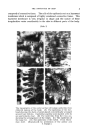
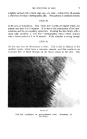
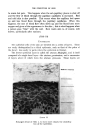
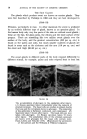
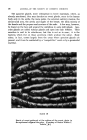
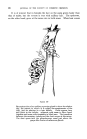
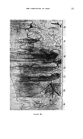
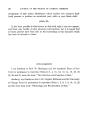
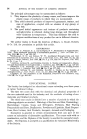
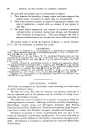
THE STRUCTURE OF SKIN 3 composed of connective tissue. The cells of the epidermis rest on a basement membrane which is composed of highly condensed connective tissue. This basement membrane is very irregular in shape and the nature of these irregularities varies considerably in the skin in different parts of the body. Slide 2 The topography of tile under surface of human epidermis from different regions of the body. (A) The epidermis of the fore- head showing the ducts of sweat glands concentrically arranged around hair follicles. Epidermal papillae (one marked with X) are particularly clear. (B) The epidermis from the rirna ani, showing the arrangement of the ridges. (½) The epidermis of the large toe. (D) The epidermis of the eyelid. From Horst- man (147). (Reproduced by permission of the author and S. Karger.)
Purchased for the exclusive use of nofirst nolast (unknown)
From: SCC Media Library & Resource Center (library.scconline.org)