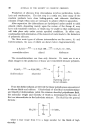
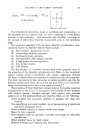
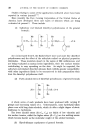
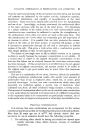
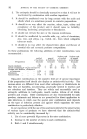
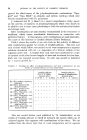
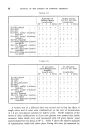
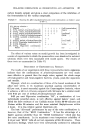
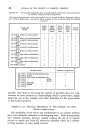
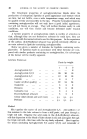
32 JOURNAL OF THE SOCIETY OF COSMETIC CHEMISTS 2. The antiseptic should be chemically unreactive so that it will not be inactivated by combination with another ingredient. 3. It should be unaffected even by long contact with the acids and alkalis which are sometimes present in cosmetic preparations. 4. It should in no way affect the reaction, odour, taste, colour and consistency of the product and it should cause no turbidity, bleaching, hardening, precipitation or flocculation. 5. It should not irritate the skin or the mucous membranes. . It should be unaffected by metallic salts, e.g., salts of aluminium, zinc, iron, and alloys, e.g., tinfoil, etc., from which collapsible tubes are made. 7. It should in no way affect the characteristic odour and flavour of essential oils and aromatic perfume compositions. In these publications the following additions of ester combinations were recommended: Sodium salt Sodium salt methyl propyl of methyl of propyl :p-hydroxy- p-hydroxy- p-hydroxy- p-hy droxy- Preparation benzoate benzoate benzoate benzoate % % % % Casein emulsion .... 0.25 q- 0' 1 q- 0.3 q- 0' 15 Cream containing 5-10 per cent fat 0.1 q- 0.1 or 0.12 q- 0.12 Creams with lecithin, cholesterol or hormones .... 0.25 q- 0.05 Emulsions ...... 0.1 q- 0' 05 Almond milk ...... 0•-15 q- 0-05 Nipa-ester combinations in the cosmetic field are of special importance if the preparation itself should also display an antimicrobial activity. The various esters are different from most other antiseptics or disinfectants in that they are harmless, non-irritating, practically neutral in reaction and are odourless and tasteless. They are widely and successfully used as antiseptic additions in tooth-paste, mouth washes, lotions of all kinds, powders and creams. Ester combinations are also recommended for such powders, ointments and lotions as are prescribed for direct application to skin infections, in which case the special ester combination used depends on the type of infection present and against which organisms the ester combination is particularly effective. In our experience with the use of two and more esters for the preservation of various types of products we have observed that the antimicrobial activity can be considerably increased by: 1. Use of more powerful Nipa-esters in the ester combination. 2. Increase in the number of esters in such combination. 3. Both 1 and 2 simultaneously.

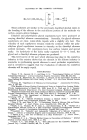
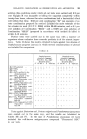
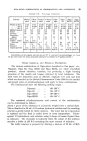
NIPA-ESTER COMBINATIONS AS PRESERVATIVES AND ANTISEPTICS 33 Experiments also indicated that the esters were not only suitable as preservatives as was originally intended but also for the maintenance of sterility under special conditions and even for direct sterilisation. In fact, we were able, through the above methods 1-3, to prepare new ester com- binations with more powerful microbiostatic and microbiocidal effects than any of the known esters or their known combinations. This had the advantage of reducing the necessary percentage of such ester combinations compared with mixtures recommended before. The first step, according to method 1, led us to a well-known ester combination 'Nipa 64' which is used for antiseptic treatmen• of paraffin- waxed papers, corks and similar equipment. Following method 2 and increasing the number of esters in the combina- tion caused the creation in 1942 of the preparation Nipasept. This consists of three esters and is recommended for eye drops, eye lotions and parenteral injection solutions in concentrations of 0-05-0.1 per cent. Method 3 resulted in the creation of even more powerful ester com- binations consisting of five different esters which are introduced as 'Nipa 82121' and 'Nipa 82123'. EXPERIMENTAL Recently, O. M. Littlejohn and W. J. Husa 6 have published a method of preservation for simple syrup USP which also corresponds with the above method 1. They found that the best inhibition of moulds in syrup is obtained through the addition of a mixture of 50 per cent Nipagin and 50 per cent Nipabutyl in a 1:4,500 dilution. The American Food and Drug Administration7 has accepted a com- bination of 0.18 per cent of the methyl ester and 0-02 per cent of the propyl ester for the preservation of aqueous suspensions of procaine penicillin. In this case, the problem was one of protecting the preparation against mould contamination, for which the p-hydroxybenzoates have been established as particularly effective. Effectiveness against bacteria was secondary because of the inherent antibacterial properties of penicillin. A more realistic evaluation of methyl and propyl p-hydroxybenzoate combinations under exaggerated conditions was reported by C. A. Lawrence 8, using ophthalmic preparations. The investigator reported a combination of 0'16 per cent methyl p-hydroxybenzoate and 0'02 per cent propyl p-hydroxybenzoate as effective against strains of Pseudomonas and Proteus. These results were obtained despite a high level of contamination. Lawrence's work indicates that for ophthalmic solutions, ester combinations are useful for the inhibition of at least two bacterial genera, Pseudomonas and Proteus. Similar observations were made by M. Klein and co~workers', who have
Purchased for the exclusive use of nofirst nolast (unknown)
From: SCC Media Library & Resource Center (library.scconline.org)