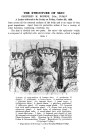
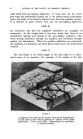
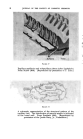
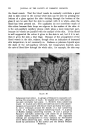
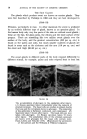
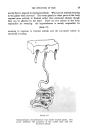
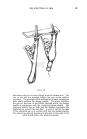
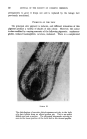
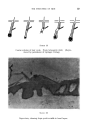
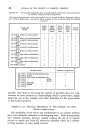
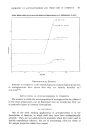
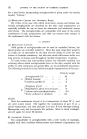
10 JOURNAL OF THE SOCIETY OF COSMETIC CHEMISTS the blood vessels. That the blood vessels do normally contribute a good deal to skin colour in the normal white skin can be seen by pressing the bottom of a glass against the skin--looking through the bottom of the glass it can be seen that the skin in contact with it is white--since the blood has been pressed out. The capillaries do not contribute much of this colour because their loops are edge-on to the surface of the skin--it is the sub-papillary capillary plexus which plays a more important part, because its vessels are parallel with the surface of the skin. If the blood is well oxygenated the colour it gives to the skin is red, but if it is not, then it gives the skin a blue tinge. Because of the arrangement of the blood vessels in the skin, redness, though often an indication of increased skin temperature, is not necessarily so. Redness or paleness depends upon the state of the sub-capillary network, but temperature depends upon the rate of blood flow through the whole skin for example, the skin may SLIDE 10 Cutaneous innervation. 2t, groups of Meissner's corpuscles sub- serving the sensation of touch B, beaded nerve nets subserv- ing pain (probably fast pain) C, Merkel's disks subserving touch D, beaded nerve fibres derived from nerve nets subserv- ing pain and associated with blood vessels (probably slow pain) E, nerve terminals around the sheath of a hair subserving touch F, a Pacinian corpuscle subserving touch G, a group of •Ruffini endings subserving warmth H and I, groups of I•rause's end-bulbs subserving cold (these lie at somewhat variable depths beneath the skin surface). The organized endings are accompanied in every instance by fine-beaded nerve fibres subserving pain. From Weddell (135). (Repro- duced by permission of the author and the British Medical Bulletin.)

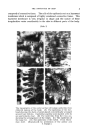
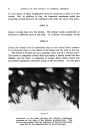
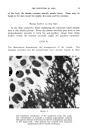
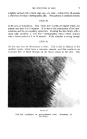
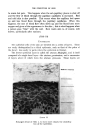
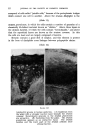
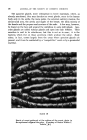
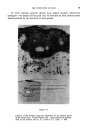
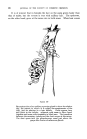
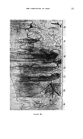
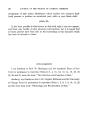
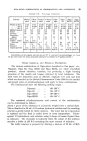
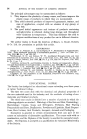
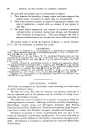
THE STRUCTURE OF SKIN I I be warm but pale. This happens when the sub-papillary plexus is shut off and the flow of blood through the papillary capillaries is increased. Red and cold skin is also possible. This occurs when the capillary bed opens up and less blood flows through the papillary capillaries. When this happens, the rate of blood flow often slows up and the blood loses more oxygen and gives a blue appearance to the skin this is what happens when a person goes "blue" with the cold. Red, warm skin is, of course, well known, particularly after sunburn. (Slide 10) EPITHELIUM The epithelial cells of the skin are divided into a series of layers. These are easily distinguished in a thick epidermis, such as that of the palm of the hand less easily in parts where the epidermis is thinner. The lowest epithelial layer is called the stratum Malpighii, and is itself composed of a single basal layer--the stratum germinatum, and a succession of layers above it which form the stratum spinosum. These layers are SLIDE 11 Enlarged detail of Slide 1, to show more clearly the stratifica- tion of the epidermis.
Purchased for the exclusive use of nofirst nolast (unknown)
From: SCC Media Library & Resource Center (library.scconline.org)