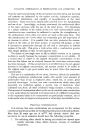
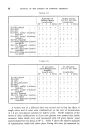
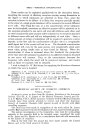
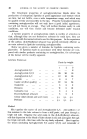
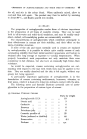
CHEMISTRY OF ACETOGLYCERII)ES AND THEIR USES IN COSMETICS 49 the oil, and stir in the colour blend. When uniformly mixed, allow to cool and then mill again. The product may then be melted by warming to about 80 ø C., and finally poured into moulds. (B) CREAMS The properties of acetoglycerides render them of obvious importance in the preparation of all types of cosmetic creams. They can be used both in oil-in-water and water-in-oil emulsions, and may be readily emul- sifted--indeed, self-emulsifying grades are commercially available. The characteristics of acetoglycerides which contribute principally to their effectiveness in creams are their stability, and their effect on the micro-crystalline structure. If some of the oils and waxes normally used in creams are replaced by acetoglycerides, it is possible to obtain quite readily creams of such outstanding stability that their initial excellent appearance and texture is retained after long storage or exposure to varying temperatures. When properly formulated, such preparations not only maintain their even consistency in hot climates, but also have an unusually high freeze-thaw resistance. As would be expected, creams containing acetoglycerides are out- standing with respect to the ease with which they may be applied to the skin. They are readily absorbed and the skin is left supple, without any greasy feel being apparent. A particularly important application of acetoglycerides is in the formulation of creams containing medicaments, hormones, vitamins, or fruit iuices, which it is desired to bring into intimate contact with the skin. The following notes and formulae illustrate potential uses of aceto- glycerides in the preparation of various types of creams: GENERAL PURPOSE CREAMS Parts by weight Acetoglyceride S/C/4 ......... 10 Stearic acid ............ 3 Ozokerite ............... 4 Beeswax ............... 6 Petroleum jelly ............ 6 Cosmetic paraffin oil ......... 25 Water (softened or distilled) ...... 44 Preservative ............ 0.1 Perfume ............... q.s.

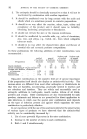
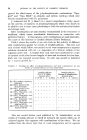
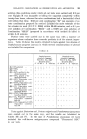
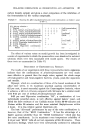
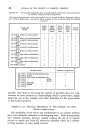
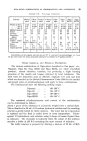
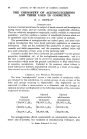
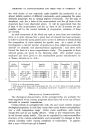
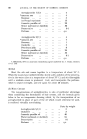
$0 JOURNAL OF THE SOCIETY OF COSMETIC CHEMISTS Acetoglyceride S/C/1 ......... 4 *ABRACOL SPS ............ 4 Beeswax ............... 3 iso-Propyl myristate ......... 15 Cosmetic paraffin oil ......... 25 Water (softened or distilled) ...... 50 Preservative ............ 0.1 Perfume ............... q.s. Acetoglyceride S/C/1 ......... 4 *ABRACOL $PS ............ 7 Beeswax ............... 1 Ozokerite ................ 2 Petroleum jelly ............ Cosmetic paraffin oil ......... 25 Water (softened or distilled) ...... 53 Preservative ............ 0.1 Perfume ............... q.s. * ABRACOL SPS is a non-ionic emulsifying agent marketed by A. Boake, Roberts & Co. Ltd. Method Heat the oils and waxes together to a temperature of about 75 ø C. When the waxes have melted entirely, slowly add a solution of the preserva- tive in the water (also at a temperature of about 75 ø C.) and stir thoroughly until a uniform cream is produced. Cool, and incorporate the perfume. Allow to stand overnight, and stir again for about 20 minutes. (b) HAIR CREAMS The non-greasiness of acetoglycerides is also of particular advantage when considering the formulation of hair creams, and the formula given below is for an inexpensive dressing which, by the incorporation of an acetoglyceride in place of part of the oil which would otherwise be used, is rendered virtually non-staining. Parts by weight Acetoglyceride S/C/4 ......... 3 Ozokerite ............... 3 Cosmetic paraffin oil ......... 40 Water (softened or distilled) ...... 54 Preservative ............ 0.1 Perfume ............... q.s.
Purchased for the exclusive use of nofirst nolast (unknown)
From: SCC Media Library & Resource Center (library.scconline.org)