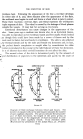
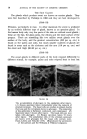
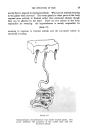
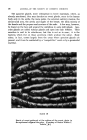
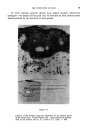
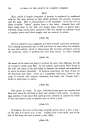
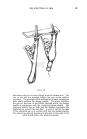
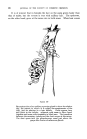
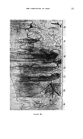
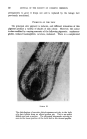
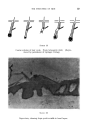
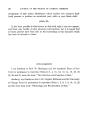
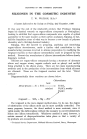
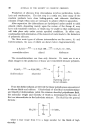
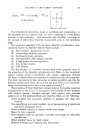
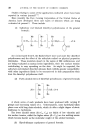
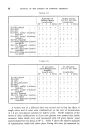
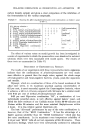
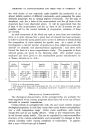
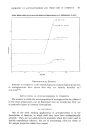
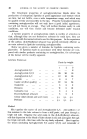
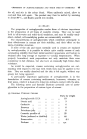
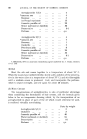
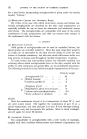
CHEMISTRY OF ACETOGLYCERIDES AND THEIR USES IN COSMETICS 45 the wide choice of raw materials, make possible the production of an almost infinite number of different compounds--each possessing the same desirable properties, but in varying degrees of intensity. For the sake of simplicity, only the • form of the mono-acetate and the • form of the di-acetate have been illustrated abSve. It will be appreciated that the • form of the mono-acetate and the •' form of the di-acetate are also possible, and by the normal methods of preparation, mixtures of these are formed. As each component of the blend can exist in more than one crystalline form, it is quite obvious that a great deal of research has been necessary in order to assess the many grades and to arrive at methods of standardising the composition of those selected for specific uses. As a result of this investigation, a limited number of grades have been judged pre-eminently suitable for cosmetic and pharmaceutical applications and these have formed the basis of a more comprehensive study. The properties of these selected grades are given in the following table. (The product names employed are those given to the standardised grades manufactured by A. Boake, Roberts & Co. Ltd.) Aceto- Softening t Specific Iodine Saponifica- Acid glyceride point gravity value tion values øC. (max) value (max) ..... S/C 30 ø to 32 ø 0.925-0-935•60 ø C. 2.0 330-345 1.0 S/C/1 43-5 ø to 45.5 ø 0.918-0.928•60 ø C. 2-0 325-340 1-0 S/C/4' 42ø•to 44 ø 0.930-0.940•60 ø C. 4.0 290-305 6.0 L/C --9 ø to --5 ø C.967-0.977•25 ø C. 10-22 390-405 0.8 (cloud point) * S/C/4 is a self-emulsifying grade. t Softening points have been determined by the A S.T.M. Ring and Ball method. $ The number of milligrams of potassium hydroxide required to neutralise one gram of sample. RHEOLOGICAL CHARACTERISTICS The rheological characteristics of the acetoglycerides are probably the most important of the various properties which have led to the use of these materials in cosmetic formulations. Certain blends of acetoglycerides with oils and waxes exhibit unusual rheological properties, in that they retain their initial texture and plasticity over a wide temperature range. Under warm conditions, such blends remain firm and do not readily deform whilst at low temperatures, they do not become unduly brittle. This can be explained by a micro-crystalline structure of the various constituents, and presumably by changes in their natural solubility under various conditions of temperature. It appears that a type of thixotropic gel is formed.

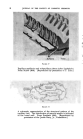
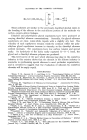
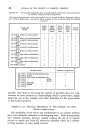
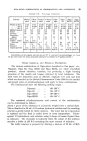
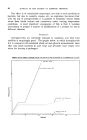
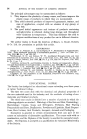
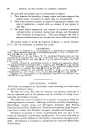
46 JOURNAL OF THE SOCIETY OF COSMETIC CHEMISTS This effect is of considerable importance, not only in such products as lipsticks, but also in cosmetic creams, etc., as experience has shown that with the aid of acetoglycerides it is possible to formulate creams which retain their initial texture and consistency under varying temperature conditions. A most important consequence of this is that it becomes unnecessary to prepare a number of modifications of a product for use in different climates. STABILITY Acetoglycerides are extremely resistant to oxidation, and their heat stability is surprisingly good. The graphs below, in which Acetoglyceride S/C is compared with hardened whale oil and glycerol monostearate, show that only small increases in acid value and peroxide value result, even when the heating is prolonged. ,' f-?7 a.•:[L• fe I0o /$• ZOO
Purchased for the exclusive use of nofirst nolast (unknown)
From: SCC Media Library & Resource Center (library.scconline.org)