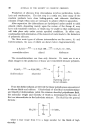
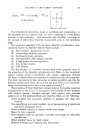
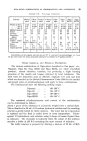
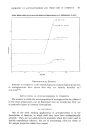
40 JOURNAL OF THE SOCIETY OF COSMETIC CHEMISTS potassium dihydrogen phosphate and 15.2 ml. of N/10 sodium hydroxide solution to 100 ml. If x mi. is the volume of N hydrochloric acid used in the titration, then the volume of sodium hydroxide used for the hydrolysis of the ester mixture is (25--x) mi. of N sodium hydroxide. 1 mi. of N sodium hydroxide solutions0.1381 grams of p-hydroxybenzoic acid. The combined acid content of the various combinations are: Nipasept ...... 87.3-88.3% Nipa 64 ...... 70.5-71.5% Nipa 82121 ... 84-85% Nipa 82123 ... 77.5-78.5% SUMMARY 1. The favourable effect of the simultaneous use of a combination of two or more of the esters of p-hydroxybenzoic acid as preservatives is discussed in detail. 2. The desirable properties of a preservative for cosmetic products are listed and some recommendations for the use of Nipa-ester combina- tions are made. The methods by which more powerfully antimicrobial ester combinations can be prepared are discussed. 3. Reference is made to the findings of other workers in such widely different fields as the preservation of simple syrup, procaine penicillin and ophthalmic preparations and the treatment of moniliasis. Experimental results are given showing the increased activity of Nipa-ester combinations against a wide range of micro-organisms. 4. The results of these experiments are discussed. 5. The solubilities of Nipa-esters in a number of solvents, and the chemical and physical properties of the combinations discussed in the paper are given. REFERENCES • Sabalitschka, Th., and Boehrn, E., Arch. Pharmaz. Ber. dtsch. pharmaz. ges., 267, 272 (1929). 2 Boehm, E., La Parfumerie .$ioderne, 27, 373, and 478 (1933). a Boehm, E., l•iechsto•ndustrie und I•osmetik., 8, 7 (1933). 4 Boehm, E., 2V/anuf•uring C•emist, 4, 282 (1933). • Boehm, E., The JDru• and Cosmetic Industry, 32, 510 and 591 (1933). • Littlejohn, O. M., and Husa, W. F., Journal of American Pharmaceutical Associa- tion, Scient. Edit., xliv, 305 (1955). ? Warner, M. E., and Gee, A. H., "Parahydroxybenzoates as Preservatives for Parenteral Drugs." Paper presented on October 27th, 1955, at the Annual Meeting of the Parenteral Drug Association, New York, N.Y. •Lawrence, C. A., Journal of the American Pharmaceutical Assoc., Scient. Edit., xliv, 457 (1955). • Klein, M., iViillwood, E. G., and Walther, W. W., Journal Pharm. and P•ar•col., 6, 725 (1954) Lanc•, No. xxi, 1063 (1954). •o Schimmel, J., and Husa, W. J., Journal of the American Pharmacezctical Assoc., Scient. Edit., xlv, 204 (1956). •x Sabahtschka, Th., Arzneimittelforschung, 5, 259 (1955).

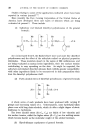
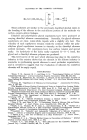
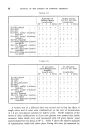
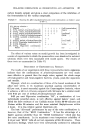
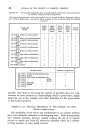
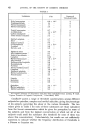
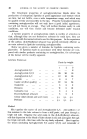
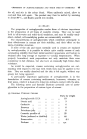
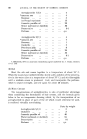
SMELL--THRESHOLD CONCENTRATION 41 SMELL--THRESHOLD CONCENTRATION A. W. MIDDLETON, B.Sc., Ph.D., F.R.I.C.* IN ^N earlier paper • in which the author developed the thesis that smell is a physical sense--primarily a matter of adsorption of olfactory molecules on a surface possibly of protein matter--he showed that the vapour pressure of the substance divided by its saturated vapour pressure under the same conditions of temperature and pressure is the proper measure of the stimulus applied to the olfactory receptor. There have been published in the literature the results of various determinations of olfactory thresholds which have been expressed as concentrations of odoriferous substance. It was considered worth while to recalculate those accessible to the writer for which the saturated vapour pressure at 32 ø C. can be calculated or extrapolated from published values: the recaiculated values are listed in Table I. The substances in that table have been arranged in order of decreasing activity. It is seen that the hydrosulphide and aidehyde radicles pre- dominate among the more active substances (although this might be a consequence of the high proportion of substances containing these radicles for which data are available). These radicles are among those which have a high affinity for protein molecules and which would be expected to have high heats of adsorption on them. The values lend some support to the theory of the adsorption being one of the gas on to the protein terminal hairs on the end vesicles of the olfactory nerve fibres. It is known that such proteins have a helical structure which might well uncurl to some extent when external molecules are adsorbed on to them. In the same way that the basis of the auditory end organs move to alter the tension of the membrane of their nerve cells and, consequently, their permeability to sodium and potassium ions, so might the uncurling of the protein helix of the olfactory hairs disturb the membrane permeability of their attached cells. However, this is purely speculation, and a matter not likely to be decided for some considerable time. Holway et al. • have determined the response of four subjects to five equally separated stimuli, using the right nostril alone, the left nostril alone, and both nostrils together. Each subject stated forty times whether the odour could be smelled or not at each concentration after inhaling for five seconds, and at two minute intervals between tests. They plot their results to show that the relation between the frequency of response to the intensity of stimuli is a Gaussian one but their results fit a Poisson distri- bution equally well, more results being needed in the intensity range 0 to 30 per cent and 70 to 100 per cent. * Chesebrough-Ponds Ltd., London, N.W. 10. ,
Purchased for the exclusive use of nofirst nolast (unknown)
From: SCC Media Library & Resource Center (library.scconline.org)