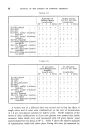
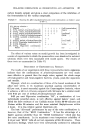
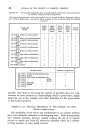
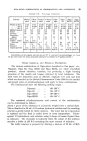
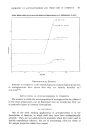
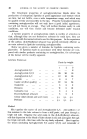
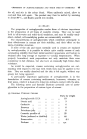
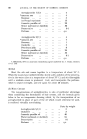
SMELL--THRESHOLD CONCENTRATION 43 These results can be explained qualitatively by the adsorption theory. Accepting the concept of olfactory receptors varying among themselves in the degree to which substances are adsorbed on them, then--since the variation is known to be diffuse--it is likely that receptors partially specific to the odour of a single given substance will be connected to several different nerve cells. This being the case, at a low concentration of the substance near to its threshold, sometimes an effective amount will be adsorbed on to the receptors attached to one nerve cell and will reinforce each other, and on other occasions the same amount will be adsorbed on to receptors attached to different nerve cells and will act independently of each other. Since a certain amount of energy of adsorption will be required to generate a nerve impulse, in the first case the concentration will give rise to a recognisable smell signal but in the second will not do so. The threshold concentration of the odour will, even for the same person, vary considerably about some mean value, giving results such as were found by Holway. When the concentration of odour is increased above the threshold, the proportion of the time when the substance is adsorbed on to sufficient receptors attached to one nerve will increase. Thus, as the concentration increases the frequency with which the smell will be perceived increases, and results such as those of Gundlach will be obtained. I wish to thank Dr. W. McCartney for supplying the literature references on which this note is founded. • Middleton, A. W., Journal of the Society of Cosr•,•etic Chemists, vii, 46 (1956). 2 Holway, A. H., Stuart, R. M., Winchell, C. A , and Zigler, M. J., J. Gert. Psych., 23, 65 (1940). a Gundlach, R. H , and Kenway, G., J. Exp. Psych., 24, 192 (1939). 4 DallaVale, J. M., and Dudley, H. C , Pub. Health Rep., 54, 35 (1939). s Z. Anorg. ½he•'., 172, 407 (1928). 6 Kuehner, R. L., Ann. N.Y. Acad. Sci., 58, 180 (1954). AMERICAN SOCIETY OF COSMETIC CHEMISTS SPECIAL AWARD As we go to press, we learn from Mr. Strianse, President of the American Society, that Dr. A. P. James of the Medical Research Council and Dr. A. J.P. Martin, F.R.S., Nobel Laureate, formerly with the •edical Research Council, have been jointly selected to receive and share the American Society of Cosmetic Chemists 1957 Special Award of $1,600 with $600 travelling expenses. The award has been made in recognition of the work which Dr. James and Dr. Martin pioneered in the development of Gas Liquid Chromatography. The sixteen investigators on the Committee, who look for outstanding research in the cosmetic field in its broadest sense, considered the work of Dr. James and Dr. Martin to be a contribution that will add measurably to the science of cosmetics. This is the first time the award has been made outside the United States, and is the third award of its kind.

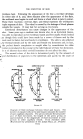
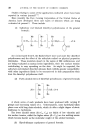
44 JOURNAL OF THE SOCIETY OF COSMETIC CHEMISTS THE CHEMISTRY OF ACETOGLYCERIDES AND THEIR USES IN COSMETICS H. G. NEWMAN* INTRODUCTION ACETOGLYCERmES HAVE been the subject of much research and investigation during recent years, and are currently attracting considerable attention. They are relatively inexpensive compounds, readily available in commercial quantities and they combine a number of remarkable features which are of undoubted value in the formulation of a wide variety of products. The potentialities of acetoglycerides ,are indeed great, and since their original introduction they have found particular application in cosmetics formulation. Their use has facilitated the production of many improved cosmetic and toilet preparations, and the properties outlined below will give some indication of their scope in this particular field. Extensive studies have been conducted and published'-' on the general properties, formulation, etc., of the acetoglyceride compounds and it is felt that a useful purpose will be served by summarising those physical characteristics which make the greatest contribution to their effectiveness in cosmetics manufacture. Included in the summary which follows is much information (hitherto unpublished) obtained as a result of investiga- tions carried out in the ABRAC laboratories. CHEMICAL AND PHYSICAL PROPERTIES The term "acetoglyceride" covers a vast number of substances which are obtained by the substitution, by acetate groups, of one or more of the fatty acid groups occurring in triglycerides. Any triglyceride can be converted to either a mono-acetate or a di-acetate, and the changes in chemical structure are illustrated by the following example of the conversion of glycerol tri-stearate. Glycerol Glycerol Glycerol a-mono-acetate a/•-di-acetate tri-stearate di-stearate monostearate CH•OOC.C,,Ha• CH•OOC.C,,H• CH•OOC.C,,H.•, CH.OOC.C,,H,G CH.OOC.Cx,Ha, CH.OOC.CH.• CH,OOC.C,,Ha• CH,OOC.CHa CH,OOC.CH• The acetoglycerides offered commercially are substantially mixtures of mono- and di-acetates, but variations in manufacturing techniques, plus * A. Boake, Roberts & Co. Ltd.
Purchased for the exclusive use of nofirst nolast (unknown)
From: SCC Media Library & Resource Center (library.scconline.org)