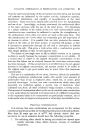
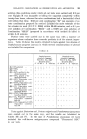
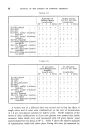
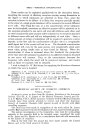
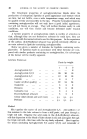
36 JOURNAL OF THE SOCIETY OF COSMETIC CHEMISTS TABLE III Bacterium coli Proteus wdgaris Culture Clausen Iq.C.T.C. No. 4175 Growth after: Growth after: 30' 1 2 4 24hrs. 30' 1 2 4 24hrs. (1) 0.5% phenol .... + + + + + + + + + -- (2) 0-75% ...... + + -- -- -- + + -- -- -- (3) 1.o% ...... (4) 0.24% m•hyl p-•drox•' benzoate (5) 0.04% propyl p-•drox•'- q- q- q- q- -- q- q- q- q- -- benzoate .... + + + + + + + + + -- (6) 0.2% Nipasept .... -- -- + + -- -- -- (7) 0.075 % Nipa-ester combina- tion 82121 .... + + + q- + + + -- -- -- (8) 0.1% Nipa-ester combina- tion 82121 .... q- q- q- q- -- q- -- -- (9) 0.14ø./o Nipa-ester combina- tion 82121 ...... (10) 0.075 % Nipa-ester combina- tion 82123 .... q- q- q- q- .... TABLE IV Ps. pyocyanea Ps. pyocyanea (from Whipps Cross Iq.C.T.C. No. 7244 Hospital) Growth after ß Growth after: 30' 1 2 4 24hrs. 30' 1 2 4 24hrs (1) 0.5% phenol .... q- q- q- -½ -- q- q- q- q- -- (2) 0-75% ...... + + -- -- -- + + -- (3) 1.o% .... - ....... (4) 1.0% ph•oxetol .. q- q- q- + -- q- q- q- -- -- (s) 2.0% ........... (6) 0.24% methyl p-/•droxf benzoate (7) 0.04% propyl p-•drox•'- + q- q- + -- q- q- + q- -- benzoate .... + (8) 0'2% Nipasept .... + .... + -- -- -- (9) 0.1% Nipa-ester combina- tion 82121 .... + + + + -- + + + + + (10) 0.14% Nipa-ester combina- tion 82121 .... -- ..... A further test of a different kind was carried out to find the effect of single esters and of some ester combinations on the rate of fermentation of a 2 per cent glucose solution by bakers' yeast. Sterile solutions of the esters or their combinations in :2 per cent glucose were poured into sterile urometer tubes which were each inoculated with 0.5 gram bakers' yeast and incubated for two hours at 37 ø C. Table V shows the relative amounts of fermentation which had taken place during this time (as measured by

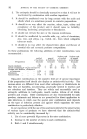
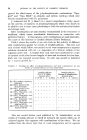
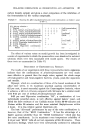
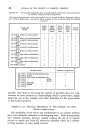
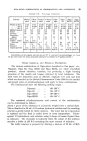
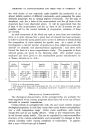
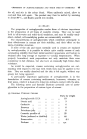
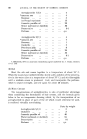
NIPA-ESTER COMBINATIONS AS PRESERVATIVES AND ANTISEPTICS 37 carbon dioxide output) and gives a clear comparison of the inhibition of the fermentation by the various compounds. TABLE V. Showing the effect of p-hydroxybenzoates and combinations on Bakers' yeast at 37 ø C. 2% glucose solution:- 1. Control 2. 0-2% metl•)l p-h3•lroxy•)'enzoa• 3. 13'075/o ethyl p-hydroxybenzoate 4. 0.04% propylp-hydroxybenzoate 5. 0.025 % n butyl p-hydroxybenzoate 6. 0.025% isobutyl p-hydroxyben- zoate 7. 0.015 % benzyl p-hydroxybenzoate 8. 0.03% Nipa-ester combination 64 0. 0.18% Nipasept ...... 10. 0.14% Nipa-ester combination 82121 ........ + q- q- q- q- q- (full fermentation) + + + + + (heavy ,, ) +++++ ( ) + + + + (mo&rat ' ,, ) + + (little ,, ) ++ ( .... ) + (very little ,, ) + ( ...... ) q- q- q- (some ,, ) The effect of various esters on mould growth has been investigated in a series of experiments in which the preservatives were dissolved in nutrient solutions which were then inoculated with mould spores. The results of these tests are summarised in Table VI. DISCUSSION OF EXPERIMENTAL RESULTS The results of our experiments with these representative micro-organisms indicate that the combinations of p-hydroxybenzoates are very much more effective in general than the single esters, against the whole range of Gram-positive and Gram-negative bacteria, yeasts, yeast-like organisms and moulds. Nipasept, which is a combination of three of the lowest members of the alkyl ester series, in its maximum practical aqueous concentration of 0.2 per cent, is most successful against the Gram-negative bacteria, where it achieves a kill in 1-2 hours compared with 24 hours for a similar result with 0.24 per cent of methyl p-hydroxybenzoate alone. 0.03 per cent Nipa-ester combination "64", a combination of two individually powerful esters, is very effective against bakers' yeast, and killed the more resistant of our Candida strains within 30-60 minutes and Proteus within 30 minutes and the more resistant Staphylococcus within 4 hours. It is less reliable against Bacterium colt. The best "all-round" performance by any of the ester combinations is, however, that of the "82121 Combination." It has the advantage of a higher aqueous solubility than the "82123 Combination" which also has five ester constituents. In its maximum room temperature solubility of 0.14 per cent "82121" kills all our test organisms within 30 minutes. These laboratory findings, which have been substantially confirmed in industriM
Purchased for the exclusive use of nofirst nolast (unknown)
From: SCC Media Library & Resource Center (library.scconline.org)