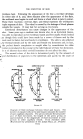
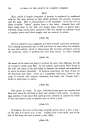
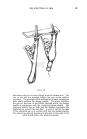
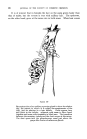
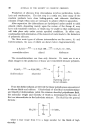
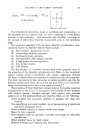
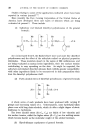
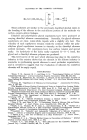
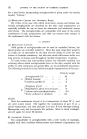
28 JOURNAL OF THE SOCIETY OF COSMETIC CHEMISTS Studies relating to some of the applications indicated above have been reported in various journals TM. More recently the Dow Corning Corporation of the United States of America have developed three new types of silicones which are being evaluated at present •. These include (1) Salicyloxy end blocked dimethyl polysiloxanes of the general formula: 0 Me fMe -• II I I I | C.OCH2--Si--O-- Si--O[-- HO• Me Me _• n Me 0 $i CH20 C , n•0 I i Me 00 H As n is increased from 0, the fluids behave more and more like dimethyl polysiloxanes and the effect of the salicylate radical on physical properties diminishes. Those materials absorb in the region of 200 millimicrons and are being evaluated as suntan lotion ingredients, their low surface tension contributing to easy spreading on the skin. As might be expected, the salicylate end-blocked dimethyl siloxane fluid exhibits greater compatibility with other ingredients likely to be encountered in skin preparations than does the dimethyl polysiloxane itself. (2) Fatty alcohol esters of dimethyl polysiloxane, of general formula •e • Me RO-- t •iO --S[iOR, n•'O I A whole series of such products have been produced with varying R groups and increasing values of n. Unfortunately, some hydrolysis takes place even with long chain alcohols, which do offer a slight degree of steric hindrance to hydrolysis. The lower alcohol esters (R:C•, C•) are fluids of low viscosity and low surface tension, whilst the higher esters (R-----C•) are low melting waxes which become harder as the molecular weight of the alcohol increases. (3) Glycol-siloxane copolymers of general formula

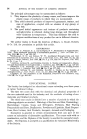
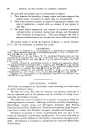
SILICONES IN THE COSMETIC INDUSTRY 29 n• 0 I Mean Those polymers are similar to the previously described alcohol esters in the bonding of the silicone to the non-silicone portion of the molecule via carbon-oxygen-silicon linkages. Ethylene and polyethylene glycol copolymers have been produced at varying dimethyl siloxane concentrations. Generally, the glycol-siloxane copolymers are clear, water-white liquids with a slightly oily feel. The viscosity of such copolymers remains relatively constant whilst the poly- ethylene glycol copolymers increase in viscosity as the dimethyl siloxane content increases. The copolymers have low surface tension and spread easily. On hydrolysis of the fairly easily ruptured Si--O--C bond, the glycol and a dimethyl siloxane polymer are produced. This brief survey of the part which silicones may play in the cosmetics industry in this country shows that the chemist in the silicone industry is amenable to synthesising special silicones to meet particular requirements, and is intended to suggest that the evaluation of silicones by cosmetics chemists will be amply repaid. REFERENCES • Rowe, V. K., Spencer, H. C., and Bass, S. L., "Toxicological Studies on Certain Commercial Silicones." Journal Industrial Hygiene, November, 1948, 30, 332-352. 2 Largent, E., Blackstone, M., and Roth, J., Report on the Immediate Toxicity of Dow Corning 200 Silicone Oil Given Orally to Rats. U.S. Air Force Medical Service (1950). a Schoog, M., "Significance of Silicones for Dermatology." Arzneirnittel-Forschung, 1951, I, 167-169. 4 The Results of Range Finding Toxicological Tests on Certain Dow Corning Fluids. Private Communication of March 5th, 1954, from M. A. Wolf and H. C. Spencer, Biochemical Research Department, The Dow Chemical Company, Midland, Michigan. 5 Repeated Insult Patch Test Study (Shelanski Method) with Dow Corning 555 Fluid. Private Communication of May 21st, 1954, from Morris V. Shelanski, M.D., C.M. 6Schoog, M., "The Importance of Silicones for Dermatology." Arzneimittel- J•orschung, 1951, I, 167-169. ? Morris, G. E., "Silicone Protective Creams--a Clinical Study." Archives of Industrial Hygiene and Occupational Medicine, 1954, 9, 194. 6 Piein, J. B., and Piein, E. M., "A Preliminary Study of Silicone Oils as Derma- tological Vehicles." J. Amer. tharm. Assn., Scientific Ed., 1953, 42, 79. g Smith, C. C., Thomas, M.D., Day, L., and Zimmerman, E. H., "Studies of a Nitrocellulose Silicone Cream as a Skin Protectant Against Eczemtogenous Contact Allergens." Journal of Investigative Dermatology, August 1953, page 111. •0 Susskind, R., "Industry and Laboratory Valuation of a Silicone Protective Cream." Archives of Industrial Hygiene and Occupational Medicine, 1954, 9, 121. n Talbot et al., "The Use of Silicone as a Skin Protectant." J. Invest. Derre., September 1951, 125. •2 Bateman, F. J. A., "Silicone Barrier Cream in Prevention of Bedsores." British Medical Journal, March 10th, 1956, 1, p. 554. •a Currie, C. C., and Gergle, R. C., "New Silicones for the Cosmetic Industry." Journal Socy. Cosmetic Chemists, lrli, No. 3, 1956.
Purchased for the exclusive use of nofirst nolast (unknown)
From: SCC Media Library & Resource Center (library.scconline.org)