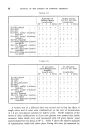
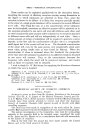
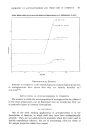
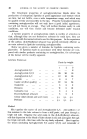
34 JOURNAL OF THE SOCIETY OF COSMETIC CHEMISTS proved the effectiveness of the p-hydroxybenzoate combinations "Nipa- sept" and "Nipa 82121" in atropine- and eserine- eyedrops which were heavily contaminated with Ps. pyocyanea. J. Schimmel and W. j. Husa TM, in a recent comprehensive study, report on the activity of mixtures of p-hydroxybenzoates which were shown to be additive and in some cases potentising in both the antimicrobial studies and storage tests. Ester combinations are also recently recommended in the treatment of moniliasis, which causes considerable disturbances in connection with antibiotic therapy. In this instance, ester combinations are used internally. The cause of this infection is Candida albicans (Robin Berkhout). Table I shows the results of our own tests on the activity of different ester combinations against two strains of Candida albicans. This test, and each of those which follow, was carried out at room temperature in aqueous solutions inoculated with 0.1 c.c. suspension of a 24-hour culture of the organism under test. A loopful from each tube was transferred to a tube of nutrient broth after known lengths of time and incubated for five days. Each test was repeated several times. In each case growth is indicated by + and no growth by --. TABLE I. Showing the effect of p-hydroxybenzoates and their combinations on two strains of Candida albicans at room tern Oerature Candida albicans Candida albicans (N.C.T.C. Z248) (Stamm 2 Sabalitschka) Growth after: Growth after: 5 •15 • 30 1 2 424hrs. 5 • 15 •30 1 2 424hrs. (1) 0.2% methylp-hydroxy- benzoate .. d- + + + + + + + + + + + + + (2) 0.24 % methyl f-hy- droxybenzoate .. + + + + + + -- + + + + + + -- (3) 0'04% propyl p-hy- droxybenzoate .. (4) 0.03% Nipa-ester com- bination 64 .... q- (5) 0.05% Nipa-ester com- bination 82121 .. + + + + + + -- + + -- (6) 0'1% Nipa-ester com- bination 82121 .. (7) 0.14% Nipa-ester c. om- bination 82121 .. -- -- (8) 0'075% Nipa-ester com- bination 82123 .. -- This test cmTied further work published by Th. Sabalitschka n on six strains of Candida albicans in which he indicates the success which can be achieved against this organism with combinations of the esters. We can confirm from the above tests that at room temperature and in aqueous

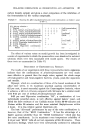
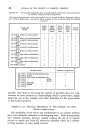
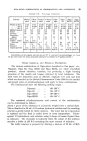
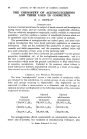
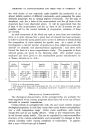
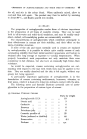
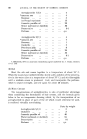
NIPA-ESTER COMBINATIONS AS PRESERVATIVES AND ANTISEPTICS 35 solution (the conditions under which all our tests were carried out) 0.2 per cent Nipagin M was incapable ot killing the organism completely within twenty-four hours, whereas the ester combinations had a bactericidal effect well within that time. 0-03 per cent combination "64" (an example of an ester combination prepared by method 1) killed the more resistant of the two strains we used (N.C.T.C. Z248) within 30-60 minutes, and a 0.1 per cent solution of Combination "82121" and a 0.075 per cent solution of Combination "82123" (prepared in accordance with method 3) killed it within 5-15 minutes. Further tests were carried out in the same way with a number of organisms whose exclusion from cosmetic products is of the utmost impor- tance. Table II shows the results obtained in tests against two strains of Staphylococcus pyogenes (aureus) in which several concentrations of phenol are included for comparison. TABLE II Stap h y lococcus Stap h y loc occ u s pyogenes (aureus) pyogenes {aureus) N.C.T.C. No. 7447 N.C.T.C. No. 7972 Growth after: Growth after: 5' 15 •30' 1 2 424hrs. 5' 15' 30' 1 2 424hrs. (1) 0.5% phenol .... q- q- q- 4 q- q- q- q- q- q- q- q- -- (2) 0.75% ...... + q- + + -- + (S) 1.0% .. q- - -- q- q- (4) C.24% m•ihyl •'-hy- droxybenzoate .. q- • + q- + + -- + q- q- q- + -- -- (S) 0.04% propyl p-hy- droxybenzoate .. 4- 4- 4- q- q- q- -- q- + + q- + q- {6) 0-03% Nipa-ester com- bination64 .... q- q- q- • ..... + q- q- + q- (7) 0.075% Nipa-ester com- bination 82121 .. q- -½ q- q -- q- q- q- q- -- {8) 0.1% Nipa-ester com- bination82121 .. q- q- q- -- q- q- q- -- (9) 0.14% Nipa-ester bination 82121 .. q- q- - - q- q- (10) 0-075% Nip•-ester com- bination 82123 q- q- q- -- q- q- q- -- (11) 0.1% Nipaseptq-0.03•o Nipa-ester combina- tion 64 q- (12) 0.12% Nipasep•-0.03'ø)o Nipa-ester combina- tion 64 .... q- -- q- q- Tests against Bacterium colt, Proteus vulgaris and Pseudomonas pyocyanea were carried out in the same way, and the results are tabulated in Tables III and IV. In the case of Pseudomonas pyocyanea we have included the well-known antipyocyanea compound "Phenoxetol BPC" in our tests.
Purchased for the exclusive use of nofirst nolast (unknown)
From: SCC Media Library & Resource Center (library.scconline.org)