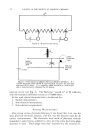
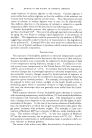
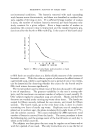
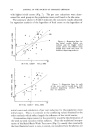
MEASUREMENT OF SKIN MOISTURE BY POTENTIOMETRIC METHODS By ISAIAH S. BOTWINICK* Presented May 7, 7959, New York City THE 1959 recipient of the Society's Special Award, Dr. I. H. Blank has contributed a great deal in showing that the emolliency and suppleness of the skin is related ,to the water content of the skin (1, 2). We searched for a reliable method,to measure the moisture content of the skin quickly and easily and finally devised a potentiometric procedure. The water content of the skin affects the resistance of the skin. It can be stated as a formula that the more moisture present in the skin, the lower the resistance to the flow of an electric current. When a constant or steady electric current is passed through a wire or series of resistances including the skin, the potential drop or difference be- tween any two points is proportional to the resistance between these two points. If an external source of EMF, e, is connected through a galvanom- eter as shown in Fig. 1 to two points a and b, two points can be found by m_ovement and adjustment of a and b at which the•e is no flow of current through the galvanometer. If another external source of EMF, e', is in- troduced for which the balancing positions are a'b', the ratio of e to e' will be equal to the ratio of the resistances between a, 3 to that between a', b'. This gives us a practical method of comparing different sources of EMF and the potential drops produced by the passage of electric current through standard resistances. Conversely, we also can compare the potential M -, drops produced by using different skin resistances and standard E I4 s or the same source of EMF. The potentiometric method which we have tried to explain is a very sensitive one since it is a null method. By null method we mean one in which the galvanometer is "zeroed in" or balanced. Thus, the method is not limited or restricted by a needle's deflection on a scale with the needle having to stop at a maximum point and not being able to go further. The Beckman Model G pH meter contains a very sensitive potenti- ometer and this instrument was adapted for our purposes by adding an * Research Testing l,aboratories, New York 24, N.Y. 377

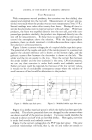
378 JOURNAl, OF THE SOCIETY OF COSMETIC CHEMISTS E Figure 1.--Potentiometric circuit. Subject Electrode Jacks 1.5 volts x• Glass • Electrode Reference Electrode Jack Figure 2.--External circuit added to Beckman Model G pH Meter. R = variable resistance which should be approximately ten times the resistance measured (50 K ohms). C = capacitor which should be as small as pos- sible is manufactured to eliminate the AC pickup. external circuit (see Fig. 2). The Beckman "zeroed in" at 20 millivolts with the standard calibrated resistance of 50,000 ohms. In this work special electrodes had to be devised for: 1. Surface measurements. 2. Intra-keratin measurements. 3. lntra-dermal measurements. SURFACE MEASUREMENTS After trying various electrode distances, it was found that 1 cm. was the most practical electrode distance, and this was the distance used for all surface measurements. The electrodes were made of platinum securely imbedded in polystyrene, soldered to wire, and the wires had male plugs attached to each. These plugs were then inserted into the external cir-
Purchased for the exclusive use of nofirst nolast (unknown)
From: SCC Media Library & Resource Center (library.scconline.org)