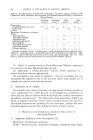
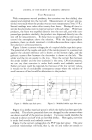
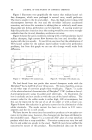
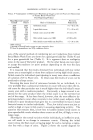
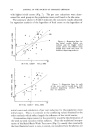
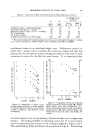
408 JOURNAL OF THE SOCIETY OF COSMETIC CHEMISTS Figure 5 illustrates very graphically the reason that sodium lauryl sul- fate shampoos, which were packaged in aerosol cans, would perforate. The iron is anodic to the tin and solder. Also, the high current value, 6.60 microamperes between the iron and the tin-solder indicates accelerated corrosion, and since this corrosion is taking place at relatively small areas (base plate pin holes), perforation can be expected. A coating would not help this particular situation since the coating would be even more strongly cathodic than the tin and, therefore, accelerate corrosion. Figure 6 shows the same conditions existing with a triethanolamine lauryl sulfate shampoo, high current flow between the iron and tin-solder elec- trodes with the iron anodic. It was felt at one time that the substitution of TEA lauryl sulfate for the sodium lauryl sulfate would solve perforation problems, but from this graph we can see this change would make little difference. 5© 400 MICROAMPERES MILLIVOLTS 200 Fe/Sn Sol - 5 O0 Couple 480 Sn/Fe Sol -012 Fe 230 100 Sol/Sn Fe +4 80 Sn 420 Sol 490 2 3 4 MICROAMPERES Figure 7.--Deriphat 170C seamed can. 600 soo- 400 200, i MICROAMPERES MILLIVOLTS Fe/Sn Sol -0 15 Couple 280 Fe 270 Sn 330 2 3 4 MICROAMPERES Figure 8.--Deriphat 170C drawn can. We had found from test packs that aerosol shampoos made with the Deriphats © had a shelf life of over three years. We were, therefore, anxious to see what type of corrosion graph these would give. Figure 7 is a plot of the electrochemical characteristics of Deriphat © 170C (sodium-n-lauryl- 8-aminopropionate) using tin-solder-steel electrodes. As illustrated, the iron is cathodic and not anodic as with the case of the lauryl sulfates. The current value for the solder anode is rather high, 4.80 microamperes, but this can be improved by the use of an all tin solder or with a drawn can. Figure 8 shows the reduction in galvanic current by the elimination of the solder electrode. The anode current has been cut down to 0.15 micro- amperes and the tin is still anodic. We have known for some time that emulsion products o/w are quite cor- rosive to tin plate cans however, this characteristic has been attributed to the emulsifier used. Figure 9 is a current-E.M.F. plot of a wax emulsion product which has a soap emulsifier. Corrosion currents are very low and the tin and solder are anodic to the steel. Shelf life tests have verified the noncorrosive nature of this product. Electrochemical data can be very

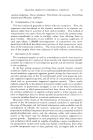
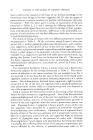
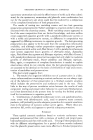
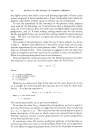
CORROSION TESTING OF AEROSOL PRODUCTS 409 useful in the formulation of emulsion products which are to be packaged in metal cans. An experimental shelf pack of a resin emulsion sl•owed very high per- foration after as short a period as three weeks. Figure 10 is a current- E.M.F. plot of this product. As can be seen, the iron is anodic and the current value between the iron and the tin-solder is 5.5 microamperes. The low current value of the tin cathode indicates that corrosion was under cathodic control. Perforation, as would be expected, took place at the liquid/vapor line where oxygen was present to effect depolarization of the tin (cathode). The use of a coated drawn can with nitrogen flushing of the head space resulted in a commercially feasible package. A drawn can increased the anode area and, therefore, decreased the intensity of the corrosion. i300 1 MICROAMPERES MILLIVOLTS Fe/Sn-Sol - 0 50 C•uple 55'3 200 Sn/Fe-Sol +0 !.5 Fe , 550 -- Sol/Sn-Fe +0 20 S• 610 100 ---• Sol 580 __ 1 2 3 4 5 MICROAMPERES Figure 9.--Wax emulsion. TS 6O5 I Fe/S•I.Sol + 5 5 Couple ' 625 I so/r• sol- • • I soys, Fe - 3 9 s, szs / 1 2 3 4 5 •c,0•,E,Es Figure 10.--Resin emulsion. From these few examples, it can be seen that current-potential data can be extremely useful for corrosion reduction by studying the effect on these values by the following: 1. Reformulation 2. Emulsifier 3. Elimination of lead-tin solder 4. Inhibitors 5. Polarizers 6. Oxygen There are limitations to this technique such as inability to determine vapor phase corrosion and also inability to determine product damage, such as discoloration and perfume degeneration. Care must also be exercised in interpreting these data since the anode and cathode are separated by a much greater distance than in the container hence, resistance of solution and the unnatural formation of corrosion products are sources of error. Variation of anode/cathode areas from what is actually lhe case in the con- tainer can also cause an error in the interpretation of the results. It is for these reasons that, in order to get as much information as possible, the
Purchased for the exclusive use of nofirst nolast (unknown)
From: SCC Media Library & Resource Center (library.scconline.org)