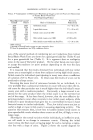
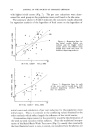
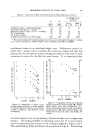
MEASUREMENT OF SKIN MOISTURE BY POTENTIOMETRIC METHODS 379 cult box for convenience since this enabled us to rapidly change electrodes e.g., from surface electrodes to intra-keratin electrodes to intra-dermal electrodes. Surface measurements of dry skin had the following variables: 1. Amount of pressure applied to the electrodes on the skin. 2. Surface area used: palm, dotsurn of hand, dorsal and volar forearm. 3. Humidity and temperature. To eliminate the pressure variable, initially, the same person continually applied the surface electrodes to the test subjects in a uniform manner. The electrodes were just touched to the subjects and held there. Ulti- mately, this procedure was refined. The surface electrodes were strapped to the test site and a 200 gram weight was permanently attached to the polystyrene portion of the electrode to give constant and uniform pressure. Regarding the surface variable, four different areas were used---palm, dotsurn of hand, dorsal forearm and volar forearm. The measurements were made on five different occasions on ten human subjects. Measure- ments were made with dry skin, skin coated with U.S.P. petroleum jelly, acetone washed skin and lotion coated skin. For brevity's sake, only the average figures are given in the data section. INTRA-KERATIN MEASUREMENTS After trying various electrode distances and lengths, it was found that I cm. was the most practical electrode distance and 1.2 min. was the opti- mum electrode length for the palm and 0.5 ram. was the optimum electrode length for the dorsal hand and dorsal and volar forearm. We know that the intra-keratin laver is not 0.5 mm. below the surface. On biopsy, if we go down 0.5 mm., we are past the intra-keratin layer and are in the intra- derreal layer. However, because of the elasticity of the skin in vivo which results in the skin yielding to the electrodes and forming a crater, we found by trial and error that the electrodes had to be 0.5 min. long to penetrate the intra-keratin layer with a 200 gram weight. We hope to verify this by securing the cooperation of some surgeons and repeating this study on optimum electrode length in the operating room at the site of an incision. Then we will definitely know by biopsy whether our measurements with an electrode of a specific length are really of the intra-keratin, intra-dermal or corium layers. For convenience and uniformity, the electrodes were securely imbedded in polystyrene, soldered to wire, and the wires soldered to male plugs. These plugs were then inserted into the external circuit box. Two hundred gram weights were permanently attached to the polystyrene portion of all the intra-keratin electrodes. In an attempt to reduce the variable of the elasticity of the skin, the skin was pulled taut before the electrodes were applied.

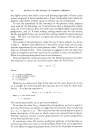
380 JOURNAL OF THE SOCIETY OF COSMETIC CHEMISTS Individuals tested had varying thickness of the callus, particularly of the palm which makes the palm a poor test area. We found it best to determine the individual thickness of the callus of each subject tested before proceeding. Each subject had a base line level determined for four or more test sites on five or more occasions. After determining the base line of each subject, we then proceeded to test and evaluate coating the skin with acetone, petroleum jelly or test lotions. The averages of the figures obtained with the intra-keratin electrodes are given in the data section. IN'rP,.4-D E P,M), •. M F.^S U P,F. MF. NTS After trying various electrode distances and lengths, it was found that 1 cm. was the most practical electrode distance and 2.0 min. was the opti- mum electrode length. Again, we know that the intra-dermal layer is not 2.0 min. below the surface. However, as was previously discussed under intra-keratin measurements, the elasticity of the skin in vivo, etc., necessi- tates the use of electrodes that are 2.0 mm. long in order to penetrate the intra-dermal layer with a 200 gram weight. Again, we hope to repeat this study in the operating room with the cooperation of some surgeons. As usual, the electrodes were imbedded in polystyrene, soldered to wire, and the wires soldered to male plugs for insertion into the external circuit box. The subjects' skins were pulled taut and the intra-dermal electrodes were pushed into the skins until the investigator could push no further. Then the electrodes were strapped in place. One could note the penetra- tion of the various layers by the change in the millivolt readings on the potentiometer. The same four test sites were used and the measurements were made on ten subjects on five different occasions using dry skin, acetone washed skin, and skin coated with petroleum jelly or a test lotion. The average figures obtained are given in the data section. Discussion In all of the ten subjects tested it was noted that washing the skin site with acetone just prior' to applying the surface electrodes, resulted in a significantly much greater voltage. (The average surface voltage went from 300 millivolts for pahn dry skin to 885 millivolts for palm acetone washed skin.) It was also noted that the average surface voltage varied from skin site to skin site. The palm averaged 300 millivolts, the antecubi- tal area 550 millivolts and the volar forearm, dorsal forearm and dorsal hand averaged 680, 670 and 710 millivolts respectively. The last three areas are practically the same. The differences for the palm and antecu- bital area are probably due to the sweating of the subjects. It was con- cluded that washing the skin with acetone dries the skin surface, thereby increasing the resistance, and yielding a higher voltage. E(voltage) =
Purchased for the exclusive use of nofirst nolast (unknown)
From: SCC Media Library & Resource Center (library.scconline.org)