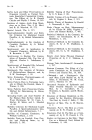
GUMS IN COSMETIC FORMULATIONS 401 ADDENDUM Since the preceding article was written, several additional papers of in- terest have appeared in the literature. Meyer and Cohen (25) compared the rheological characteristics of homogenized tragacanth solutions to those prepared with low shear. The former exhibited high yield values and "permanent" suspending properties while the latter showed pseudoplastic flow characteristics without significant yield value and poor suspending ability. The sensitivity of various hydrocolloids to light has been demonstrated by a number of workers. Davies and Rowson (26) reported, that solutions of sodium carboxymethylcellulose exposed to daylight were less•stable than those stored in the dark. Schwarz and Levy (9) found that Carbopol 934 solutions undergo rapid degradation in the presence of daylight. Sodium alginate solutions appear to be less stable in light, according to a paper by Bolliger and Muenzel (27). In order to protect products containing light- sensitive hydrocolloids from possible viscosity breakdown, it may be desirable to use light-resistant containers, antioxidants or screening agents. Bolliger and Muenzel (27) have also studied the effect of pH on the sta- bility of sodium alginate solutions and found the greatest stability at pH 7. At pH below $ and above 8, the solutions were found to be quite unstable. Kostenbauder and co-workers (28) dealt with a quantitative determina- tion of the intermolecular association between methyl- and propylparaben and several hydrophilic polymers. The parabens were found to interact to some extent with methylcellulose, polyvinylpyrrolidone and gelatin, but there was no evidence for a significant degree of interaction between the parabens and carboxymethylcellulose or tragacanth. (1) Asbeck, W. K., and Baxter, M. K., Paper presented at the 134th National Meeting of the American Chemical Society, Chicago, 1958. (2) Schwarz, T. W., and Levy, G., 7. zlm. Pharm. Atssoc., $ci. Ed., 46, 562 (1957). (3) deButts, E. H., Hudy, J. A., and Elliott, J. H.,Ind. Eng. Chem., 49, 94 (1957). (4) Levy, G., and Schwarz, T. W., 7. Arm. Pharm. At Jsoc., $ci. Ed.,47, 451 (1958). (5) Steiner, A. B., and McNeely, W. H., in "Natural Plant Hydrocolloids," American Chemi- cal Society, Washington, D.C. (1954), p. 69. (6) Levy, G., to be published. (7) Levy, G., and Schwarz, T. W., 7. zlm. Pharm. Atssoc., Sci. Ed., 47, 455 (1958). (8) B. F. Goodrich Chemical Co., "Carbopo1934" (1957), pp. 2, 16. (9) Schwarz, T. W., and Levy, G., 5 t./lrn. Pharm. Atssoc., $ci. Ed., 47, 442 (1958). (10) Harry, R. G., "Cosmetics, Their Principles and Practices," Chemical Publishing Co., New York (1956), p. 755. (11) The Dow Chemical Co., "Methocel" (1957): p. 19 if. (12) Davies, R. E. M., and Rowson, J. M., 7. Pharm. and Pharmacol., 9, 672 (1957). (13) Schwarz, T. W., Levy, G., and Kawagoe, H. H., 7. Arm. Pharrn. Atssoc., $ci. Ed., 47, 695 (1958). (14) Levy, G., and Schwarz, T. W.,Ibid., 47, 44 (1958). (15) Bart, M., andTice, L. F.,Ibid.,46,217 (1957). (16) Hutchins, H. H., and Singiser, R. E., 5 t. •lrn. Pharrn. •lssoc., Pract. 2Pharrn. Ed., 16, 226 (1955). (17) Segur, J. B., Whittaker, E. L., and Miner, C. S., Jr., Food Technol., 10, 625 (1956).

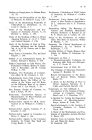
402 JOURNAL OF THE SOCIETY OF COSMETIC CHEMISTS (18) Bolliger, R., and Muenzel, K., Pharm. Acta Helv., 33, 141 (1958). (19) Mantell, C. L., in "Natural Plant Hydrocolloids" (Ref. 5), p. 29. (20) Schon, S. A., and Fuerst, W. J., Dansk. Tids. Farm., 15, 34 (1941). (21) Tillman, W. J., and Kuramoto, R., 7. Am. Pharm. Assoc., $ci. Ed., 46, 211 (1957). (22) Eisman, P. C., Cooper, J., and Jaconica, D.,Ibid.,46, 144 (1957). (23) Taub, A., Meet, W. A., and Clausen, L. W., Ibid., 47, 235 (1958). (24) deNavarre, M. G., Am. Perfumer Aromat., 70, 31 (1957). (25) Meyer, R. J., and Cohen, L., 2 e. $oc. Cosmetic Chemists, 10, 143 (1959). (26) Davies, R. E. M., and Rowson, J. M., 2 e. Pharm. andPharmacol., 10, 30 (1958). (27) Bolliger, R., and Muenzel, K., Pharm. Acta Helv., 34, 79 (1959). (28) Miyawaki, G. M., Patel, N. K., and Kostenbauder, H. B., 7. Am. Pharm. Assoc., Sci. Ed., 4$, 315 (1959). CORROSION TESTING OF AEROSOL PRODUCTS By MoP, P, IS J. ROOT and MERLIN J. MAUP, Y* Presented May 7, 1959, New York City SINCE THE ADVENT of cosmetic aerosols in metal cans, corrosion has taken its place as a major problem in the formulation of these products. Corrosion problems in metal cans have, of course, been dealt with for a good many years, notably in the food industry, as well as others. The classic method of evaluating corrosion in metal containers has been the test pack. The product is placed in the container, sealed and allowed to stand at vari- ous temperatures for a specified period of time and then opened and in- spected. If, after one year's storage, the container and contents were still in good condition, a one-year shelf life could be anticipated. Or, if as was recently the case in England, a can of beef was opened after storage for 134 years and found in good condition, a shelf life of a comparable period could be guaranteed. In this instance, however, it is of little commercial im- portance since the can made at that time was hand wrought and weighed 7 pounds 5 ounces. Although temperature is an important factor in shelf life test, it is still no substitute for time, as elevated temperatures are not always a guarantee of accelerated corrosion. One notable example was the case of the aerosol shampoo which was test packed at room temperature and at 130øF. Since the cans stored at 130øF. for three months were in good condition, no one felt it necessary to examine the cans which were stored at room temperature before the product was marketed. When the cans on the retailers' shelves began perforating, a quick examination of the cans stored in the laboratory at room temperature showed up the same condition. Test pack procedures require an extensive time period and, with today's dynamic marketing practices, especially in our industry, the need for a * G. Bart & Co., Chicago 9, Ill.
Purchased for the exclusive use of nofirst nolast (unknown)
From: SCC Media Library & Resource Center (library.scconline.org)