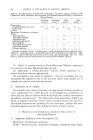
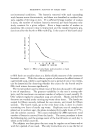
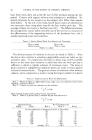
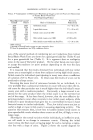
MEASUREMENT OF SKIN MOISTURE BY POTENTIOMETRIC METHOI)S 38! /(amperes) X R(ohms). The values were all greater than 1300 millivolts for skin coated with U.S.P. petroleum jelly. This was probably due to the marked electrical resistance of petroleum jelly and the inability of the electrodes to make contact with the skin. The petroleum jelly most likely set up an insulated electrical barrier. One cannot correlate intra-keratin values with intra-derrnal values with surface values too well since different electrodes were used for the different measurements (see summation chart). However, with a given set of SUMMATION CHART--AvERAGES OF READINGS OF 20 SUBJECTS Acetone Petroleum Lotion (3) Test Area Dry Skin H/ashed •el/y Coated Skin Surface Palm 300 885 1300 1200 Dorsal forearm 710 895 1300 1230 Volar forearm 680 900 1300 1240 Dorsal forearm 670 920 1300 1250 Antecubital area 550 950 1300 1210 Intra-Keratin Palm 1152 1250 1047 1030 Dorsal hand 1175 1260 1084 1040 Volar forearm 1162 1280 1063 104l Dorsal forearm 1181 1265 1050 1057 Antecubital area 1148 1270 1071 1053 Intra-Dermal Palm 941 1020 830 810 Dorsal hand 953 1050 850 800 Volar forearm 945 1090 839 805 Dorsal forearm 946 1040 840 820 Antecubital area 930 1080 836 817 Units are in millivolts. Readings were made 10 times for each subject. electrodes one can compare the values obtained for different conditions of the skin. If we try to make the surface readings with the same intra- keratin electrodes to establish some rough relationship, we find that when the skin is dry the values for the skin surface are in the order of 1200-4250 millivolts and in the order of 1150--1180 millivolts for intra-keratin layer. LIMITATIONS OF THE METHOD Of necessity, since it was the first time something of this natme was attempted, our initial electrodes were rather crude. We tried fine platinum wire only to find that it was too soft and bent too readily. We ultimately borrowed my wife's sewing needles since they were strong, sharp, thin, not hollow like a hypodermic needle and could be coated on the outside surface to reflect only the voltage at the depth to which they were inserted. At first we tried only two needles or electrodes with a 1 cm. distance between them for the intra-keratin and intra-dermal measurements. As a further

382 JOURNAL OF THE SOCIETY OF COSMETIC CHEMISTS refinement and to insure better contact, we used six needles spaced in two rows of three each with a 1 cm. distance between the rows. The needles in the row were 0.5 cm. apart from each other. FURTHER REFINE/VIENTS OF PROCEDURE The crux of the problem in this study is that no one has as yet been able to satisfactorily devise a method for testing the different layers of the skin in vir)o. We are trying to differentiate the layers using chemical pro- cedures, e.g., electrolyte concentration, oxygen concentration and pH to mention a few. As soon as we will be able to differentiate the layers chemically, depth measurements will cease to be a problem. Individual depth variation and test site variation will also cease to be a problem. Good PmNTS oF THE MF:rHOD This method is cheap, quick and relatively simple. The apparatus can be easily reproduced and with the proper brief training, any conscientious technician can operate it and secure quite fine reproducible readings al- though the cost of the apparatus is so modest. We found that it cost us less than $550 to assemble the apparatus including the cost of the Model G pH meter which meter can be used for pH measurements anytime in the laboratory. In conclusion, some of the applications of this method ate: I. To evaluate the ability of a test lotion or cream to impart emolliency and suppleness to the skin. With this apparatus you can measure the rates of hydration and dehydration of the skin with various test lotions and creams. This provides a rapid screening procedure. We have hydrated the skin by having subjects immerse their hands up to the elbows in water for ten minutes, made readings of "maximum" hydration, applied test lotions and measured the rate of transpiration. Also, we have used right hand versus left hand applying the test lotion to only one hand. The inference is that the better lotions inhibit water loss. Skin roughers and dehydraters have been used, e.g., trisodium phosphate soaks and readings made with the apparatus of "maximum" dehydration. Then test lotions were applied and the rates of hydration measured. 2. Other possible applications would be to measure the moisture con- terit in various skin disorders to see if there is any correlation of skin disorders with changes in moisture content. This is merely a suggested procedure. We hope this paper locuses more attention on the problem and importance of skin moisture measurement. REFERENCES (1) Blank, I. H., St. Invest. Dermatol., 18,433 (1952). (2) Blank, I. H., Arm. ,4cad. Dermatol. Syphilol. Symposium, Dec. 13, 1951. (3) Peck, S. M., SuggesteJ formulas for test lotions, peraonal communication.
Purchased for the exclusive use of nofirst nolast (unknown)
From: SCC Media Library & Resource Center (library.scconline.org)