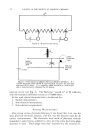
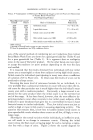
404 JOURNAL OF' THE SOCIETY OF COSMETIC CHEMISTS At the anode the metal goes into solution with a release of electrons cor- responding to the valence of the metal in solution. These electrons are then discharged at the cathode where hyd• oxyl ions are formed if there is oxygen available, or hydrogen ions can be discharged by the formation of molecular hydrogen. Electrons can also be discharged at the cathode by the reduc- tion of an organic or inorganic compound in contact with it. Any cathodic condition which prevents the discharge of electrons, such as high pH, low oxygen, absence of reducible substances, will reduce the anodic metal cor- rosion. Anodic conditions which will reduce the anodic metal corrosion are a high common metallic ion concentration around the anode or the pres- ence of an oxide film. In 1954, G. Barr& Company (2) set up a fellowship to study the possi- bility of using electrodes prepared from tin foil and mild steel base stock for measuring the electromotive force existing across a tin-steel electrode system in various products, such as shaving cream, hair sprays, shampoos and other cosmetics. It was found in this work that, in the formulations studied, the tin was anodic to the steel. It was also shown that steel corrodes more rapidly when insulated from tin than when in electrical con- tact. This indicates the furnishing of cathodic protection to the steel by the tin. The results of this study indicated that much corrosion information could be gathered by electrochemical measurements that could not be obtained in any other way. One of the difficulties with this technique, however, was that the experimental conditions did not coincide closely enough with actual conditions. In 1955, Continental Can Company (3), in collaboration with the Armour Research Foundation, developed their "Corrosivity Tester," which they used for prediction of shelf life for carbonated beverages in tin cans. With this technique it was possible to plot perforation data from controlled test packs plotted against a curve based on calculated perforation times of cans with 0.0012 sq. in. area of exposed iron. The correlation between the two plots was good. Agreement was also good between microampere readings and actual i•on content (p.p.m.) of controlled test packs plotted with the theoretical curve based on Faraday's Law of electrolysis. The relation between the galvanic corrosion of the anode and the galvanic current is Faraday's Law: tM where/47 is the weight of metal dissolved to produce the galvanic current (grams) t is the time of flow (seconds) F, the Faraday Constant (96,500 coulombs) M, the atomic weight of the anode metal n, the charge of the metal ions formed and I, the galvanic current in amperes.

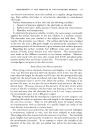
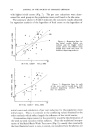
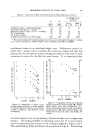
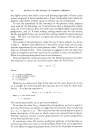
CORROSION TESTING OF AEROSOL PRODUCTS 405 In some recent work (4), Johnson and Daly have shown by use of their "Corrosivity Tester" that antioxidants such as ascorbic acid and glucose oxidase-catalase enzyme systems were effective in reducing iron pickup and can perforation in soft drinks. Removal of air in the head space also pro- duced a more satisfactory shelf life of canned soft drinks. In a paper (5) presented by these same authors along with Koehler and Francis of the Armour Research Foundation before the National Associa- tion of Corrosion Engineers in March of this year, they pursued the cor- rosion processes in carbonated beverage cans further with the use of the "Corrosivity Tester." Perhaps the most significant part of this work was the development of a practical test metal electrode. Tin wire, solder, steel black plate, or any other metal, is mounted in an epoxy resin. Wire leads extending from the tin and steel are coupled externally through a device of sufficient sensitivity and sufficiently low resistance to measure the galvanic currents produced. Electrodes of this type have the following advantages: 1. Size of cathode and anode metals can be accurately controlled. 2. Proximity of electrodes can be controlled within limits. 3. Fresh electrode areas can be exposed by grinding. 4. Electrodes can be made of identical metal found in container under question. Except for proximities of the electrodes and relative sizes of the anode and cathode, this electrode simulates what is occurring in a metal container where two or more dissimilar conductors in contact with an electrolyte (product) convert energy liberated by a spontaneous chemical reaction directly into electrical energy. The test cell which we used consisted of this electrode, a saturated calomel reference electrode and a gas flushing tube, held in place in a one-pint Mason jar with a large rubber stopper. This assembly and construction of the electrodes is described in the Continental Can Company's booklet, "Cor- rosivity Tester" (6). Current measurements are made with a Leeds & Northrup galvanometer No. 2430-C converted by suitable shunts to a microameter. The sensi- tivity of this instrument is 4-0.0031 microamperes. Two resistors make it possible to read either 1 or 10 microamperes at full deflection. At the more sensitive setting, the smallest division measures 0.01 microamperes. Potential measurements we found could be satisfactorily measured with a Beckman pH meter (10 millivolts/division). The Electro-Motive-Force (E.M.F.) could be readily measured between the calomel cell and any of the metal electrodes, singly or coupled together. Measurements were taken of the coupled potential as well as the individual electrode potentials against the reference cell (saturated calomel).
Purchased for the exclusive use of nofirst nolast (unknown)
From: SCC Media Library & Resource Center (library.scconline.org)