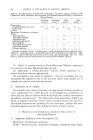
ORGANISM GROWTH IN COMMERCIAL COSMETICS 391 sporium herbarum, Mucor plumbeus, Penicillium chryso•enum, Penicillium notatum and Rhizopus nigrica,s. B. Contamination of the Samples This was conducted generally as before with two exceptions. First, the organisms were introduced to the cosmetic emulsions in an aqueous sus- pension rather than in a portion of their culture medium. This method of contamination was used to force the organisms to attack the cosmetic prep- aration immediately in order to multiply rather than allowing them to grow initially. One-tenth of one milliliter of an aqueous suspension of each type (about 1,500,000 micro Srganisms) of contaminant was intro- duced into individual four fluid ounce portions of both preservative varia- tions of the commercial cosmetics. The second exception was the elimina- tion of the samples which were subjected to daily airborne contamination. C. Observation of the Samples The inoculated samples as well as uninoculated controls were stored at room temperature for a period of three months and observed periodically as before for evidences of micro6rganism growth and detrimental changes in the emulsions. In the first testing sequence involving three typical nonionic cosmetic emulsions (Table 1), one of the 21 contaminated parahydroxybenzoate pre- served emulsions supported organism growth during the three-month ob- servation period, none of the 21 contaminated sorbic acid preserved sam- ples supported organism growth, and all of the 21 contaminated emulsions which had no preservative supported organism growth. These results indicate, especially in the absence of materials which would act as auxiliary preservatives or preservative synergists in any of the three formulations, that the extent to which preservatives have been shown to be inactivated by nonionic surfactants in organism culture media or dilute aqueous solu- tions or dispersions does not always parallel the preservative's behavior in a cosmetic emulsion based on a nonionic surfactant system. Discussion of the results of the determination of resistance to organism growth of the 18 commercial nonionic cosmetic •mulsions is restricted by the scope of this paper and the limited information made available to us for consideration of whether the nonionic surfactants used in all of these preparations inhibited the present preservative systems, composed mairfly of parahydroxybenzoate esters, and the alternate sorbic acid preservative system to the extent that the finished cosmetic products supported or- ganism growth. Ingredients in each preparation other than preservative and surfactant which could be capable of making a major contribution to the preservative system were noted, but further contributions from other possible components such as dyes, perfume oils, astringent salts or mild

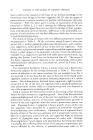
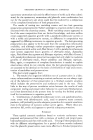
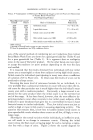
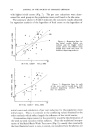
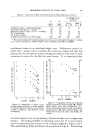
392 JOURNAl, OF THE SOCIETY OF COSMETIC CHEMISTS bases could not be assessed on the basis of our limited knowledge of the formulation even though it has been suggested (18, 23) that the degree of preservation in a cosmetic emulsion is a problem which embraces the entire formulation. With this latter point in mind, an examination of the data presented in Tables 2, 3, 4 and 5 showing the differing behavior of two preparations which appear from our restricted knowledge of their composi- tions to be identical can be attributed 1o differences in the unidentified com- ponents of each emulsion and the final differences which they in turn cause in both finished preparations. The results of testing six lotions with two different preservative systems are presented in Table 2. Of the six lotions tested, Lotion 2 when pre- served with a methyl parahydroxybenzoate/dehydroacetic acid combina- tion, supported a heavy growth of one of the nine test organisms. None of the sorbic acid preserved samples supported perceptible organism growth. Lotion 1, which appears to be equivalent to Lotion 2 flora the information available to us, supported no growth with either preservative system, sug- gesting that Lotions 1 and 2 may not be identical after all. The nature of the heavy organism growth observed in the uninoculated, methyl para- hydroxybenzoate/dehydroacetic acid preserved control for Lotion 2 was not identified. Two commerical foundation lotions, a suntan lotion and a hand lotion, formed the subjects for the testing summarized in Table 3. The concen- tration of salicylate in the suntan emulsion was not revealed to us, but it was assumed to be Jess than five per cent on the basis of the tested active ingredient contents of many currently marketed preparations of a similar nature. One of these lotions, the hand Notion, supported a slight to moder- ate growth of two of the nine test organisms with a parahydroxybenzoate ester preservative system, while no contaminant growth was observed in any of the preparations containing sorbic acid. Table 4 contains the three-month results of the testing of four cleansing lotions for their resistance to organism growth. One of the four emulsions supported slight growth with one of the nine test organisms in a sorbic acid preservative system, and two of the lotions supported heavy growths of several of the test organisms when the current preservative system was used. Cleansing Lotion 3 supported a heavy growth of one of the nine test organisms when protected by a quaternary ammonium salt/para- hydroxybenzoate ester combination. Cleansing Lotion 4 supported heavy growths of four of the nine test organisms with a preservative system sup- plied by a quaternary ammonium salt, and supported slight to moderate growth of Atspergi//us niger in the presence of sorbic acid. Although Cleansing Lotions 3 and 4 appear to be identical from the information which is available, the conflicting observations of the apparent improvement pro- tection afforded by the addition of parahydroxybenzoate esters to the
Purchased for the exclusive use of nofirst nolast (unknown)
From: SCC Media Library & Resource Center (library.scconline.org)