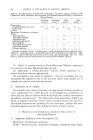
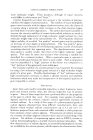
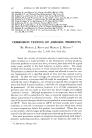
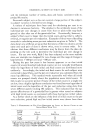
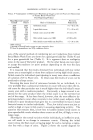
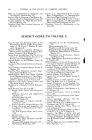
ORGANISM GROWTH IN COMMERCIAL COSMETICS 389 TABLE 4---TsE RESISTANCE OF FOrR O/W COMMERCIAL COSMETIC CLEANSING LOTIONS TO ORGANISM GROWTH DURING A PERIOD OF THREE MO-•THS* Cleansing Cleansing Cleansing Cleansing Lotion 1 Lotion 2 Lotion 3 Lotion 4 Preservatives Methyl parahydroxybenzoate O. 3 .... Propyl parahydroxybenzoate Parahydroxybenzoate esters .... 0.3 .. 0.2 ., Quaternary ammonium salt .. . 1 25 1' Sorbic acid .. 0'. 52 . i 0'.'2 i. (/.'2 .. 6.'2 Possible auxiliary preservative, propylene glycol 5 0 .. Control ......... Bacterium, P seudomona.* aeru gino sa Molds tilterr, aria tenuis ....... 4- + - dspergillus fumigalus ........ .dspergillus niger ..... 4. 4. -- 4- 3 + Cladosporium herbarum Mucor plumbeus ...... Pencillium chrysogenm Penicillium ritatum ....... q. 4. -- Rhizop•ts nigricans ........ Nonionic emulsifier system: Cleansing lotion 1--Sorbitan monoester of fatty acid/ethoxylated fatty acids, glyceride ester, and fatty alcohols---11% w/w. Cleansing lotion 2--Ethylene oxide condensates of fatty alcohols--6% w/w. Cleansing lotion 3--Sorbitan monooleate/polyoxyethylene sorbitan monGolcate--8% w/w. Cleansing lotion 4--Sorbitan monooleate/polyoxyethylene sorbitan monGolcate---8% w/w. * See Table l for guide to abbreviations and symbols. ++, heavy growth observed +, slight to moderate growth observed -, no growth apparent, C. 0/14' Baby Lotion Mineral oil, lanolin, cetyl alcohol and surfactants were combined, heated and combined with water by the method described for the preparation of the face cream, except that the emulsion was allowed to cool to room tem- perature with propeller agitation. 2. REsIsw^•c• ov T• Tvmc^L No•io•c COSMEW•C EMULSIONS TO O•O^SISM G•owwu At. Organisms Employed in the Investigation (23) Bacterium--Pseudomonas aeruginosa. Molds--Arspergillus niger, Cladosporium carpophi/um, Mucor p/umbeus, Penicillium chr. ysogenum, and Rhizopus nigrican. B. Conamination of the Samples One-hundred gram quantities of each of the three variations of each preparation containing respectively no preservative, a methyl and propyl parahydroxybenzoate combination, and sorbic acid were placed in four- ounce bottles and contaminated by surface inoculation and by stabbing with cultures obtained from the following sources:

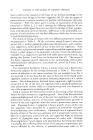
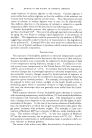
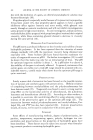
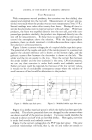
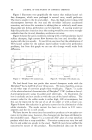
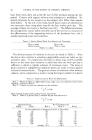
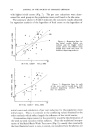
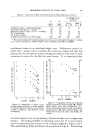
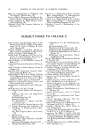
390 JOURNAL OF THE SOCIETY OF COSMETIC CHEMISTS TAm. E 5--T}•E RESISTANCE OV Two O/W COMMERCIAl. VANIS•IINO CREAMS AND Two O/W COMMERCIAL HAIR GROOMING PREPARATIONS TO ORGANISM GROWTH DURINO A PERIOD OF T•IRE r• MONT•IS Vanishing Vanishing Hair Hair Cream 1 Cream 2 Groom 1 Groom 2 Preservatives Parahydroxybenzoate esters 0.3 0.3 0.3 0.3 Sorbicacid ... (5'5 ... (515 ... (515 ... (5'5 Control .................... Bacterium, Pseudomonas aeruginosa .................. Molds Atlternaria tenuis .... + + -- 4- -- Atspergillusfumigatus ........ Atspergillus niger .... + + - -- -- Cladosporiurn herbarum ........ Mucor plurnbeus ...... + - Penicillium chrysogenum .... + + - - - Penicillium notatum Rhizopus nigricans .... 4- 4- - 4- -- Nonionic emulsifier system: Vanishing cream 1, polyethylene glycol fatty acid derivatives, 10% w/w. Vanishing cream 2, polyethylene glycol fatty acid derivatives, 10% w/w. Hair groom 1, polyoxyethylated nonyl phenol, fatty acid, and alkylolamide, 60-/o w/w. Hair groom 2, polyoxyethylated nonyl phenol, fatty acid, and alkylolamide, 6% w/w. (1) Molds--a seventy-two-hour Fluid Sabouraud Medium suspension or a seventy-two-hour Sabouraud Agar growth. (2) Bacterium--a twenty-four-hour nutrient broth suspension or a twen ty-four-hour nutrien t agar growth. All inoculations were made in duplicate. One set of samples was not inoculated but exposed to the air for one hour daily, while another set of samples was used as uninoculated controls. C. Observation of t. be Samples The samples were observed during a storage period of three months at room temperature for visible growth of micro6rganisms, production of odors and any physical change which would make the cosmetic formulation unusable or unsatisfactory. The observation data presented in Table 1 are based on samples receiving a broth culture inoculum because this source of intentional contamination produced, for the most part, quicker and more luxuriant organism growth than did the inoculum of slant cultures. 3. RESISTANCE OF COMMERCIAl. COSMETIC EMULSIONS TO ORGANISM GROWT• /t. Organisms Employed in the Investigation (23) Bacterium--Pseudomonas aeruginosa. Molds--ztlternaria tenuis, ztspergillus fumigatus, ztspergi/lus niger, Clado-
Purchased for the exclusive use of nofirst nolast (unknown)
From: SCC Media Library & Resource Center (library.scconline.org)