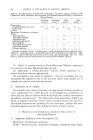
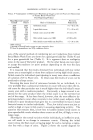
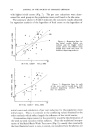
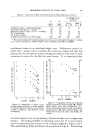
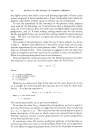
392 JOURNAl, OF THE SOCIETY OF COSMETIC CHEMISTS bases could not be assessed on the basis of our limited knowledge of the formulation even though it has been suggested (18, 23) that the degree of preservation in a cosmetic emulsion is a problem which embraces the entire formulation. With this latter point in mind, an examination of the data presented in Tables 2, 3, 4 and 5 showing the differing behavior of two preparations which appear from our restricted knowledge of their composi- tions to be identical can be attributed 1o differences in the unidentified com- ponents of each emulsion and the final differences which they in turn cause in both finished preparations. The results of testing six lotions with two different preservative systems are presented in Table 2. Of the six lotions tested, Lotion 2 when pre- served with a methyl parahydroxybenzoate/dehydroacetic acid combina- tion, supported a heavy growth of one of the nine test organisms. None of the sorbic acid preserved samples supported perceptible organism growth. Lotion 1, which appears to be equivalent to Lotion 2 flora the information available to us, supported no growth with either preservative system, sug- gesting that Lotions 1 and 2 may not be identical after all. The nature of the heavy organism growth observed in the uninoculated, methyl para- hydroxybenzoate/dehydroacetic acid preserved control for Lotion 2 was not identified. Two commerical foundation lotions, a suntan lotion and a hand lotion, formed the subjects for the testing summarized in Table 3. The concen- tration of salicylate in the suntan emulsion was not revealed to us, but it was assumed to be Jess than five per cent on the basis of the tested active ingredient contents of many currently marketed preparations of a similar nature. One of these lotions, the hand Notion, supported a slight to moder- ate growth of two of the nine test organisms with a parahydroxybenzoate ester preservative system, while no contaminant growth was observed in any of the preparations containing sorbic acid. Table 4 contains the three-month results of the testing of four cleansing lotions for their resistance to organism growth. One of the four emulsions supported slight growth with one of the nine test organisms in a sorbic acid preservative system, and two of the lotions supported heavy growths of several of the test organisms when the current preservative system was used. Cleansing Lotion 3 supported a heavy growth of one of the nine test organisms when protected by a quaternary ammonium salt/para- hydroxybenzoate ester combination. Cleansing Lotion 4 supported heavy growths of four of the nine test organisms with a preservative system sup- plied by a quaternary ammonium salt, and supported slight to moderate growth of Atspergi//us niger in the presence of sorbic acid. Although Cleansing Lotions 3 and 4 appear to be identical from the information which is available, the conflicting observations of the apparent improvement pro- tection afforded by the addition of parahydroxybenzoate esters to the

ORGANISM GROWTH IN COMMERCIAl, COSMETICS 393 quaternary ammonium salt and the effectiveness of sorbic acid when substi- tuted for the quaternary ammonium salt/phenolic ester combination but not for the quaternary salt alone could best be resolved by a comparison of the complete formulations of both preparations. The results of testing two vanishing creams and two hair grooming preparations arepresented in Table 5 and depict a situation similar to the one discussed with the cleansing creams. Both vanishing creams appeared to be of the same composition from our limited knowledge and since neither cream supported organism growth with a parahydroxybenzoate system or with a sorbic acid preservative system, no difference in composition was suggested by differing resistances to organism growth. The hair grooming preparations also appear to be the same from the composition information available and although neither preparation supported organism growth when preserved with sorbic acid, Hair Groom 1 with aparahydroxybenzoate ester system supported heavy growths of d/ternaria tenuis, dspet•i//us niger, Penicillium chrysogenum and Rhizopus nigricans, while Hair Groom 2 with parahydroxybenzoate preservatives supported only slight to moderate growths of dllernaria tenuis, Mucor plumbeus and Rhizopus nigricans. Here, again, a comparison of' complete formulations is needed to explain observations which do not coincide when the hair grooming preparations are assumed to be identical on the basis of similarities of type and concen- tration of emulsifiers and preservatives. This short study suggests that: 1. The results of an organism inhibition test of a preservative in a labo- ratory culture medium containing a nonionic surfactant are not always typi- cal of the behavior of that preservative in a finished cosmetic emulsion which includes the preservative and surfactant used in the test. Since little in the way of proven correlation exists between the results of such component testing and preservative behavior in a particular finished prod- uct is best determined at the present time by testing the finished product itself for its resistance to organism growth. 2. Combinations of parahydroxybenzoate esters and parahydroxyben- zoate esters with dehydroacetic acid, used to preserve many cosmetic products, will probably provide adequate protection for cosmetic emulsions even in the presence of nonionic surface active agents. Where these pre- servatives fail, sorbic acid appears to provide adequate protection. SUMMARY Three typical cosmetic emulsions based on nonionic surfactants xvere prepared and preserved first with a mixture of methyl and propyl para- hydroxybenzoates and then with sorbic acid. Testing of these preparations with six different micro6rganisms for a period of three months indicated that the phenolic preservatives were more effective in finished preparation
Purchased for the exclusive use of nofirst nolast (unknown)
From: SCC Media Library & Resource Center (library.scconline.org)