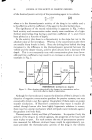
84 JOURNAL OF THE SOCIETY OF COSMETIC CHEMISTS ance is encountered by the penetrating molecule, and it passes easily into the wide channels of the dermis and on to the blood vessels. The only deterent here may be the adsorptive capacity of the mucopolysaccharides for polar substances. Some substances whose molecular size is too large for passage through the blood vessel walls are carried away by lymphatics. Smaller molecules are swept away by the rapidly flowing blood stream which maintains a high concentration gradient. But in the lymphatics, the concentration gradient declines as the concentration of penerrant rises, due to sluggish lymph flow this impedes passage of the penerrant into the lymphatics. /Increased blood flow, as in inflammation, may actually increase penetration slightly, in as much as the concentration gradient will approach the maximum. In some membranes, such as in the gastrointestinal tract, transfer of substances is assisted by the vital processes occurring within the cell. But in the skin of nonaquatic animals, there is no evidence that energy from cellular metabolism is required. As excised skin dies over a period of days, its permeability neither increases nor declines. Penetration of the skin is, therefore, entirely a process of diffusion. ABNORMAL CONDITIONS Under abnormal structural conditions, all the above limitations on pene- tration do not apply. If the barrier is destroyed by trauma, as in cuts, chapping, ruptured blisters, toxic reactions from mustard gas or in eczema, all substances pass freely into the dermis. It is this type of stress which elicits wound repair and restoration of the barrier. For superficial wounds and transient inflammation, the barrier may be restored in twenty-four to forty-eight hours. But for restoration of the entire epidermis, three weeks are required. ]Fiechanical Trauma. Of practical importance to the cosmetic chemist are the superficial scratches and punctures which occur frequently in rou- tine daily activities. Using satin tagged with pa2, Blank, eta/., demonstrated by autoradiography, as well as by chemical determination of extracts of the dermis, a striking increase in permeability following a superficial scratch extending just barely through the barrier (1). Similar data were obtained for trauma by adhesive tape stripping and puncture wounds. While sarin pours through slight scratches in the barrier, tagged deter- gents pass through scratches only in small amounts and ions, such as aluminum, hardly at all. Recent work by Blank (10) shows that sodium laurate C TM and alkylbenzene sulfonate S •5 penetrate slight breaks in the barrier in very small amounts and aluminum ions hardly at all. Chemical Trauma. Chemical damage to the barrier will occur from sol- vent extraction and exposure to pH greater than 11.5. Ether-alcohol or pyridine extraction increases the water permeability of skin 50 to 100 fold

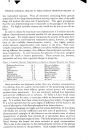
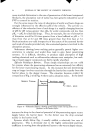
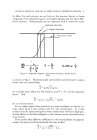
PHYSICAL CHEMICAL ANALYSIS OF PERCUTANEOUS ABSORPTION PROCESS 85 (11). Cosmetics applied to skin previously exposed t'o solvents may be expected to penetrate more readily and possibly cause irritation. Depil- atory creams and cold-wave solutions may be alkaline only if their pH is g•eater than 11.5 will the barrier be sufficiently damaged to alter permea- bility. REFERENCES (1) Griesemer, R. D., "Protection Against the Transfer of Matter Through the Skin," In The Human Integument, Am. Assoc. Advance. Sci. Pub. No. 54 (1959), pp. 2546. (2) Mali, J. W. H., 2 •. Invest. Dermatol., 27, 451 (1956). (3) Blank, I. H., Ibid., 18, 433 (1952). (4) Higuchi, T., 2 •. Soc Cosmetic Chemists, 11, 85 (1960). (5) Blank, I. H., and Gould, E., "Penetration of Anionic Surfactants into Skin. I. Pene- tration of Sodium Laurate and Sodium Dodec51 Sulfate into Excised Human Skin," 2 •. Invest. Dermatol., 33, 327 (1959). (6) Szakall, A., Fette, Seifen, dnstrichmittel, 53, 399 (1951). (7) Stoughton, R. B., "Relation of the Anatom) of Normal and Abnormal Skin to its Pro- tective Function," In The Human Integument, Am. Assoc. Advance. Sci. Pub. No. 54 (1959), pp. 3-24. (8) Selby, C. C., 2 •. Invest. Dermatol., 29, 131 (1957). (9) Treherne, J. E., 2 •. Physiol. (London), 133, 171 (1956). (10) Blank, I. H., Personal communication. (11) Blank, I. H., Personal communication. PHYSICAL CHEMICAL ANALYSIS OF PERCUTA- NEOUS ABSORPTION PROCESS FROM CREAMS AND OINTMENT S BY T. HIotycm* Presented September 23-24, 1959, Seminar, New York City PROBI•EMS ^SSOCI.•TEt) with penetration of intact skin are, of course, of great interest to both pharmaceutical and cosmetic chemists. Not only are we concerned with maximizing the rate of penetration of beneficial drugs from ointments and lotions but also in minimizing the rate of entry of toxic chemicals, as such, or from drug and cosmetic preparations. In this brief discussion I hope to review from the viewpoint of a physicat chemist some'of the factors which may govern the rate of the penetratio- process. Despite the large amount of work already carried out in this field, there is very little agreement on the basis process which is largely responsible for percutaneous absorption through the intact skin. Many workers feel that essentially all penetration occurs through the transfollicular route. Other equally recognized investigators support the view that the major pathway of entry is transepidermal through the intact cornified and transition * School of Pharmacy, University of Wisconsin, Madison, Wis.
Purchased for the exclusive use of nofirst nolast (unknown)
From: SCC Media Library & Resource Center (library.scconline.org)