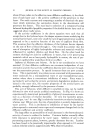
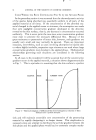
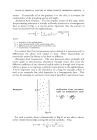
PHYSICAL CHEMICAL ANALYSIS OF PERCUTANEOUS ABSORPTION PROCESS 85 (11). Cosmetics applied to skin previously exposed t'o solvents may be expected to penetrate more readily and possibly cause irritation. Depil- atory creams and cold-wave solutions may be alkaline only if their pH is g•eater than 11.5 will the barrier be sufficiently damaged to alter permea- bility. REFERENCES (1) Griesemer, R. D., "Protection Against the Transfer of Matter Through the Skin," In The Human Integument, Am. Assoc. Advance. Sci. Pub. No. 54 (1959), pp. 2546. (2) Mali, J. W. H., 2 •. Invest. Dermatol., 27, 451 (1956). (3) Blank, I. H., Ibid., 18, 433 (1952). (4) Higuchi, T., 2 •. Soc Cosmetic Chemists, 11, 85 (1960). (5) Blank, I. H., and Gould, E., "Penetration of Anionic Surfactants into Skin. I. Pene- tration of Sodium Laurate and Sodium Dodec51 Sulfate into Excised Human Skin," 2 •. Invest. Dermatol., 33, 327 (1959). (6) Szakall, A., Fette, Seifen, dnstrichmittel, 53, 399 (1951). (7) Stoughton, R. B., "Relation of the Anatom) of Normal and Abnormal Skin to its Pro- tective Function," In The Human Integument, Am. Assoc. Advance. Sci. Pub. No. 54 (1959), pp. 3-24. (8) Selby, C. C., 2 •. Invest. Dermatol., 29, 131 (1957). (9) Treherne, J. E., 2 •. Physiol. (London), 133, 171 (1956). (10) Blank, I. H., Personal communication. (11) Blank, I. H., Personal communication. PHYSICAL CHEMICAL ANALYSIS OF PERCUTA- NEOUS ABSORPTION PROCESS FROM CREAMS AND OINTMENT S BY T. HIotycm* Presented September 23-24, 1959, Seminar, New York City PROBI•EMS ^SSOCI.•TEt) with penetration of intact skin are, of course, of great interest to both pharmaceutical and cosmetic chemists. Not only are we concerned with maximizing the rate of penetration of beneficial drugs from ointments and lotions but also in minimizing the rate of entry of toxic chemicals, as such, or from drug and cosmetic preparations. In this brief discussion I hope to review from the viewpoint of a physicat chemist some'of the factors which may govern the rate of the penetratio- process. Despite the large amount of work already carried out in this field, there is very little agreement on the basis process which is largely responsible for percutaneous absorption through the intact skin. Many workers feel that essentially all penetration occurs through the transfollicular route. Other equally recognized investigators support the view that the major pathway of entry is transepidermal through the intact cornified and transition * School of Pharmacy, University of Wisconsin, Madison, Wis.

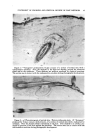
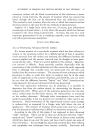
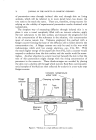
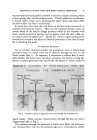
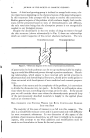
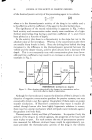
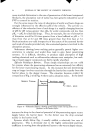
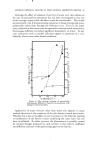
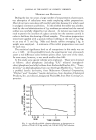
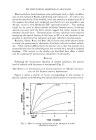
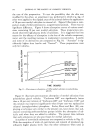
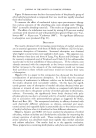
JOURNAL OF THE SOCIETY OF COSMETIC CHEMISTS layers. A third and growing group is inclined to accept both routes, rela- tive importance depending on the chemical nature of the penetrating agent. In this treatment little attempt will be made to resolve this controversy. Rather, general aspects of the problem which embrace largely both mecha- nisms will be presented based on laws of thermodynamics and diffusion, the only restriction being that the absorption process is not energetically coupled to any biological process. Despite the dissimilarity in the two modes of drug movement through the skin structure (shown schematically in Fie. 1) there are relationships which are valid irrespective of the correct absolute mechanism. The rate Transfollicular Transepidermal Figure 1.--Schematic diagram of two routes of percutaneous penetration. of penetration by both pathways can be set ,up mathematically by employ- ing as a model the diffusional process through a passive membrane. Result- ing relationships, which appear to have received only partial attention in pharmaceutical and dermatological literature, should prove useful guides to those entrusted with development of new medicinal and cosmetic prepara- tions. Because of the nature and the complexity of the problem, it is convenient to divide the discussion into two parts. In the first we will analyze situa- tions where the rate-controlling step or steps are in the skin. In the second part we will consider those cases where the thermodynamic potential drop of the percutaneously absorbed materials is largely in the applied phase such as an ointment base. , RELATIONSHIPS FOR S¾S'rEMS WHERE THE RATE CONTROLLING BARRIER Is IN THE SKIN The majority of the cases of interest to us fall into this category. The skin is a wonderfully resistant cover and it is penetrated only with difficulty by most noncaustic substances. In our discussion of this aspect of the problem of percutaneous absorption, we will treat it initially in its simplest aspects, then attempt to see what additions and modifications must be made in our formulation to better fit the real systems.
Purchased for the exclusive use of nofirst nolast (unknown)
From: SCC Media Library & Resource Center (library.scconline.org)