SOME ASPECTS OF THE ANALYSIS OF HOUSEHOLD DETERGENTS 355 separates from the aqueous layer. Subtract the blank obtained on the indicator alone. FACTORS INFLUENCING THE TITRATION These considerations apply to the Cullum method, described above. 1. pH The indicator starts changing to the yellow acid form at pI-I 4.6. Above pH 9 or thereabouts, the quaternary is appreciably converted to the free base, which is extracted by the chloroform without reacting with the deter- gent anions. The useful range of pH is therefore 4.6 to 9, and the procedure described gives a pH of about 8. 2. Indicator Any anionic indicator can be used, but bromopheno[ blue remains in its salt form at lower pit values than most other indicators, and blue seems more easily visible at low intensities than other colours. 8. Solvent Many solvents will work, but chloroform and methylene chloride give little trouble with emulsions and yield nearly stoichiometric results. 4. Titrant The following quaternaries have been tried: I)odecyl, tetradecyl and hexadecyl pyridinium bromides dodecyl, tetradecyl and hexadecyl trimethylammonium bromides cetyl and stearyl pyridinium chlorides cetyl and stearyl benzyl dimethylammonium chlorides cetyl trimethylammonium halides. "Hexadecyl" etc., indicates the pure single homologue "cetyl" etc., indicates the mixture of homologues constituting the usual commercial materials. Primary ammonium salts have also been used with complete success, but the pH range (4.6 to 5-2) in which they are useful is too narrow for practical purposes. The identity of the halide ion is quite immaterial. 5. Soaps Soaps do react quantitatively under suitable conditions, but in this titration their effect is like that of a buffer in an acid-base titration. They must therefore be removed, if present in the detergent under examination.

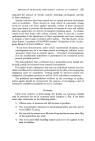
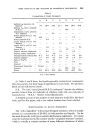
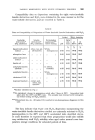
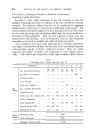
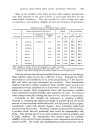
356 JOURNAL OF THE SOCIETY OF COSMETIC CHEMISTS 6. Short-chain sulphonates Sodium toluene sulphonate and sodium xylene sulphonate do not inter- fere when present at the concentration levels at which they are normally present in household detergents. 7. Stoichiometry In order to determine whether the procedure described led to titration in stoichiometric proportions, the method was tested by preparing standard solutions of pure single homologues of both anionic and cationic surface agents, and titrating each member of the first group with each member of the second. The following results were obtained: Table 4 Check on stoichiometry error Anionic DPB TPB HPB DTAB TTAB HTAB SDS .. +4-2 +4.4 +4.6 +0-5 +0.7 +1.1 +4.4 +4.3 +4.8 --0.3 --0.1 0 STS .. +4.5 +4.8 +4.3 --0.4 --0.2 --0.1 +5.1 +4.9 +4.4 +0.1 +0.1 +0.5 SHS .. +4.7 +4.7 +4.5 +1.1 +0.6 +1-0 +5.1 +4.9 +5.3 +0.6 +0.6 +0.7 SDS = sodium dodecyl sulphate STS = sodium tetradecyl sulphate SHS = sodium hexadecyl sulphate DPB = dodecyl pyridinium bromide TPB : tetradecyl pyridinium bromide HPB : hexadecyl pyridinium bromide DTAB = dodecyl trimethylammonium bromide TTAB = tetradecyl trimethylammonium bromide HTAB = hexadecyl trimethylammonium bromide Upper figures refer to experiments with chloroform as solvent. Lower figures refer to experiments with methylene chloride as solvent. It is not yet known why the two groups of quaternaries yield such different results. Considering the value of the detergent industry's annual output, it would be reasonable to expect that this technique would have been very rigorously studied and a very precise analytical method developed. This is very far from being the case, and there are many facets of the process about which little or nothing is known. Here, indeed, is a fruitful field for the research analyst.
Purchased for the exclusive use of nofirst nolast (unknown)
From: SCC Media Library & Resource Center (library.scconline.org)