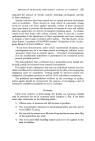
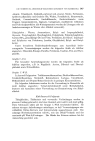
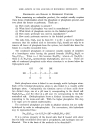
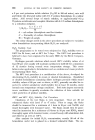
LANOLIN DERIVATIVES WITH DILUTE HYDROGEN PEROXIDE to hair and scalp. Emollient lanolin derivatives have been included in bleaching lotions, creams, and solutions and in neutralizing and oxidizing preparations as well, with a view toward protecting, modifying, coating, adding lustre and improving manageability of treated hair. It may seem a rather optimistic viewpoint to hope for such improvements and protective effects while the hair is undergoing drastic chemical and physical changes, but the so-called "conditioning action" of emollient and superratting additives has been fairly well established. Oil-soluble !anolin derivatives and cholesterol are often used for this purpose as well as water-soluble derivatives resulting from the ethoxylation of various lanolin derived materials •-0. There is some evidence that surface active lanolin derivatives take a lunctional part in bleaching and dyeing, by solubilizing and assisting in the penetration and deposition of hair dyes which are to be oxidized with peroxide, resulting in more uniform bleaching and dyeing action. This is an area in which much investigational work is now going on. Lanolin derivatives are also used for clouding, thickening and emulsifying dilute hydrogen peroxide solutions, thereby giving them cosmetic elegance and improving the ease of application of the product 4. Because of present interest in the inclusion of lanolin derivatives in hydrogen peroxide-containing products, and the obvious potential for future growth of this type of product, it was felt that data on the compatibility of lanolin derivatives with hydrogen peroxide would be of value to the cosmetic industry. The present investigation was undertaken to fill some of the gaps in our knowledge in this field. In addition to making simple compatibility studies of soluble products, dispersed systems were developed for water-insoluble materials, and emulsified oxidizing lotions were formu- lated with lanolin derivatives known to have good hair conditioning pro- perties. Methods of determining the stability of H •0 • in the various systems are described along with a detailed procedure for the quantitative analysis of H•O• in these systems. PRODUCTS TESTEr) Six water-soluble and eight water-insoluble lanolin derivatives were ,evaluated for compatibility in the presence of 6 per cent hydrogen peroxide. In addition, eight emulsified H•O• lotion formulations containing various _lanolin derivatives were studied for H•O• and emulsion stability. Fig. 1 illustrates the chemical nature and derivation of the lanolin products. All the lanolin derivatives employed in this study had previously been bleached with hydrogen peroxide as part of their processing on a ,commercial scale. Although normally slight surface oxidation does take place in lanolin, lanolin alcohols and cholesterol when exposed to air for

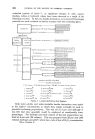
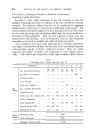
JOURNAL OF THE SOCIETY OF COSMETIC CHEMISTS extended periods of time 8-•, no significant changes in acid, saponi- fication, iodine or hydroxyl values have been observed as a result of the bleaching reaction. In fact, the lanolin derivatives so treated with hydrogen peroxide are quite resistant to further reaction with this oxidizing agent. -acylation (acet,•j LANOLI N -ethoxylation (75 moles EO) , -solvent fract•onation I sapon?cation T0½AL !l FATTY Iesterification(,soIlanolate'IsopropylI Acetylated lanolin**' I I Ethoxylated Innolin: I ILanolin oil' I fract•ønat•ønlsuI•Iextract'extractUSPJcholesterol'base-mult•-sterotmulti-sterolJSolidEO/--IEthoxylated,•lLiquid[Absorption[Cholesterolmoes/24fract•onation•blend•ng/ethoxyat,on-further-crystallizationFACE adsøiptiøn I extraction I ACT I V E i •-(16 moles EO)dEthoxylated lanolin alcohols'" I --ethøxylatiøn-L(25 moles EO)--IEthoxylated lanolin r(acetic)-fract•onatlon•Acetylated lanolin alcohols •: esterification-I , • I I L(ricinoleic) ILanolin alcohols ricinoleate / •--acetyiation lPamally acetylareal ethoxylated ester t• I I.
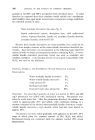
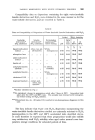
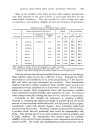
IALCOHOLS et box latlon • -k•cet•,•tion Com• acet•7•'7/eth•'•x•atT• •er,• l WATER SOLUBLE --WATER INSOLUBLE **U.S. Patent 2,725,334 British Patent :::784,465 and other foreign patents I. Modulan © 6. Amerchol©CAB II. Solula?25 2. Solulan©75 7. Amerchol©H-9 12. Acetulan © 3. Viscolan © 8. Amerchol©Cholesterol USP 13. R•olan©B 4. Amerlate©P 9. Solulan©C-24 14. Solulan©98 5. Amerchol©L-101 10. Solulan©16 15. Solulan©9 - Figure 1. Lanolin derivatives flow diagram Both water-soluble and water-insoluble lanolin derivatives were tested in the highest concentration at which they might normally be used in peroxide-containing preparations. This was set at 5 per cent although it was felt that they generally would be employed at considerably lower percentages. The hydrogen peroxide content of the test preparations was fixed at 6 per cent (20 volume). This was prepared from 35 per cent (130 volume) hydrogen peroxide*, which has a rate of loss of H202 concentration_ *Becco Formula D.
Purchased for the exclusive use of nofirst nolast (unknown)
From: SCC Media Library & Resource Center (library.scconline.org)