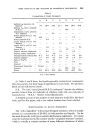
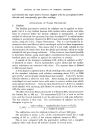
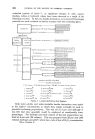
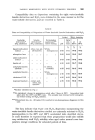
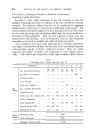
LANOLIN DERIVATIVES WITH DILUTE HYDROGEN PEROXIDE 369 Compatibility data on dispersions containing the eight water-insoluble lanolin derivatives and H202 were obtained in the same manner as for the water-soluble derivatives, and are recorded in Table 2. Table 2 Data on Compatibility of Dispersions of Water-Insoluble Lanolin Derivatives with H•O• Initial H•O2 Stability Insoluble Soluble Formulation H•O2 derivatives* derivatives* appearance** con- at at (5% additions) (5% additions) before testing pH tent 100øC 66øC % % % liquid multi-sterol ethox. lan. alc. White, extract .... (16 mol EO) homogeneous 5'00 6.01 99.0 99'5 absorption base ............ 5.00 6.04 99.2 99.7 solid multi-sterol extract .............. 5.05 5.99 99.0 99.5 lanolin oil .............. 4.50 6.00 95.7 99'0 acetylated lanolin sl. yellow, alcohols .......... stratified 4.55 6'02 98.5 99.2 acetylated lanolin ........ White, homogeneous 4.40 5.98 94.7 98 '9 cholesterol USP ............ 4.25 6.03 90.6 91'9 isopropyl lanolate.. compl. acer ..... 4.35 5.98 98.0 99'3 ethox. lan. ester*** *Further identified in Fig. 1. **No significant change in appearance noted after 7 days at 25øC. Separation took place after the 100øC and 66øC tests. The samples were remixed until homogene- ous before testing for H•Oz stability. ***Ethoxylated lan. alc. (16 moles EO) resulted in non-homogeneous dispersion in this case. The data indicate that 6 per cent H20• dispersions incorporating the water-insoluble lanolin derivatives studied are extremely resistant to H202 decomposition in the 66øC and 100øC accelerated tests described above. It could therefore be expected that these preparations would also exhibit very satisfactory shelf H202 stability when aged under normal room tem- perature storage conditions for extended periods of time.

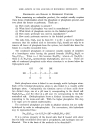
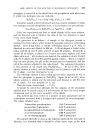
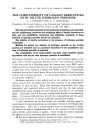
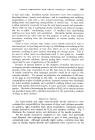
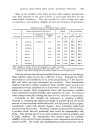
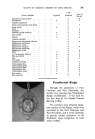
370 JOURNAL OF THE SOCIETY OF COSMETIC CHEMISTS The Stability of Hydrogen Peroxide in Emulsion Formulations containing Lanolin Derivatives In order to draw valid conclusions it was felt necessary to test the stability of hydrogen peroxide in emulsions of the type used in the cosmetic industry. Formulations utilized here are to be considered as suggested starting points which may be varied to meet individual requirements. The various lanolin derivatives employed in these formulations have been tested by the usual procedures for establishing safety, and have been found non- irritating and hypo-allergenic. Wide use over a period of many years has substantiated these findings. It is recommended, however, that completed formulations be tested to establish the safety of finished products. These emulsions were made using lesser amounts of lanolin derivatives, and higher concentrations of fatty alcohols than in the previously described water-insoluble lanolin derivative dispersed systems. They are better balanced, have higher viscosities, and, in general, are more elegant cosmet- ically. Table 3 gives the composition of the eight emulsified H20• lotions. Table 3 Emulsified H202 Lotions (See also Fig. FORMULA A V C D E F G H Oil Phase I iq. Multi-sterol Extract Sol. Multi-sterol Extract Absorption Base .. Acer. Lanolin .... Acet. Lan. Alcohols .. Lan. Alcohols Ricinoleate Cholesterol USP .. Ethox. Lan. Alc. (16 mol EO) Ethox. Cholesterol .. Cetyl Alcohol NF .. Stearyl Alcohol USP .. Mineral Oil 70 vise .. % 3'0 1'0 % % % % % % % 5-0 -- 2.0 2.0 2.0 -- -- ..... 2.0 -- ...... 2.0 -- -- -- -- -- 1.0 -- -- -- .... 1.0 -- -- 0.1 -- 4.0 4.0 4.0 4-0 4.0 4-0 3.0 2.5 -- 3.0 3.0 3-0 -- -- 2-5 3.0 -- -- -- 3.0 3-0 -- 2.9 -- -- -- 1'0 1.0 Water • Phenacetin USP .. Phase [_Water, deionized .. 0.04 72.• 1 Hydrogen Peroxide 35% .. 17.15
Purchased for the exclusive use of nofirst nolast (unknown)
From: SCC Media Library & Resource Center (library.scconline.org)