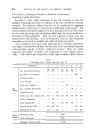
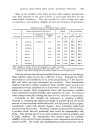
372 JOURNAL OF THE SOCIETY OF COSMETIC CHEMISTS CONCLUSIONS From the results of the hydrogen peroxide stability tests it is apparent that very little reaction between lanolin derivatives and hydrogen peroxide takes place. This is confirmed by the very low degree of oxiderive changes which take place in lanolin products on ageing. There is a direct correlation between the results of the accelerated ageing tests carried out at 100øC and 66øC, and stability on the shelf at room tem- perature. A product which retains 90 per cent of its hydrogen peroxide in either of the tests could be expected to retain at least 90 per cent for 12 months on the shelf. As the stability approaches 100 per cent by these procedures, as it has in some of the data presented, the room temperature shelf-stored products could also be expected to approach 100 per cent retention of activity for at least a year. (Received: 4th July 1962) REFERENCES • yon Schr6tter, A., Ber. 7 980 (1874) z Goldemberg, R. L., Drug and Cosmetic Ind. 89 446 (1961) a Cass, G. S., Am. Perturner A•'omat. 68 25 (1956) (1) 4 French Pat. 946,665 5 Benk, E., Seifen-(•le-Fette-Wachse 75 481 (1949) 0 Spanish Pat. 207,526 ? Becco Bulletin No. 42 (FMC Corporation, N.Y.) s Conrad, L. I., iVfotiuk, K., and Maso, It. F., J. Soc. Cosmetic Chemists 11 415 (1960) 9 Gillam, BI. W., Australian Chemical Institute Journal and Proceedings 14 361 (1947) •0 Kitchen, G. F. and Clark, E. W., Pharm. Industrie 22 5 (1960) • Muirhead, G. S. et al., y. Pharm. and Pharmacol. I 762 (1949) BOOK REVIEW ANGEWANDTE CHEMIE. International Edition in English. Monthly. Academic Press Inc. (London), Ltd., London. Annual Subscription--oe5 7s. 6d., plus postage. Academic Press, Inc., New York. Verlag Chemie, G.m.b.H., Weinheim/Bergstr, Germany. The journal Angewandte Chemie will need no introduction to most chemists and the publication of an International Edition in English, available from the beginning of 1962, will be generally welcomed. Each issue of the new edition will contain a series of review articles drawn from all fields of chemistry, together with selected papers from the affiliated journal Chemie- Ingenieur-Technik. At the same time, issues will also include Communica- tions on chemical research, Reports on European Conferences in the form of abstracts of lectures covering unpublished results, plus Selected Abstracts from the International Chemical Literature and Book Reviews.

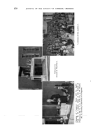
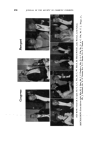
INTERNATIONAL FEDERATION OF SOCIETIES OF COSMETIC CHEMISTS 373 Some indication of the width of interest covered is shown by the titles of the articles appearing in the first issue :. Non-enzymatic synthesis of polysaccharides, nucleosides, and nucleic acids a-Additions of immonium ions and anions to isonitriles Pilot plant for the enrichment of heavy water Chemical reactions in the atmosphere NMR-Spectroscopy of phosphorus Mixed-phase pigments with rutile structures One claim the publishers make is for the originality of the contents of this new edition, as no translation will appear whenever a similar article is already available in English. As expected, this new publication sets a high standard both as regards production and translation. The cosmetic chemist may find relatively little that is of specific interest in his work but should find much of general interest, particularly if he wishes to keep up with developments in related fields such as biochemistry. D. E. BUTTERFIELD. INTERNATIONAL FEDERATION OF SOCIETIES OF COSMETIC CHEMISTS Second Congress THE SECOND International Congress of Cosmetic Science, organised by the Society of Cosmetic Chemists of Great Britain, was held in London from 2nd-6th July 1962. It was attended by 270 participants from Austria, Belgium, Canada, Czechoslovakia, Denmark, France, Germany (West), Greece, Italy, Japan, Netherlands, Spain, Sweden, Switzerland, U.S.A. and the host country. Participants and their guests totalled 450. On the first evening, a reception was held at the Apothecaries Hall in the City of London, at which participants and guests were received by the President of the Society of Cosmetic Chemists of Great Britain and his lady, and by Mr. A.M. A. Moore, F.R.C.S., Master of the Worshipful Society of Apothecaries of London. The formal opening of the Congress took place on Tuesday morning, 3rd July, in the lecture theatre of the School of Pharmacy (University of London), Brunswick Square, London, W.C.1, where all scientific sessions were held. Mr. A. Herzka, Chairman of the Congress, introduced Professor W. H. Linnell, D.Sc., Ph.D., F.P.S., F.R.I.C., Dean of the School of Pharmacy, who extended a welcome to the Congress on behalf of the School. He was followed by Dr. L.-W. Masch, President of the International Federation,
Purchased for the exclusive use of nofirst nolast (unknown)
From: SCC Media Library & Resource Center (library.scconline.org)