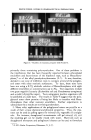
472 JOURNAL OF THE SOCIETY OF COSMETIC CHEMISTS SUMMARY AND CONCLUSIONS In summarizing the results of this fragrance/color interaction study, it is concluded that color in the environment has a strong influence on per- ceived fragrance qualities. This study did not attempt to explore the full range of colors nor cover the many classes of fragrance available to a con- sumer. Instead, the work illustrates some of the implications and the importance of the use of color in conjunction with fragrance marketing. Similar data have been compiled by our organization for foods, beverages and appliances, and it has been found that marketing effectiveness has been based on sound consumer research. (Received January 17, 1964 •. REFERENCES (1) N. Schwartz and D. Foster, Proc. Sci. Sect. Toilet Good! zissoc. No. 27, 32 (1957). (2) C. W. Dunnett, 7- Arm. Star. zi.rsoc., 50, 1096 (1955).

J. soc. cos. CHEM. 15, 473-483 (1964) SOME USES AND APPLICATIONS OF POLYGLYCEROL ESTERS IN COSMETIC AND PHARMACEUTICAL PREPARATIONS By V. K. B^B^¾AN, B.S., T. G. KAufMaN, B.S., H. L•.•Mx•, B.S. and R. J. T•aczuK, M.S.* Presented November 6, 1963, New York Chapter ABSTR> Polyl•lycerol esters as a class of emulsifiers having a wide range of hydrophilic-lipophilic characteristics have been prepared and charac- terized. Their properties and characteristics are discussed and com- pared with those of other groups and classes of emulsifiers. Applications and uses of the polyl•lycerol esters are discussed, with particular emphasis on their use as emulsifiers. It is shown that some esters are especially suitable for use and give the most stable W/O emul- sions with certain oils. In addition, the results of microbiological tests are given, indicating that hydrophilic polyl•lycerol esters do not interfere with the bacteriostatic action of G-11. INTRODUCTION The large number of emulsifiers that is currently available to the cosmetic and pharmaceutical industries is generally divided into four classes: anionic, nonionic, cationic and amphoteric. Typical examples of anionic emulsifiers are materials such as soaps, sodium lauryl isethionate, sulfated oils, etc. Anionic surfactants have the advantages of being use- ful in small concentrations however, they are sensitive to the presence of other ions, acids and cationic emulsifiers (1). In addition, their internal use is limited. Typical examples of nonionic emulsifiers are materials such as poly- ethylene glycol esters, sorbitan and polyoxyethylene sorbitan esters, ethoxylated fatty alcohols, alkanolamides, etc. Nonionic emulsifiers de- * Drew Chemical Corp., Boonton, N.J. 473
Purchased for the exclusive use of nofirst nolast (unknown)
From: SCC Media Library & Resource Center (library.scconline.org)