474 JOURNAL OF THE SOCIETY OF COSMETIC CHEMISTS pend chiefly upon ether linkages and hydroxyl groups to create their hy- drophilic action. Since they do not ionize, they are claimed to be the least irritating of emulsifiers (1). However, nonionics and especially those that are ethoxylated have been reported by many authors to inac- tivate preservatives (2-7). The most frequently encountered cationic emulsifiers are quaternary ammonium compounds such as stearyl dimethyl benzyl ammonium chloride. Cationic emulsifiers are generally stable only at neutral and acid pH's, are considered to be the most irritating class of surfactants, and are not allowed for internal use (8). In addition, there are relatively few cationic edible and W/O emulsifiers available. Thus, there is a definite need for a new class of emulsifiers which is edible, covers a wide range of hydrophilic-lipophilic properties and is nonethoxy- late& This has become particularly important with the establishment of stringent controls on food, drug and cosmetic ingredients and additives. THE POLYGLYCEROL ESTERS Although polyglycerol esters have been known for over thirty years, very little has been written and even less use has been made of their unique physical and chemical properties. The major reason for this neglect is, perhaps, the difficulties of preparing materials with reproducible results (9). In recent years, suitable methods have been developed, and patents for the preparation and analysis of the polyglycerols and polyglycerol esters are now pending (10). The status of the polyglycerol esters can be summed up as follows: 1. Polyglycerol esters are prepared from glycerine, fats and oils and fatty acids. 2. Functionality can be built into the structure as desired, ranging from complete oil solubility to complete water solubility. 3. Tailor-made emulsifiers from polyglycerols can be made to suit or fit the needs of the cosmetic and pharmaceutical industries. 4. A process has been developed in our laboratories which yields products of good color, odor and flavor. 5. They are readily available, and the cost is within reason. 6. The human body is able to utilize the polyglycerol derivatives just like the common fats and oils (12). 7. No accumulation or toxic effect could be found in the usage of poly- glycerol esters even when used as the sole source of fat. As products that could achieve low or high molecular weight, solid or liquid consistency, water or oil solubility in the complete absence of toxicity, these polyglycerol esters became a welcome addition to the line of ac- ceptable emulsifiers once the F.D.A. gave the necessary clearance to their use.

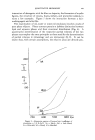
POLYGL¾CEROL ESTERS IN PHARMACEUTICAL PREPARATIONS 475 TABLE I--SOME PHYSICAt, AND CHEMICAL CHAR.ACTEKISTICS OF POLYGLYCEKOLS Molecular Number of Calculated Found Specific Compound Weight OH Groups OH Value OH Value Gravity Glycerol 92 3 1830 1828 1.24 Di-glycerol 166 4 1352 1320 Tri-glycerol 240 5 l 169 1166 l'. • Tetra-glycerol 314 6 1071 1082 ... Penta-glycerol 388 7 1012 1028 Hexa-glycerol 462 8 970 1010 1"2'4 Hepta-glycerol 536 9 941 972 ... Octa-glycerol 610 10 920 951 ... Nona-glycerol 684 11 903 903 Deca-glycerol 758 12 880 888 l' • Polyglycerols are prepared by the polymerization of glycerine under alkaline conditions. The process has been recently developed, and a patent is pending with the U.S. Patent OfFice. The controlled polym- erization of glycerol to yield a specific molecular weight polymer produces water white to pale yellow products with pleasant odor and flavor. The polyglycerols thus prepared are then esterified with specific fatty acids or subjected to alcoholysis or ester exchange to prepare a mixed fatty acid ester. Thus, a hexaglycerol monostearate may best be made by reacting hexaglycerol with stearic acid, while a hexaglycerol coconut oil ester may best be prepared by the alcoholysis of coconut oil with hexaglycerol. Investigations thus far indicate that the polymerization of glycerol is progressing in a straight line manner without cyclization or ring formation. Although Markley (11) indicates cyclic structure formation, we have not been able to identify the presence of any ring structures in our product. Work is continuing to shed light on the mechanism of this reaction, but it appears, at present, that the polymerization gives rise to the type of chain growth which is shown below: OH OH H H OH H H OH OH HC C--C-4)--C--C--C---O--C--C C--H H H H H H H H H H The polymerization can continue in this manner, with the terminal hy- droxyl groups forming ether linkages by elimination of water. CHEMICAL AND PHYSICAL PROPERTIES The polyglycerols have the characteristics normally associated with polyols. They are water-soluble in all proportions and have excellent emollient and humectant properties. They differ from glycerol mainly in that the viscosity increases as the chain length does. Table I shows some
Purchased for the exclusive use of nofirst nolast (unknown)
From: SCC Media Library & Resource Center (library.scconline.org)