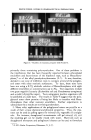
476 JOURNAL OF THE SOCIETY OF COSMETIC CHEMISTS of the chemical properties of polyglycerols, starting with the single glycerol molecule and going up to the decaglycerol molecule which contains 10 moles of glycerol. It should be noted that there will always be two more hydroxyl groups than there are moles of glycerol. These figures show the numerical increase in the hydroxyl groups in each polyglycerol as the poly- mer is increased in size and molecular weight. Also, the calculated hy- droxyl values and the actual hydroxyl values obtained by analysis are given to demonstrate the correlation between hydroxyl value and molec- ular weight. It has been possible to prepare polymers from diglycerol (2 moles of glycerol) to tricontaglycerol (30 moles of glycerol) in the initial stages of polymerization. The polyglycerols are high-molecular weight, water- soluble fluids which may be used as thickening agents, humectants, chemi- cal intermediates and for other purposes. One or more of the hydroxyl groups present in a polyglycerol molecule may be esterified thus, since decaglycerol contains 12 hydroxyl groups, any ester from mono to dodeca may be prepared. Since any number of fatty acids may be used in the esterification, the number of possible poly- glycerol esters becomes virtually unlimited. These polyglycerol esters may be liquid to waxy saturated or unsaturated low to high molecular weight and hydrophilic or lipophilic, depending on the number of hy- droxyl groups that are reacted with the fatty acids and/or oils in question. Polyglycerol esters ranging from complete oil solubility to complete water solubility may be prepared, with the possibility of many intermediate properties between these two extremes. Therefore, it becomes possible to synthesize an entire class of emulsifiers, tailor-made to perform any specific function. Table II illustrates some of the chemical and physical proper- ties of a selected list of the polyglycerol esters, and Table III shows their solubilities in various solvents. Regardless of the molecular weight of the polyglycerol and regardless of the type of fatty acid or amount of such fatty acid present in the poly- glycerol ester, feeding studies (12) have indicated that such esters are completely nontoxic and are degraded fully by the body to yield glycerol and the fatty acid. Why a three-carbon ether linkage should be utilized by the body while a two-carbon ether linkage of the polyoxyethylene prod- ucts should not be utilized is not clearly understood. The repeated re- sults of testing, however, leave no question that this is true. Based on these feeding studies, which were conducted with saturated and unsatu- rated esters of polyglycerol ranging from two to thirty moles of glycerine, the F.D.A. not only gave approval on the use of these polyglycerol esters in food but also placed no limits on the amounts that could be used (13). This F.D.A. approval currently covers esters up to and including the decaglycerol esters of the fatty acids derived from corn, cottonseed, lard,

POLYGLYCEROI. ESTERS IN PHARMACEUTICAL PREPARATIONS 477
Purchased for the exclusive use of nofirst nolast (unknown)
From: SCC Media Library & Resource Center (library.scconline.org)