478 JOURNAL OF THE SOCIETY OF COSMETIC CHEMISTS

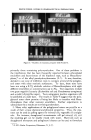
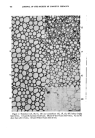
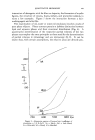
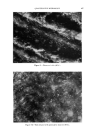
POLYGLYCEROL ESTERS IN PHARMACEUTICAL PREPARATIONS 479 palm fruit, peanut, safflower, sesame and soybean oils, and tallow. Fur- ther approvals are expected in the near future. APPLICATIONS 1. Since a number of these esters are lipophilic in nature, they should constitute a family of W/O emulsifiers with a particularly wide range of properties. The literature contains many references to work on the selection of suitable O/W emulsifiers for various oils (14-15), but ap- parently little such work has been done on W/O emulsions in fact, difFi- culties had been encountered in preparing stable W/O emulsions with vegetable oils as the external phase (16). It seemed important, there- fore, to test a series of the polyglycerol esters as W/O emulsifiers for various oils to determine the most suitable polyglycerol ester for emulsification of each oil. The following oils were used: two grades of mineral oil isopropyl myristate peanut oil Neobee MSS* NeobeeO•* corn oil Robanent and lanolin oils. The tabulated materials were employed as emulsifiers: 1. A 50/50 mixture of decaglycerol dodecaoleate and decaglycerol deca- oleate. 2. A 50/50 mixture of decaglycerol decastearate and decaglycerol deca- oleate. 3. Decaglycerol decaoleate. 4. Decaglycerol hexaoleate. 5. Decaglycerol octaoleate. 6. Decaglycerol tetraoleate. 7. Sorbitan sesquioleate (as control). All emulsions were prepared in 500 g. quantities, using 65% oil, 25% water and 10% emulsifier. The oil (containing the emulsifier) and the water were heated separately to 78 ø C, and the water was slowly added to the oil phase using rapid agitation, mixing being continued for 30 minutes. The emulsions were observed initially, after one and three days, after one and two weeks and after one month. Figure 1 shows the series using light mineral oil as the external phase after intervals of one day and one and two weeks respectively. Figure 2 shows the equivalent series for heavy mineral oil. It is noted that the greatest stability was obtained with decaglycerol tetraoleate (10-4-0). Similar results were obtained with isopropyl myristate and with Robane. Figure 3 shows a similar series using Neobee O as the external phase. In this case, the best stability was obtained with a blend of decaglycerol decaoleate * Neobee is Drew Chemical Corporation's trademark for synthetic triglycerides. t Robane is Robeco Chemicals' Inc. trademark for hydrogenated squalene.
Purchased for the exclusive use of nofirst nolast (unknown)
From: SCC Media Library & Resource Center (library.scconline.org)