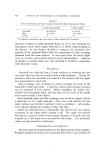
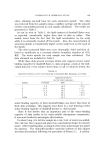
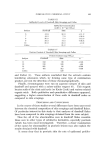
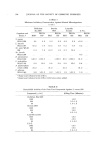
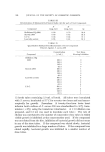
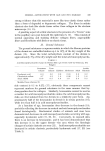
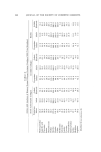
SKIN SUBSTANTIVITY 505 DISCUSSION From the data obtained in the bacteriostatic and bactericidal tests (Tables I and II), it was evident that there was no significant difference in the antimicrobial activity of the four test compounds. Each of the four compounds was effective against a spectrum of microorganisms in the absence or presence of horse serum, and low concentrations of all the compounds were bactericidal. Hence, these criteria did not offer a means of judiciously selecting any one compound from the group for topical use. However, the skin substantivity results offered a means not only of selecting compounds for topical use but of selecting the com- pound best suited for a specific need. The data presented in Table III indicated that all four compounds were substantive to the skin tissue and that C.P.C. and Laurodin acetate had a greater avidity for the skin than either of the other two compounds. If the only criterion for selecting a compound for use in a topical preparation were the property of skin substantivity then these data (Table III) would be sufficient for selection of the best compound for topical use. If the criteria for selection of a compound are extended beyond the property of skin substantivity to include the elution char- acteristics of active material, additional data would be required. Such data were obtained by titration of the active material released from the skin discs. The data in Table IV indicate that if the selection of a compound were to be based on the elution of active material for an extended period of time then selection of Laurodin acetate as the com- pound of choice would be indicated. If, however, the criterion for selection were the retention of the compound at the site of application then the selection of Hollichem HQ 3300 would be indicated. If rapid release of all or nearly all of the compound were desired, then the selec- tion of Sterwin #904 would be indicated. SUMMARY Skin substantivity of quaternary antimicrobial agents, which may have utility for topical application, was studied by several methods. By use of the described methods, it was possible to determine whether an antimicrobial agent had calf skin substantivity. Once this fact was ascertained, it was possible to determine whether the compound was bound irreversibly to the skin if not, it could be shown whether the active material was released rapidly or slowly from the skin. From such

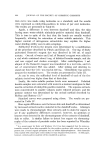
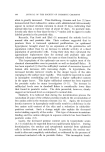
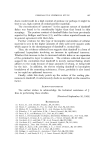
506 JOURNAL OF THE SOCIETY OF COSMETIC CHEMISTS information and from knowledge of the intended usage the selection of the compound best suited for a particular type of topical formulation can be made. (Received September 3, 1964) REFERENCES (1) Circular 198, United States Food and Drug Administration Methods of Testing Antiseptics and Disinfectants, U.S. Dept. Agriculture, 1931. (2) Vinson, L. J., Ambye, E. L., Bennett, A. G., Schneider, W. C., and Travers, J. J., J. Pharm. Sci., 50,827 (1961). (3) Rammelkamp, C. H., i'roc. Soc. Exptl. Biol. Med., 51, 95 (1942).
Purchased for the exclusive use of nofirst nolast (unknown)
From: SCC Media Library & Resource Center (library.scconline.org)