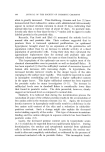
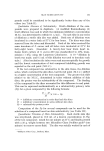
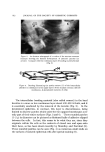
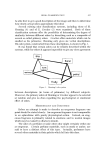
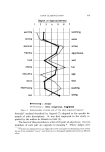
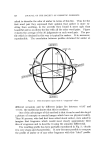
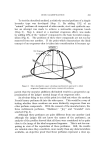
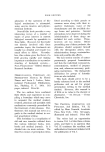
ODOR CLASSIFICATION 523 To test the described method, a relatively neutral perfume of a simple lavender type was developed (Step 1). By adding 15% of an "animal" perfume oil composed of nitro musks, civet and synthetic am- ber an attempt was made to achieve a noticeable erogenous touch (Step 2). Step 3, aimed at a maximal erogenous effect, was made by adding 40% of the "animal" compound to the basic lavender compo- sition (Fig. 6). The positions of these three compounds are not too far removed from one another. If the point which characterizes the ideal concept of an erogenous odor is taken into consideration it becomes ap- I ACTIVITY' I Ideal Erogenous Scanda Figure 6. Odor description space showing experimental approach to ideal erogenous fragrances and some commercial perfumes parent that the stepwise additions did indeed result in a progressive ap- proximation of the judges' mental image of an erogenous odor. An obvious thing to try at this point is to find out where the modern French luxury perfumes fit into the odor space. This would be a way of testing whether these creations are more distinctly erogenous than are other perfume compounds. With the consent of the manufacturers, the three well-known perfumes, "Shalimar, .... Joy" and "Scandal" were selected (Fig. 6). Although these perfumes are quite different from one another (and although the judges did not know the names of the perfumes), an analysis of the profiles showed that all three were considered to be quite close to the image of the ideal erogenous fragrance. This is not too sur- prising in view of the reputation of these perfumes. Still, the results are valuable since they constitute, more nearly than any data heretofore available, an objective proof that these perfumes represent a close ap-

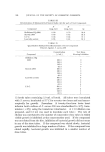
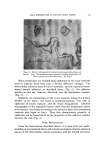
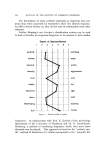
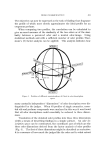
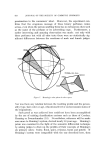
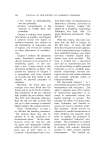
524 JOURNAL OF THE SOCIETY OF COSMETIC CHEMISTS proximation to the consumers' ideal. Moreover, the experiment con- firms that the erogenous message of these luxury perfumes comes across, even when the person smelling them has no extraneous clues such as the name of the perfume or its advertising copy. Furthermore, a rather interesting and amusing observation was made: not only with these perfumes but with all odor tests there were no statistically sig- nificant differences between the reactions of male and female judges. b•7a• HENNING's Odor Prism resl• Figure 7. Henning's odor prism in odor space Nor was there any relation between the resulting profile and the person- ality type, hair color or age, educational level or socioeconomic status of the respondents. Such proof as was achieved here could not have been accomplished by the use of existing classification systems such as those of Crocker, Henning or Zwaardemaker (10). Nevertheless, reference will be made once more to Henning's system, devised nearly 50 years ago. Henning's prism was examined in the light of the semantic differential technique by asking judges to draw up the profiles of their concepts of Henning's six primary odors: fruity, floral, spicy, resinous, burnt and putrid. If Henning's system were compatible with the one described here, then
Purchased for the exclusive use of nofirst nolast (unknown)
From: SCC Media Library & Resource Center (library.scconline.org)