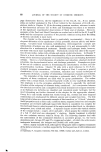
JOURNAL OF THE SOCIETY OF COSMETIC CHEMISTS tions. In their procedure, the hexachlorophene was extracted from the product with alkali and then isolated, by acidifying this extract, prior to the spectroscopic determination. A similar determination has been reported by Elvidge and Peutrell (3), which was based on the "difference" absorption at 312 mt• of the sample in a solution buffered at pH 8.0 and in a solution buffered at pH 1.4. Such procedures suffer from the disadvantage that deodorants usually contain aluminium compounds as antiperspirants, which, on treatment with alkali, produce a gelatinous precipitate of aluminium hydroxide with is difficult to remove. In the present communication, which describes a rapid method for the determina- tion of hexachlorophene in powdered personal deodorants, this difficulty is overcome by the use of acidic methanol. The method is based on the absorbance at 33.8 Kcm -• (296 mr,) of an acidic methanol extract of the product. The presence of a chloroxylenol is readily detected at 35.8 Kcm -• (279 ms) and is determined simultaneously. EXPERIMENTAL The spectra were determined on a Unicam SP 700 recording UV/near IR spectrophotometer in 10 mm silica cells. The reference data for hexachlorophene and the chlorinated xylenols was obtained by weighing approx. 100 mg of the phenol into a 50 ml graduated flask and diluting to volume with N/10 methanolic HC1 (pre- pared by adding 100 ml of N/1 hydrochloric acid to a litre graduated flask and diluting to volume with Spectrosol grade methanol). 1 ml of this solution was then pipefred into a 100 ml graduated flask and diluted to volume with solvent. The spectrum of this solution was then recorded against a solvent blank over the wavelength range 41 Kcm -• (224 m?) to 30 Kcm -• (333 ms). A tangent base-line to the absorptions was then .drawn and the E• values, i.e. the absorbance for a 1% solution in a 10 mm •cell, at 33.8 Kcm -• (296 ms) and 35.8 Kcm -• (279 ms) calculated. For the analysis of a powdered deodorant, 0.5 g of the sample was weighed into a 50 ml centrifuge tube and 25 ml of N/10 methanolic HC1 .added. The contents of the tube were agitated for 3 min with a glass rod and then centrifuged at 3000 rpm for 2 min. The upper layer was decanted into a 100 ml graduated flask and the residue re-extracted with a further 2 x 25 ml portions of solvent. The methanolic extracts were combined in the graduated flask and made up to volume with solvent. The spectrum of this solution was then recorded, as described above, and the E• values at 33.8 Kcm -x and 35.8 Kcm -• similarly calculated.

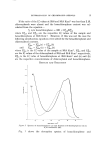
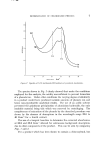
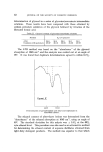
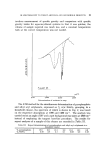
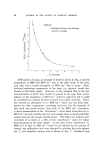
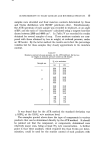
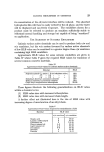
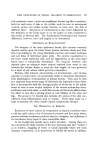
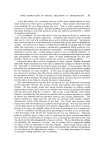
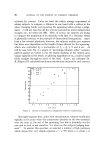
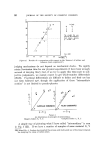
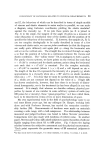
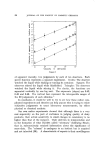
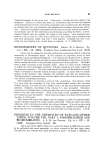
DETERMINATION OF CHLORINATED PHENOLS If the ratio of the E• values at 33.8 and 35.8 Kcm -• was less than 2.15, chloroxylenols were absent and the hexachlorophene content was cal- culated from the equation-- s H % w/w hexachlorophene = 100 x E•.s/E•.s where s H • E33.0 and the respective E• values of the sample and E3•. o are hexachlorophene at 33.8 Kcm-L However, if this was not the case the following simultaneous equations were solved for the hexachlorophene and chloroxylenol contents. s x H = E3.0(x) + (h) s x H and E•s.s = E•s.8 (x) q- E3s.8 (h) where s • E•s.8 is the E• value of the sample at 35.8 Kcm -•, E•X•.8 and x are the E• values of the chloroxylenol at 33.8 and 35.8 Kcm -• respectively, H • E•s.s is the E• value of hexachlorophene at 35.8 Kcm -• and (x) and (h) are the respective concentrations of chloroxylenol and hexachlorophene. RESULTS AND DISCUSSION o, \ ,,,/ , o \\•'-•'1'•1 '111 h,•..•_ WAVELENGTH Kcr• [ Figure 1 Spectra of hexachlorophene (a) and 4-chloro 3:5-dimethylphenol (b) in N/10 methanolic HC1. Fig. 1 shows the absorption spectra of hexachlorophene and
Purchased for the exclusive use of nofirst nolast (unknown)
From: SCC Media Library & Resource Center (library.scconline.org)