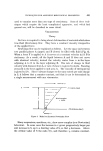
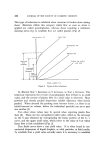
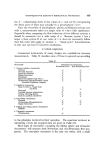
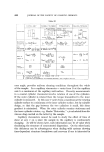
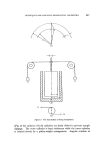
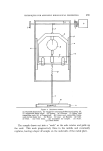
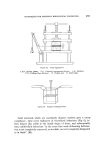
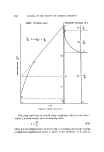
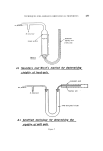
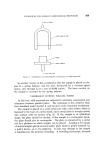
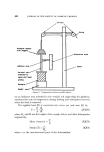
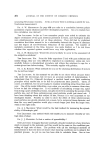
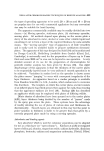
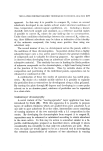
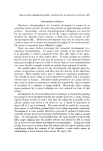
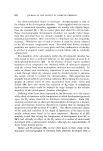
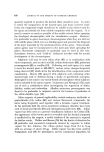
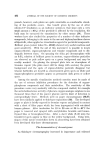
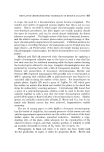
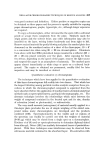
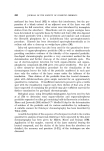
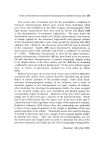
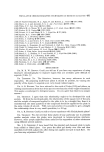
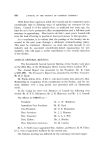
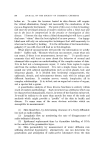
TECHNIQUES FOR ASSESSING RHEOLOGICAL PROPERTIES 453 I I Figure 5a Creep Apparatus A,B,D, Ribbed plates. C.C•. Constant compression devise. S.S•. Samples. P.P•. Pulleys (Low friction). •r. Weight pan. K. Knife edge. ( Figure 5b Sample Cutting Device. Solid materials which are essentially disperse systems give a creep compliance- time curve indicative of viscoelastic behaviour (Fig. 6), i.e. they behave like solids in the initial stages of shear, and subsequently they exhibit fluid behaviour "in the sense that work of shearing deforma- tion is not completely conserved, as in solids, nor is it completely dissipated as in fluids" (19).

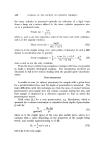
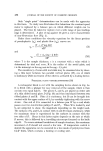
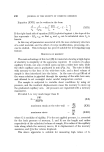
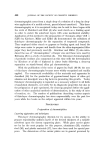
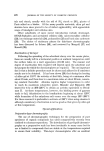
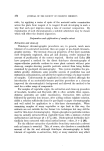
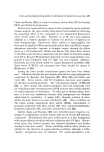
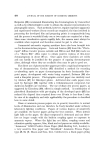
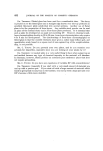
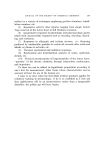
454 JOURNAL OF THE SOCIETY OF COSMETIC CHEMISTS c•, ½sr•ss : •o ) •cow• (stRess o') t Fig•r• 6 Model creep curve. The creep curve has an overall creep compliance J(t)/• at any time t, where J is shear strain, and a is shearing stress. J = •f (XlI) h where [1 is the displacement observed with a travelling microscope having a reciprocal magnification factor f, and h is the thickness of S• and
Purchased for the exclusive use of nofirst nolast (unknown)
From: SCC Media Library & Resource Center (library.scconline.org)