468 JOURNAL OF THE SOCIETY OF COSMETIC CHEMISTS chromatographic zones from a single drop of a solution of a drug by drop- wise application of a mobile solvent, passed almost unnoticed. Thin-layer chromatography as it is recognized today can be said to have begun with the work of Meinhard and Hall (4) who used starch as a binding agent in order to endow the adsorbent layers with some mechanical stability. Application of this method to the preparation of "chromato-strips" (0.5 x 5.25") by Kirchner, Miller and Keller (5) demonstrated the usefulness of thin-layer chromatography for the separation of terpenoid compounds. They employed either starch or gypsum as binding agent and found the strips were easier to prepare and handle than the silica-impregnated filter paper they had previously used (6). Kirchner and Miller (7) also intro- duced the use of "chromatoplates" of larger size and these were used by Reitsama (8) in a study of essential oils. The thin-layer chromatography of pesticide residues also commenced at this time with the determination by Kirchner et al (9) of biphenyl in citrus fruits following a clean-up separation on starch-bound silica gel chromatostrips. With the publication of the series of papers by Stahl (10-14) the uses of thin-layer chromatography became more widely recognized and readily applied. The commercial availability of the materials and apparatus he described (14) for the production of gypsum-bound layers of silica gel, alumina and kieselguhr was a big factor in promoting this growth. Today thin-layer chromatography is regarded as a necessary adjunct to all fields of analytical chemistry, not solely for its diagnostic properties but also in the preparation of pure specimens, for clean-up purposes before the appli- cation of other analytical methods of determination, in the study of rates of reaction, etc. The number of publications describing various aspects of thin-layer chromatography has risen exponentially over the past few years while five books on the subject appeared within two years. PROCEDURES Preparation of chromatoplates Layering apparatus and techniques Thin-layer chromatography depends for its success on the ability to prepare reproducibly uniform layers of the desired thickness of a suitable adsorbent upon the chosen supporting plate. While glass carrier plates are by far the most popular for this purpose, aluminium (15), stainless steel (16), and plastic materials (17), have also been used for special pur- poses. The dimensions of the carrier plates are in general governed by

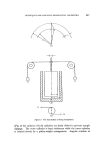
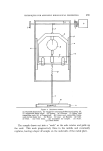
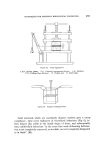
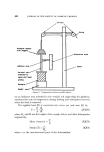
THIN-LAYER CHROMATOGRAPHIC TECHNIQUES IN RESIDUE ANALYSIS 469 the type of spreading apparatus to be used 20 x 20 cm and 10 x 20 cm are popular sizes for use with commercial applicators but any convenient size may be suitable for hand layering. The apparatus commercially available may be readily divided into two classes :--(a) Moving spreader, stationary plate (b) stationary spreader, moving plate. All methods depend upon placing on the carrier plate a slurry of the adsorbent in water, alcohol or some other volatile liquid and smoothing it out to form a layer of the required thickness by some suitable means. The "moving spreader" type of apparatus is of wide versatility and is easily used by unskilled hands to prepare satisfactory chromato- plates. The apparatus of this type designed by Stahl (14) and manufactured by Desaga G.m.b.H., Heidelberg [available from Camlab (Glass) Ltd., Cambridge• is universally used for the preparation of layers up to 2 mm thick and some 2000 cm • in area can be layered in one operation. A very detailed account of its use for the preparation of chromatoplates for pesticide residue analysis has been given by Kovacs (18). One slight disadvantage of this apparatus is that the thickness of the carrier plates to be sequentially layered must be very uniform if smooth operation is to be achieved. Variations in surface level as the spreader is drawn across the plates causes "jumping" to occur with consequent irregularity of the layer thickness. An apparatus based on a similar principle is available from Shandon Scientific Co. Ltd., London, which endearours to overcome this drawback. The template on which the carrier plates are laid consists of an inflated plastic bag which presses them against two rails, thus ensuring that the uppermost surfaces are level (19). Badings (20) has described an applicator which may be employed with plates of differing widths. Dilute slurries of adsorbent have been sprayed on to the carrier plates (8,21), layer thickness being decided by the number of "passes" made by the spray gun across the plate. These systems have the advantage of readily allowing the use of plates of various sizes and thicknesses in- discriminately. Smooth layers are obtained in this way but the point to point variation in thickness is liable to be greater than that given by a correctly prepared plate made by using a moving spreader. A dsorbents and binding agents Any adsorbent which is used for columnar separations can be adapted for use as a thin-layer (or "open-column"). Kirchner et al (5) investigated layers of silica gel, alumina, magnesium oxide, calcium hydroxide, dicalcium phosphate, bentonite, calcium and magnesium carbonates, Florisil, Filtrol,
Purchased for the exclusive use of nofirst nolast (unknown)
From: SCC Media Library & Resource Center (library.scconline.org)