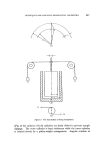
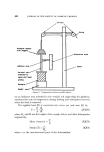
484 JOURNAL OF THE SOCIETY OF COSMETIC CHEMISTS Benjamin (68) recommend illuminating the chromatograms by transmitted as well as by reflected light in order to obtain the clearest representation by photographic means. Such methods, however, require expensive apparatus and experienced workers if true records are required the time involved in processing the developed film and preparing prints is comparatively long and the process is wasteful if only one or two copies are required at a time. Since some visualization agents rapidly fade, the camera must always be available when required and therefore cannot be put to other use. Commercial automatic copying machines have also been brought into use for documentation purposes. Getz and Lawson (93) found the "Photo- rapid" diffuse transfer process suitable and Hilton and Hall (94) made use of a "Xerox 914" office copier to obtain positive replicas of thin-layer chromatograms in about 30 sec. Once again these machines are costly and can hardly be justified for the purpose of copying chromatograms alone, although where they are available they may be put to good use. The direct use of photosensitive papers provides a rapid and inexpensive way of documentation. Gordon (95) described a method for recording uv-absorbing spots on paper chromatograms by ferric ferricyanide blue- print paper, development with water being required Zeitman (96) also used a blueprint process. Photographic contact paper was similarly used by Abelson (97) for thin-layer plates. Activated zinc oxide papers were used by Sprenger (98) together with a triboluminescent compound, but darkroom facilities are essential. The use of diazo dry process papers, as suggested by Eisenberg (99), offered a simple method. A combination of photoflood illumination with pre-ringing of the developed spots (85) has reduced the elapsed time required from over 10 min to less than 1 min. In view of its simplicity and wide applicability the procedure is described here in some detail. Diazo or ammonia process papers are, in general, insensitive to normal levels of illumination and can therefore be freely handled under ordinary laboratory lighting conditions. Papers of various degrees of sensitivity are available, the fastest papers giving the best contrast. When intense light falls on the paper, the diazo-compound is destroyed and can there- fore no longer couple with the built-in coupling agent on exposure to ammonia vapour. Where the light has not fallen, coupling occurs and coloration quickly appears blue, black and red papers are widely available. "Ammonax" 8.M13 Positive Diazo Paper (Hall-Harding Ltd., London) is a very sensitive blue paper and "Densblack" Ammonia Process Paper, type 45, 9x (E. Mason and Sons, Ltd., Colchester) is a black paper giving

THIN-LAYER CHROMATOGRAPHIC TECHNIQUES IN RESIDUE ANALYSIS 485 very good contrast and definition. Either positive or negative copies can be obtained on these papers and the process is equally suitable for copying paper chromatograms, graphs, typescripts, etc., although longer exposures are required. To copy a chromatoplate, either circumscribe the spots with a soft-lead pencil or scrape them completely from the plate. Similarly mark the origin points and the solvent front any other information may also be inscribed on the layer, writing letters backwards and from right to left. Remove excised material by gently blowing and place the marked plate face downward on the sensitized surface of a sheet of the diazo-paper 10 x 8" is a convenient size when using 20 x 20 cm chromatoplates. Illuminate from above with four 275w photoflood lamps mounted in a reflector (25 x 25 x 20 cm) placed centrally over the plate. After exposing for from 5 to 15 sec, depending on the speed of the paper, remove the light source and suspend the paper in an atmosphere of ammonia. The marked spots appear almost immediately as white rings or spots on a coloured back- ground. The copies so obtained are permanent, readily filed for later inspection and may be inscribed as desired. Quantitative evaluation of chromatograms The techniques which have been applied to the quantitative evaluation of thin-layer chromatograms fall readily into two classes. That which has the largest following among pesticide residue analysts comprises those pro- cedures in which the chromatographed compound is separated from the layer absorbent before the application of standard micro-chemical analytical methods such as spectrophotometry, gas-liquid chromatography, etc. The alternate technique involves the relationships which exist between the weight of compound contained in the located spot and its size, density of coloration (visual or photometric), or radioactivity. The very small amounts (micrograms) of material usually applied to a thin-layer plate precludes the use of simple weighing of the eluted com- pound unless many chromatoplates are developed and the products combined (100). Spectrophotometry in the visible and uv regions of the spectrum can readily be carried out with the weights of material (0-10 •g) which may be eluted from a single spot on a chromatoplate. Kirchner et al (9) used uv spectrophotometry to determine diphenyl eluted from silica gel Deters (101) has similarly determined traces of pentachloro- phenol. With these techniques some interference may be observed from extraneous material contained in the absorbent layer. Pre-extraction with
Purchased for the exclusive use of nofirst nolast (unknown)
From: SCC Media Library & Resource Center (library.scconline.org)