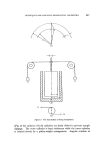
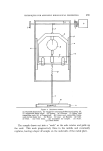
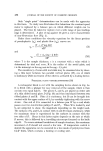
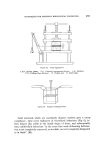
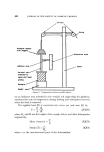
472 JOURNAL OF THE SOCIETY OF COSMETIC CHEMISTS by simple adaption of commercial layering apparatus. For the Desaga spreader a Perspex trapezium, 210 mm long with vertical sides of 40 and 38 mm, replaces the normal calibrated applicator plate. Other models of spreader are more simply adapted by adjusting the smoothing edge to feeler gauges of different thickness at either end, a sloping edge being thus ensured. In use the sample extract is applied as a streak parallel to the edge of the chromatoplate at which the layer is thickest and about 2 cm from it. After a further period of activation to ensure maximum clean-up the chromatogram is developed by the ascending-solvent techniques in the usual way. The use of this technique in the determination of traces of dinoseb has been described (36) the procedure has also been shown to be suitable for organo-chlorine and organo-phosphorus pesticides whose R•, values on silica gel are normally at least 0.50 when developed with a fairly non-polar solvent. This system is particularly of value where the ratio of co-extractives to pesticide residues is high. Wedge-layer chromatoplates composed of silica gel G, alumina G and kieselguhr G and mixtures of any two of these materials have been prepared and examined for pesticide residue analysis. Mixtures of silica gel with either alumina or kieselguhr were prone to cracking across the wedge, though this was without any marked effect upon their chromatographic properties. Alumina and kieselguhr appeared to be of closer physical properties and mixtures of these materials did not show this cracking they also showed useful adsorptive characteristics. Multi-band chromatography The use of multi-band or paneMayered chromatoplates has proved very useful both for diagnostic and for clean-up purposes (37). By inserting close-fitting partitions of suitable materials, e.g. PTFE, cork, aluminium, etc., into the body of the spreading apparatus it is possible to prepare chromatoplates composed of 2, 3 or 4 parallel panels of different adsorbents. Suitable positioning of the partitions enable panels of various widths to be layered on appropriate areas of the carrier plate. The fluid mixes of adsorbent are prepared in the usual way and are poured simultaneously into the required compartment, the assistance of a second operator being required if more than two panels are to be layered. Panel-layered plates can obviously be developed in two distinct ways. By spotting the sample and a known standard onto each of the panels and developing vertically up the bands, a useful diagnostic system is

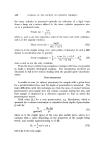
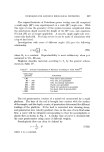
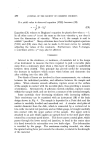
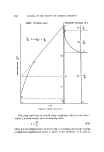
THIN-LAYER CHROMATOGRAPHIC TECHNIQUES IN RESIDUE ANALYSIS 473 apparent. In this way it is possible to compare R F values on several adsorbents developed in one mobile solvent under identical conditions of time, temperature, solvent-vapour equilibrium, etc. Including a known dyestuff, with both sample and standard, as a reference material makes it possible to correct R F values for any hold-up due to co-extractives. Under these conditions relationships between the corrected R F values on, say, three different adsorbents may be taken as indicative of the identity of the unknown compound, this being more positive than using one adsorbent only. The second manner of use, i.e. development across the panels, adds to the usefulness of these chromatoplates. Sequential elution from a highly adsorptive layer onto a less active panel enhances the general resolution of compounds and is valuable for clean-up purposes. An opposite effect is observed when developing from an adsorbent of low activity to a more adsorptive material. This similarly has uses in limiting the likely position of unknown compounds on the chromatoplate, a tight band being formed at the junction of the two adsorbents. Thus by suitable choice of the composition and positioning of the individual panels, separations can be enhanced or condensed at will. A combination of these two modes of operation also has useful prop- erties. By choice of a suitable mobile solvent it is possible to separate the pesticides from co-extractives by development along a silica gel panel. By turning the plate through 90 degrees and developing in a more polar solvent on to an alumina panel, mixtures of pesticides can be separated in a clean state. Gradient-layer chromatography A novel variant of the "moving-spreader" layer applicator has been introduced by Stahl (38). With this apparatus it is possible to prepare layers of uniform thickness which are graded from pure adsorbent A at one side to pure adsorbent B at the other, intermediate zones consisting of varying mixtures of the two materials with a 1:1 composition in the centre. By developing the chromatoplate from reagent A to reagent B, separations may be enhanced or minimized according to which adsorbent is the more active. In this way its action is somewhat similar to a bi- partite multiband-plate prepared as described above, although it shows considerably less versatility in that only two adsorbents are used. How- ever, its main use would appear to be as a research tool in investigating the retention characteristics of mixtures of two adsorbents in varying
Purchased for the exclusive use of nofirst nolast (unknown)
From: SCC Media Library & Resource Center (library.scconline.org)