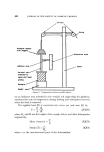
492 JOURNAL OF THE SOCIETY OF COSMETIC CHEMISTS DR. THOMSON: Fluted glass has been used for a considerable time. The slurry is poured on to the fluted glass and a straight edge drawn over the top produces an excellent thin-layer plate subdivided into several sections. Another use of fluted glass is for the preparation of loose-layers. Any suitable-sized powder can be used in place of the normal slurry and a loose-layer plate produced. It is essential that such a plate be developed at an angle not exceeding 15 ø. However, whereas bound- layer chromatoplates develop in 30 to 35 min, loose-layer chromatoplates only require 4 to 5 rain for development. The disadvantage of loose-layer chromatography on fluted glass is that the variable thickness layer gives a rather large diffuse spot, and quantitative work, based on a square root of area against log of the weight relation- ship, is not possible. MR. C. YOUNG: Do you prewash your own plates, and do you examine your solvents for impurities, especially since you are looking at your plates by Jr? De. THOMSON: A •ashed plate is a very useful thing to have when using ir as an end method because any type of chemical impurity in the material will interfere. In Germany, however, Merck produce an extremely pure stationary phase that does not require prewashing. MR. C. YOUNG: Do you have any experience of variable RF with concentrations ? DR. THOMSON: Generally if you start with a very small amount of material you end up with a precise spot. If you start off with a large amount of material which tends to get spread out anyway on the baseline, you end up with a large spot and your RF's become a little more doubtful.

Society of Cosmetic Great Britain Chemists of ANNUAL REPORT 1965-66 Membership The membership of the Society on 31st March 1966 is shown below in comparison with the figures at the same time during the two preceding years: 1964 1965 1966 Honorary Members 6 6 6 Members 351 359 378 Associates 49 48 48 TOTAL 406 413 432 Scientific Meetings The highlight of our 1965/66 lecture programme was provided by the second Medal Lecture delivered by Lord Todd of Trumpington on "The Changing Face of Organic Chemistry". Special mention can also be made of the perfumery lecture organised in conjunction with the British Society of Perfumers and which was attended by 95 people. The other lectures although broader in scope than in previous years attracted responsive audiences. Council wishes to record its thanks to Mr. Norman Van Abbk for organising a most satisfactory lecture programme. The full programme for last year is detailed below: Thursday, 7th October 1965 The subjective assessment of the consistency of materials in relation to physical measurements. G. W. Scott Blair, M.A., D.Sc., F.R.I.C. (National Institute fm Research in Dairying). 493
Purchased for the exclusive use of nofirst nolast (unknown)
From: SCC Media Library & Resource Center (library.scconline.org)