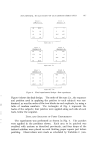
HAND DEGERMING EVALUATION 771 Cade (5), also utilizing a multiple basin technique, determined that degerming could be evaluated after one to two weeks of test soap applica- tion. By counting the bacteria in the first, fourth, and fifth basins of a series, a curve was developed from the data obtained. Since bacterial removal beyond the fifth basin was constant when an effective bacterio- static soap was employed, it was considered unnecessary to go beyond five basins (5). Per cent reduction was calculated by comparing counts obtained with a bacteriostatic soap to those obtained with a control (nonmedicated) soap. The multiple-basin procedure was further modified by Roman, et al. (6) who used a baseline control of 1,580,000 bacteria per fifth basin for all participants on the panel and evaluated the degerming efficiency of a bacteriostatic soap in five days. This number was obtained from non- medicated soap washings. Similarly, Kooistra, et al. (7) used a control reference figure of 1,300,000 bacteria for the fifth basin, a value derived from more than 500 iv. dividual fifth basin handwashings. The assump- tion behind this method is that participants in any experiment have essentially the same number of bacteria on their hands at the outset. However, this hypothesis is not confirmed by the second basin data for control soaps presented in their paper. In the four handwashing tests mentioned the underlying assumption is that the bacterial counts from the hands of the individual or the group would have remained constant during the entire test period if a non- medicated soap had been used exclusively. Unlike the handwashing techniques just described, the procedure of Quinn, et al. (8) allows each participant to serve as his own control dur- ing the five-day evaluation period. This is accomplished by requiring the panelist to wash one of his hands, generally the left, with nonmedi- cated soap, reserving the other hand for the bacteriostatic soap. When either hand is being washed, the other is covered with a neoprene glove. Results are obtained by comparing counts from the hand using non- medicated soap with those from the one on which bacteriostatic soap is applied. Prior to the evaluation period, nonmedicated soap is used on both hands for seven days. Neoprene gloves are used by panelists when per- forming such chores as dishwashing, scrubbing, shampooing, etc. The Quinn procedure (8) has been used by the authors to evaluate skin degerming. Results obtained with two antibacterial soaps by means of tlfis split-use method are described here.

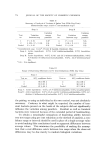
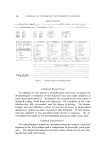
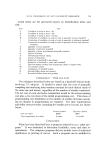
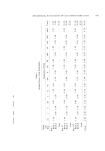
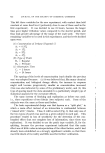
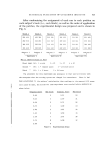
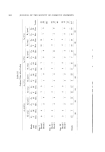
772 JOURNAL OF THE SOCIETY OF COSMETIC CHEMISTS EXPERIMENTAL The procedure provides for two types of washing sessions: applica- tion and sampling. Application washing sessions are those in which both the medicated and nonmedicated soaps are applied to the hands. These sessions make certain that panelists are exposed to the test soaps several times each day. Sampling washing sessions are identical to ap- plication sessions except that nonmedicated soap is applied to both hands and the basin water from each hand is plated and cultured for bacteria. The daily application is as follows: 1500 ml of tap water are added to each of two basins. Each subject covers his right hand with a sterile neoprene glove and wets both the gloved and ungloved hands. Twenty milliliters of a 10% solution of nonmedicated soap are poured into the cupped hands which the subject then washes up to the wrists. After 20 seconds of washing, additional water is taken up and the washing con- tinued for another 75 seconds. Hands are then rinsed in the wash basin for 20 seconds and the water is allowed to drain into the basin for 20 seconds. The procedure is repeated, but this time the left hand is covered with a sterile glove and a 10% solution of bacteriostatic soap is used. During the sampling periods, both hands are washed individually with nonmedicated soap solution only. The panelist is instructed to follow the same washing procedure at home, which includes the use of neoprene gloves with medicated and nonmedicated soap bars. Soap solutions are used in the laboratory be- cause quantitative dispensing and lathering are made easier. For colony counting, aliquots of wash water are added to Tryptic Soy Agar* containing 0.07% lecithin and 0.5% Tween-80©,t both of which are used as bacteriostat neutralizers. Plates are run in duplicate and incubated for 48 hours at 37 øC before counting. Basin sampling sessions for bacterial counts are conducted on Mon- day, Wednesday, and Friday noons. The schedule of washing and sampling is shown in Table I. For the experiments reported here, a nonmedicated soap•: was used as the control. Two medicated soaps were evaluated, the first (Soap A) * Difeo Laboratories incorporated, Detroit, Mich. t Polyoxyethylene (20) sorbitan mono-oleate. Registered trade mark of Atlas Chenfical Industries, Wilmington, Del. 19899. { Ivory ©, Procter & Gamble, Cincinnati, Ohio.
Purchased for the exclusive use of nofirst nolast (unknown)
From: SCC Media Library & Resource Center (library.scconline.org)