788 JOURNAL OF THE SOCIETY OF COSMETIC CHEMISTS Name Address DANDRUFF HISTORY FORM 6-21 22-39 Git• • No.
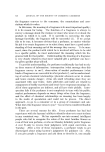
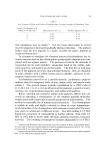
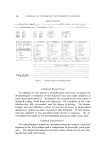
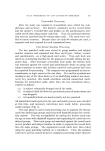
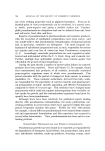
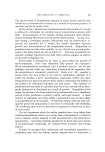
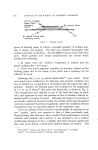
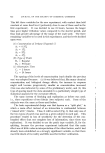
Sublect 1-3 4-5 per h 41-42 43-44 45-46 H A I R L O S S from COMBING SHAMPDOING SCALE FOR EVALUATIONS 0 - Abse.r I - M,Id 2 - Maderate 3 - Moderate to Severe 4 - Severe __ s o A P s SHAMPOOS HAIR-DRESSINGS RINSES and DYES ] - Camay J -- Alberto VO-S I - Alberto VO-S 1 - Bright Idea 2 - Cashmere Bouquet 2 - Breck 2 - Brylcreem 2 - Color Lift 3 - Dial 3 - Charles Antell 3 - Command 3 - Color Up 4 - Dove 4 - Conh 4 - Groom & Clean 4 - Foam & Sparkle 5 - Ivory 5 - Enden S - Nestle S - Lady Cla,rol 6 Lifebuoy 6 - Halo 6 - Score 6 - Loving Care 7 - Lux Toilet 7 - Head & Shoulders 7 - Marchands 7 - Top Brass 8 -- Palmolive 8 -- Helene Curbs 8 - Vaseline Cream 8 - Nestle 9 Safeguard 9 - Lustre Creme 8 - Vitalis 9 - Nice & Easy 10- Zest 10- Prell ]10 - V•tapolnte 10 - Roux Fanciful 11 - 11 -- 11 - 11 - 12- 12- •s•Ec,•--- 12 12 [SP[CIFY [S•[CIFy , [SP[CIFy) I DERMATOLOGIST'S COMMENTS: 75-76 I MD. Figure 1. Patient history transmittal forIn Dandruff Record Form In addition to the subject's identification, this form contained the dermatologist's evaluation of the subject's hair and scalp condition at each observation interval. Included in the evaluation were the extent of dandruff scaling (both loose and adherent) the condition of the scalp whether dry, oily, or normal and the degree of itching. The derma- tologist was also afforded a place to note the presence of supraorbital dermatoses, which are often associated with dandruff. If such derma- tiffs was reported, it was described under doctor's comments. Six ob- servations were made by the dermatologist during the eight-week study. Dandruff Questionnaire The Questionnaire posed key questions about the subject's personal response to the test product and a comparison to previously used prod- ucts. The subject was asked to note the extent of hair loss (if any) dur- ing the last week of the study.

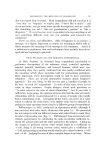
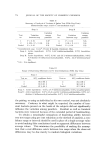
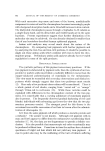
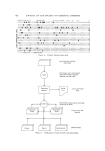
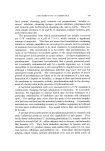
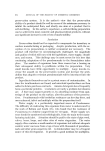
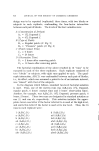
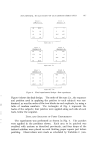
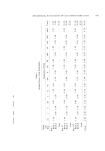
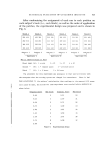
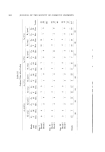
DATA PROCESSING OF ANTI-DANDRUFF RESEARCH 789 DANDRUFF RECORD FORM START lit • E E K J I/J J• /o I I•1 • I I•1 12 I o / 9 10 11 12 13 14 15 16 17 18 2rid w E E K • Loose Adherent Dry Oily Normal Itching termatitis I 4lb W E E K J Loose Adherent Dry Oily Normal Itching Dermatills / / •' • • 27 28 29 30 31 32 33 6lb W E E K J Lo.•ze Adherent Dry Oily Normal Itching termatitis 8tb W E E K Loose Adherenl Dry Oily Normal Itching germatltl• I ø I ø I I I•"1 • I ø I 41 42 43 44 45 46 47 SCALE FOR WEEKLY EVALUATIONS 0 - Absent 1 - Mild 2 - Moderate 3 - Moderate So Severe 4 - Severe -- OATE DOCTOR'5 COMMENTS CODa' Start M,D. __ 48-9 1st week M D. 50-1 __ 4th Week M,D. 54-5 6th Week M D 55-• 8rh Week M D, Figure oe. Patient record transmittal form Coding System A coding method was established for tabulating entries on the trans- mittals in order to simplify key punching and to eliminate the need for a large volume of alphabetic information in core storage. It also simplified computer program logic and reduced machine processing time. Each test product was assigned a two-digit number called group number. The subjects were assigned three-digit numbers called subject number. A scale for evaluations to record severity of each condition under study was included and is shown in Figs. 1, 2, and 3. Entries in spaces provided for doctor's comments, previously used hair and scalp products, and the subject's recorded likes and dislikes about the test product were all assigned two-digit numbers for coding. Through the use of this coding system, the printed reports were far more comprehens- ible in that they were not cluttered with verbose descriptions,
Purchased for the exclusive use of nofirst nolast (unknown)
From: SCC Media Library & Resource Center (library.scconline.org)