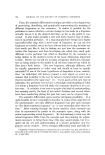
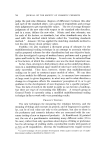
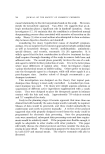
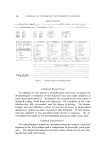
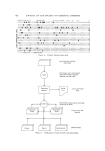
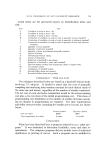
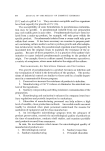
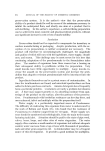
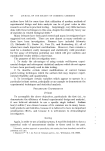
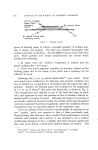
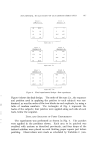
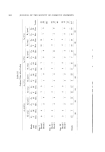
"792 JOURNAL OF THE SOCIETY OF COSMETIC CHEMISTS UNIVAC P 2•480 Figure 4. Patient history data card Key Punched & Verified Data Cards Preliminary sort to test product and patient number sequence. Separate into card types. Tabulating •. 8•• Listing for Visual •achine Edit Match History deck against record and questionnaire decks. -- Unmatched Unmatched Correct errors and Cards Cards Rematch I Figure 5. Edit phase of unit record card processing

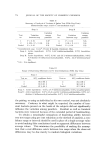
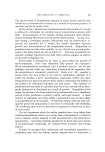
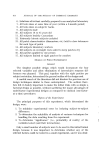
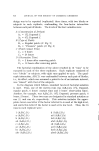
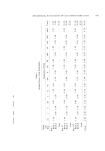
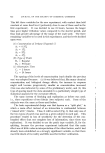
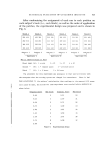
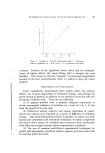
DATA PROCESSING OF ANTI-DANDRUFF RESEARCH 79g actual age or years with dandruff for a patient. A typical example fol- lows: Age groups (years) Code Years/dandruff Code 29 and under 1 5 and under 1 30to39 2 6to 10 2 40 and over 3 11 to 15 3 16 and over 4 The last phase of card processing was to sort the cards to a report se- quence for computer processing. Computer Processing The computer programs were written to accept magnetic tape as in- put since the processing rate with tape is much faster than that with cards. Furthermore, use of tape minimized the handling of bulky cards. The card images were captured on tape via a card-to-tape utility program. Five input tapes were produced. Each pass required resorting the cards to another report sequence. The final sequence of all reports was by test product group. Under the control of the program(s), cumulative totals, counts, and averages were printed for each observation by test product, and an improvement factor was calculated. In addition to printing the subject's data in detail, summary tables were also produced. The com- puter was programmed to signal inconsistencies in this phase as in all other phases. Generated Reports Nineteen reports were printed on the computer in the analysis of each of 15 antidandruff products. Three reports (A, B, C) showed those sub- jects whose condition of scalp at start was either dry, oily, or normal and the trend each followed to the end of the clinical study three reports (H, I, J) showed the correlation of condition of scalp at start to the degree of dandruff with the trends to conclusion six reports (D, E, F, G, K, Q) showed the trends from start to eighth week under the parameters" degree of dandruff," "degree of itching," "dermatitis," and "overall improve- ment" two reports (O, P) showed the trends in reduction of dandruff rs. (a) age groups and (b) years with dandruff from test product sequence. The last five reports (L, M, N, R, S) showed tallies of responses to the questionnaire from the test product sequence (Fig. 6).
Purchased for the exclusive use of nofirst nolast (unknown)
From: SCC Media Library & Resource Center (library.scconline.org)