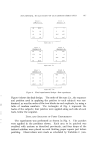
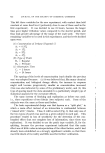
STATISTICAL EVALUATION OF CUTANEOUS IRRITANTS 813 "pressure" patch consisted of the regular patch plus two gauze squares, then a taped-on plastic poker chip (Fig. 3). Preliminary experiments indicated that substantially different results might be expected from this arrangement. Since the pressure difference was believed slight, we attributed this to the presumed greater uniformity of contact. The authors are not necessarily recommending this arrangement for general use, of course, and are aware that the use of any substantial degree of pressure is frequently believed undesirable. However, it is felt that this experience, especially when viewed in the light of the two formal experiments to be described belo•v, demonstrates the importance of maintaining a constant contact. Selection of Variables Preliminary work indicated that the degree of irritation was prob- ably also influenced by the period of time following the removal of the patch. It was therefore planned to use this factor as an additional variable. Further, contact time and irritant concentration were relevant factors, since it was well known that these variables would affect the system however, nothing was known to the authors of their interaction with each other and with the other two variables. To summarize, preliminary experimental evidence suggested use of the following four variables in the first formal experiment: A. Concentration of irritant B. Type of patch C. Patch contact time D. Observation time (after removal) In this first factorial experiment, the following potential variables were to be carefully controlled at as constant a level as possible from run to run: 1. Single judge (scorer)* 2. Type of irritant 3. Pre-treatment of site (5-second swabbing with facial tissue wet with acetone) 4. Four drops of solution on each blotter square 5. All patches applied in a single session * All scoring in the work to be described was done by an experienced pharmacologist, al- though a small preliminary study indicated no significant difference, and very high correla- tion (over 95%) between his scores and those of a technician who had been instructed by the pharmacologist and had had less than one day's practice.

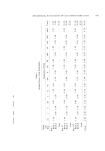
814 JOURNAL OF THE SOCIETY OF COSMETIC CHEMISTS 6. Solutions of irritant carefully prepared in an analytical laboratory 7. All tests done at same time of year (within a 2-month period) 8. All tests done on subjects' backs. 9. All subjects male 10. All subjects 18 to 45 years old 11. All subjects healthy Caucasians 12. Extremely hirsute subjects excluded 13. All patch characteristics (dimensions, etc) held to close tolerances for each type of patch 14. All subjects laboratory workers 15. All subjects on overnight tests asked to keep patches dry 16. All patches applied by one person 17. All subjects limited to eight patches for comfort DESIGN OF FIRST EXPERIMENT General The simplest possible design which would incorporate the four selected variables and allow elimination of intersubject response dif- ferences was planned. This goal, together with the eight patches per subject restriction, determined the general outline of the design used. A careful search of the literature did not disclose the previous use of design techniques similar to those contemplated. The authors there- fore felt it doubly important to make the initial trials with as simple a factoffal design as possible, without sacrificing the major advantages of multi-factor experimental designs as compared to classical (one-factor- at-a-time) procedures. Objects of the Experiment The principal purposes of this experiment, which determined the design, were: 1. To minimize experimental error by isolating subject-to-subject differences. 2. To determine the suitability of analysis of variance techniques for handling the data resulting from the experiment. 3. To determine "significance" (i.e., probability of reality) of the variables tested (and their interactions). Only a small number of subjects were to be used in this initial formal design, because it was important to determine whether any of the selected factors could be tested in a small experiment, and it was desir-
Purchased for the exclusive use of nofirst nolast (unknown)
From: SCC Media Library & Resource Center (library.scconline.org)