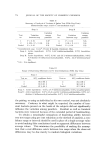
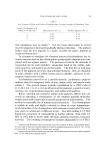
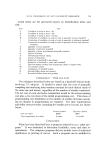
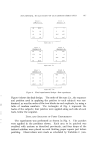
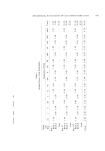
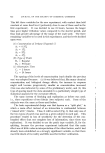
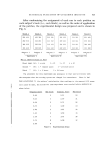
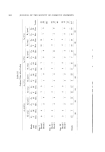
HAND DEGERMING EVALUATION 775 Results of the tests are summarized in Table III using per cent re- duction as the method of analysis. Only the 95% confidence limits are shown so as to emphasize the importance of using a range in the inter- p retation of per cent reduction calculations. (Received April 12, 1967) REFERENCES (1) Updegraff, D. M., A cultural method of quantitatively studying the microorganisms in the skin, J. Invest. Dermatol., 43, 129-137 (August 1964). (2) Ulrich, J. A., Technics of skin sampling for microbial contaminants, tJosp. J•opics, 43, 121- 123 (March 1965). (3) Pachtman, E. A., Vieher, E. E., and Brunner, M. J., The bacteriologic flora in seborrheic dermatitis, J. Invest. Dermatol., 22,389-396 (May 1954). (4) Price, P. B., The bacteriology of normal skin a new quantitative test applied to a study of the bacterial flora and the disinfectant action of mechanical cleansing, J. Infect. Dis- eases, 63, No. 3, 301-318 (1938). (5) Cade, A. R., Antiseptic soaps: a simplified in vivo method for determining their degerm- ing efficiency, Soap Sanit. Chemicals, 26, 35-38 and 73 (July 1950). (6) Roman, D. P., Barnett, E. H., and Balske, R. J., Cutaneous antiseptic activity of 3,4,4 •- trichlorocarbanilide, ?roc. Sci. Sect., Toilet Goods •4ssoc., 1%. 28, 12-13 (December 1957). (7) Kooistra, J. A., Barman, E. A., and Carter, R. O., Use of human subjects for praduct evaluation: an evaluation of antibacterial soap bars, J. Soc. Cosmetic Chemists, 17, 343- 353 (May 1966). (8) Quinn, H., Voss, J. G., and Whitehouse, H. S., A method for the in vivo evaluation of skin sanitizing soaps, Jppl. •Iicrobiol., 2,202--204 (July 1954).

J. Soc. Cosmetic Chemists, 18, 777-784 (Dec. 9, 1967) The Color of Red Hair* PETER FLESCH, M.I)., Ph.D., ELIZABETH J. ESODA, M.D., and SIDNEY A. KATZ, Ph.D.'• Synopsis--The iron pigments extracted with boiling acids from human red hair and chicken feathers are closely related and are possibly identical. Evidence is presented that these unique substances are well-defined chemical entities and not artifacts of keratin hydrolysis. The iron pigment is probably the major pigment of hu•nan red hair. Its limited extracta- bility from red hair is due to its destruction during extraction and not to the small amount present in the hair. In all of its forms the iron pigment has been proved to be a metallo-pro- tein. It can be broken down to a compound with a relatively small molecular size which re- tains all the essential properties of the originally extracted pigment. Synthesis of an iron- protein in melanocytes raises many questions which cannot be answered at present. INTRODUCTION Why is red hair red ? What is the chemical difference between the pigments of blonde and black hair? These natural variations in hair color usually extend to all epidermal pigment cells. For this reason, while ultraviolet light turns the skin of brunettes dark brown, it imparts a copper color to blondes, and burns red individuals. Yet we know very little about the chemistry of these basic types of human pigmentation. Recent chemical studies have led to the conclusion that it will be a most difficult, possibly insurmountable, task to unravel the structure of the black and brown melanins, also called eumelanins, because of the variable course that polymerization may take during pigment formation (1). At least the precursors of eumelanins and the nature of the building stones aggregating to form the black pigment are known. In the case of * Investigation supported by Public Health Service Research Grant No. AM 10046 from the Division of Research Grants, National Institutes of Health. t Department of Dermatology, School of Medicine, University of Pennsylvania, Phila- delphia, Pa. 19104. 777
Purchased for the exclusive use of nofirst nolast (unknown)
From: SCC Media Library & Resource Center (library.scconline.org)