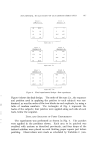
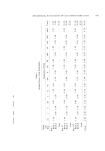
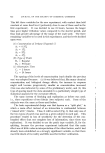
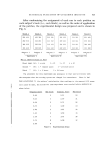
J. Soc. Cosmetic Chemists, 18, 809-829 (Dec. 9, 1967) A Statistical Approach to Evaluation of Cutaneous Responses to Irritants the W. M. WOODIN( , B.Ch.E.* and D. L. OPDYKE, Ph.D.• Synopsis--This study was done to test the application of certain eom•non statistical experi- mental designs to the field of human patch testing where they do not appear to have been used previously, and to investigate certain variables affecting irritation test results. Sodium lauryl sulfate, a typical irritant of general interest, was used. Two experiments are de- scribed in which several factors thought to affect irritation results were tested these included irritant concentration, certain time factors, and types of patch used. Irritation was basically scored on a five-point scale. Results showed that experimental and subject-to-subject variation could be greatly reduced by adequate experimental design, that several factors of interest were influential in the system, and that the error of measurement (estimation by a judge scoring the patch sites) was much snmller than had been expected. One of the signif- icant effects of considerable interest was the finding that the degree of observable irritation was a function of the interval between removal of a patch and the time the site was scored. INTRODUCTION It is well known that the use of patch testing for the detection of primary irritation or sensitization of human skin to various substances, as usually practiced, is subject to severe limitations of numbers (1). For example, it may readily be shown by elementary probability cal- culations that the use of the usual patch testing techniques, even were several thousand subjects to be used, might easily fail to predict a serious proportion of reactors in the population. This problem has not been solved by the techniques to be described in this paper, but it is hoped that it may have been ameliorated. The * Carter Products Research, Carter-Wallace, Inc., Half Acre Road, Cranbury, N.J. 08512. t Revlon Research Center, Inc., 945 Zerega Avenue, Bronx, N.Y. 10473. 8O9

810 JOURNAL OF THE SOCIETY OF COSMETIC CHEMISTS authors have felt for some time that utilization of modern methods of experimental design and data analysis can be of great value in skin research as well as in practical testing. Surprisingly, very little has been (tone with these techniques in this area, despite the relatively heavy use of statistics in related biological fields.* Many irritants have been patch tested and many investigators have suggested test methods. There are now almost as many methods as there have been investigators. Pioneers have included Schwartz (2), Shelanski (3), Draize (4), Voss (5), and Rostenberg (6), all of whom have made important contributions. However, there remains a need for a standard, easily managed, and statistically valid procedure for the assay of irritation potential, one which will give uniform and reproducible results within a short time. The purposes of this investigation were: 1. To study the advantages of using certain well-known experi- mental designs and subsequent statistical analyses which do not appear to have been previously used in skin testing. 2. To describe certain minor modifications of current human patch testing techniques which the authors feel may improve experi- mental reliability and quantitation. 3. To investigate certain variables which appear to operate in a particular irritant system, principally as an example to demonstrate the experimental techniques and statistical analysis. PRELIMINARY EXPERIMENTS irritant To accomplish the above objectives, particularly the first (viz., to demonstrate the efficiency of formal experimental design and analysis), it was believed advisable to use a specific single irritant. Sodium lauryl sulfate} was chosen because of its common use in many house- hold products and toiletries, because it is believed to have no important sensitization effects, and because it is well-known to dermatological investigators. Scoring Again, in order to use a familiar system, it was felt desirable to have a numerical scale of measurement similar to those used in the past. * Recently, another approach to quantifying skin testing has been described, and will be published soon (16). } Duponol C©--E. I. du Pont de Nemours and Co., Inc., Wilmington, Del. 19898.
Purchased for the exclusive use of nofirst nolast (unknown)
From: SCC Media Library & Resource Center (library.scconline.org)