PSEUDOMONADS IN COSMETICS 799 lient creams, cleansing pads, cosmetic eye preparations, "wrinkle re- mover" solutions, cleansing sponges, protein solutions, pharmaceutical and cosmetic gels, hydrocarbon cleansing oils, and so forth. These in- clude simple solutions, O/W and W/O emulsions, triphase systems, gels, and hydrocarbon oils. The preparations from which pseudomonads are usually recovered are O/W emulsions at a pH of 7.5-8.5, which contain a significant amount of nonionics. This does not mean that formulations containing anionic or cationic emulsifiers are not subject to attack, but the presence of nonionics has been found to be most conducive to pseudomonas con- tamination. This menstruum is so favorable, that pseudomonas, be- cause of its resistance to biostatic agents, is the usual contaminant and one that grows in the product as a pure culture. At times staphylococci, aerogenes, yeasts, and molds have been isolated but never mixed with pseudomonas. Experience has indicated that a poorly preserved prod- uct is naturally contaminated only by a specific organism, e.g., a cream susceptible to pseudomonas is not susceptible to staphylococci or yeast, although a fulminating pseudomonas infection may pave the way for subsequent mold growth. The consequences to the product of heavy growth of pseudomonas are likely to be the development of a foul odor, formation of a deposit or turbidity, a change in flow and break-down of the emulsions by enzymatic activity, decolorization and/or the develop- ment of a brown color in the presence of hydrocarbon oils. A bacterial population such as is encountered in a O/W emulsion is continuously changing through adaptation or mutation. It is possible, therefore, for organisms to emerge which may develop resistance to a particular combination of inhibitors and the emulsion will ultimately spoil. The spoilage may occur after the peak of the microbial popula- tion has been reached and the microbial count is declining. Occasionally materials are seen containing as many as 5 million organisms/ml without obvious signs of deterioration. Few would believe that such material is fit for sale. A perusal of the publications on pseudomonas growth in cosmetic and other industrial products reveal the capabilities of this genus. They break down hydrocarbons (7) including petrolatum (8), remain viable for months in aircraft fuel (9), utilize alkanes such as hexane, and aromatics like benzene (10). They form inducible enzymes to benzoic and an- thranilic acid (11), produce lipases and oxidize fatty acids (12, 13), mal- tose, lactose, cellobiose, and melibiose (14). Then their enzymes liquify gelatin, attack casein, perform amylolysis (15), and are most active at

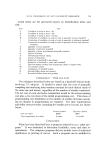
8OO JOURNAL OF THE SOCIETY OF COSMETIC CHEMISTS 25øC and at a pH of 7-8. They are micro-aerophilic and few organisms have their capacity for growth at 0 øC (16). The susceptibility of some formulations to pseudomonas contamina- tion may be specific. A pseudomonad isolated from one preparation may not readily grow in any other. Pseudomonads that have been iso- lated from a make-up product, for example, will only grow within the specific product. Pseudomonads isolated from a cream could only grow within that cream. It has been necessary on occasion to prepare prod- uct-containing culture media to achieve profuse growth and after adapta- tion to laboratory media, the pseudomonad organism must frequently be inoculated into the original cream to maintain the resistance of the or- ganism. Because of these properties, it is a practice of the author's lab- oratories to name isolated pseudomonads according to the product of origin. For example, there is a culture named Pseudornonas aquasolarus, a variety of aeruginosa, whose name indicates the origin of the culture. PSEUDOMONIASIS, AN INDUSTRIAL DISEASE AND ITS CONTROL The growth of pseudomonads in a product becomes an infection and the termination of which is the destruction of the product. The mecha- nisms of industrial control are similar to those used by a health depart- ment in a communicable disease program. 1. Preservatives increase the resistance of products to infection. 2. Manufacturing at 180 øF reduces or eliminates the microbial con- tent of the ingredients. 3. Sanitary compounding and filling minimizes contamination of the preparation. 4. Housekeeping and sanitation is enhanced by company issued san- itary regulations and periodic inspection by sanitarians. 5. Education of manufacturing personnel can help achieve a high level of sensible, clean production methods. Successful results can most readily be obtained when plant personnel understand the reasons for sanitation of equipment and for clean manufacture. 6. An investigative microbiology program tests the adequacy of product preservation, controls the microbiological quality of products at the time of manufacture, conducts shelf studies, and examines partially used products secured from consumers. In sum, the mechanisms which insure the microbiological quality of manufactured products are: 1. Microbiological control 3. Sanitary inspection 2. Sanitary manufacturing 4. Personnel education
Purchased for the exclusive use of nofirst nolast (unknown)
From: SCC Media Library & Resource Center (library.scconline.org)