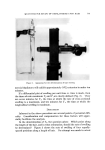
670 JOURNAL OF THE SOCIETY OF COSMETIC CHEMISTS method reported here is somewhat analogous in that a scalp brushing technique is used to help collect dandruff scurf for weighing. EXPERIMENTAL In this paper dandruff is defined as the scurf collected from the scalp by a vigorous brushing procedure and free of any hair fibers. This operational definition suffers from the deficiency that any particulate matter so collected, be it environmental soot or skin scales from other kinds of skin diseases, will be counted as dandruff. On the other hand, if care is taken to select subjects who are free of psoriasis and whose occu- pation does not expose them to high levels of soot or dust, this deficiency does not seem to be a serious one. Standard Collection Procedure Only male volunteers have been used since they do not object to disturbing their coiffure for the test. Each subject is assigned his own hair brush. The brushes should be of stiff bristles so that the scalp will be vigorously scraped by the brush- ing. Each subject is instructed to brush his scurf onto a sheet of poly- vinyl acetate plastic approximately 24 X 30 in. in size. The sheet of plastic is taped to a dark colored backing paper to make the scurf easier to see. Each patient strokes his scalp 150 times from the back to the front as he leans over the plastic sheet. Fifty strokes on the left third, 50 strokes on the center third, and 50 strokes on the right third are taken. Then the remaining loose dandruff is shaken onto the plastic sheet by hand. The scurf adhering to the hair brush and that on the collection surface are gathered together for weighing. Loose strands of hair are re- moved. The brushes are cleaned and dried and re-used by the same subject at each collection period. Standard Test Protocol The materials to be evaluated generally are supplied as simple solu- tions or suspensions in water or other suitable solvents. However, the protocol can be varied to evaluate the test material in a shampoo vehicle or in a hair dressing. The subjects are instructed to shampoo their hair with a mild sham- poo* which is supplied to them and then to pour 1 oz of the test material on the scalp. After waiting for 3 min they are directed to rinse the scalp. * White Rain Shampoo, Toni Company, Chicago, Ill.

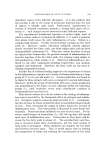
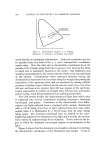
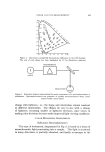
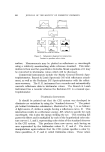
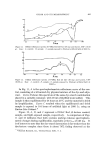
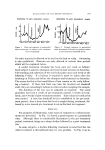
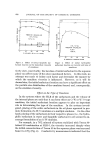
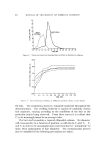
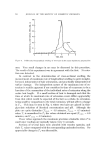
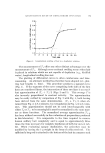
EVALUATION OF DANDRUFF SEVERITY 671 RESPONSE TO ANTI-DANDRUFF RINSE RESPONSE TO ANTI-DANDRUFF RINSE Figure 1. Clear-cut response to germicidal rinse treatments in subject with moderate level of dandruff 150 100 so t• I I I Nov. 1 Dec.1 Jan,1 Feb. 1 Maoe1 Apr. 1 Figure 2. Prompt response to germicidal rinse treatments followed by gradual return to pre-treatment dandruff levels No other material is allowed to be used on the hair or scalp. Swimming is also prohibited. Haircuts are only allowed at certain time periods which will be explained below. A useful treatment schedule has been once per week as follows: Each subject is asked to shampoo and treat his hair at home on Saturday. The brushing and collection of the scurf take place once each week on the following Friday. If a haircut is required it must be taken after the brushing on Friday and before the shampoo and treatment on Saturday. The reason for this is that small fibers of hair remain on the scalp follow- ing a haircut. If these find their way into the brushed out dandruff scurf, they are exceedingly tedious to remove before weighing the sample. The duration of the test can be adjusted as required. The usual procedure has been 4 weeks of pre-treatment control, 4 weeks of treat- ment, and 4 weeks of post-treatment control. Each subject is used as his own control. A_ base line dandruff level is established in the pre-treat- ment period then a drop from this level is sought during treatment, fol- lowed by a rise toward pre-treatment levels in the final test segment. RESULTS For purposes of illustration, some types of responses to various treat- ments are described. In Fig. 1 is shown a good response to a germicidal rinse. Although there is considerable fluctuation in the pre-treatment period, treatment brings on a sharp decline followed by a post-treatment rise. In some subjects, a decline following treatment is noted but the rise when treatment is discontinued may be very gradual. In Fig. 2 an in-
Purchased for the exclusive use of nofirst nolast (unknown)
From: SCC Media Library & Resource Center (library.scconline.org)