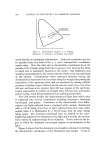
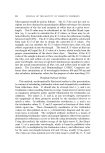
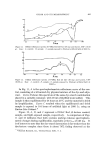
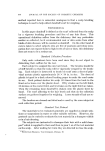
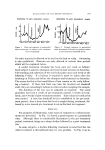
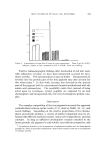
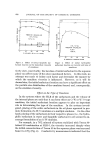
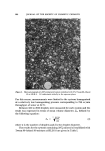
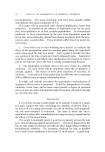
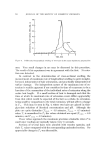
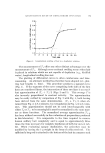
679, JOURNAL OF THE SOCIETY OF COSMETIC CHEMISTS TWICE WEEKLY SCURF COLLECTION •_. :i: -4oo . z .,125 300 i t , , .... • • •, •6 'l• ½9 •i• 4,• 4,• o • 5,• FR'DA¾ ß DATE Figure 3. Agreement between collections made on Tuesdays and Fridays. Good tracking between curves suggests errors introduced by biological variables exceed those due to the collection method stance is shown where many weeks are required before the dandruff levels show a substantial rise. Of course, there are also instances where no response is evident. It is obvious, therefore, that to evaluate a particu- lar treatment a sufficiently large test group must be chosen. DISCUSSION The method presented is straightforward in its logic and simple to perform. Dandruff is defined operationally. Although, using such a criterion, this condition may be confused with other scaly diseases of the scalp, it has usually been possible to avoid this difficulty by proper pa- tient selection. In the panel selection process, subjects are usually dropped from the test if their collected scurf during the pre-treatment control falls below some arbitrary level such as 10 mg per collection period. Cooperation of the test subjects is most important. They are allowed to use the test materials themselves (although in an institutional popula- tion this can be supervised). They are asked to brush the dandruff scurf out themselves each time in as identical a routine as possible. They must also cooperate in not using other products on their scalp and avoid- ing swimming. In this type of study each patient serves as his own control and a qualitative judgement is made as to whether or not a response was ob- served. However, there is an important drawback to this procedure.

EVALUATION OF DANDRUFF SEVERITY 6?3 Seasonal effects are believed to occur in dandruff with mnelioration during the summer months (4). The authors, too, have observed this effect. Therefore, it is felt to be important to observe a rise in dandruff levels in the post-treatment control period in order to claim a positive anti-dandruff response with confidence. Although it may seem that the procedure described would encounter huge fluctuations in scurf levels because of the casual manner in which the subjects were handled during the interval between treatment and measurement, in practice this has proved tolerable. As an illustration of the magnitude of these fluctuations one subject (with heavy dandruff) was followed for a period of ten weeks (March to May) while he used only a mild shampoo. In this instance, dandruff collections were made twice each week on Tuesdays and Fridays so that the trends of "replicate curves" could be compared. The data are plotted in Fig. 3 and show that the two sets of results track very well. Although this is only one subject, it would suggest that normal biological fluctuations will intro- duce greater errors than those inherent in the collection method. From observations made in the course of many evaluations of dan- druff by these techniques it appears to us that it is the adherent scales which are correlated with the severity of the disease. These scales are not much disturbed by the usual hair care practices. Loose flakes seen in the hair can be very misleading in estimating dandruff severity. (Received November 17, 1967) REFERENCES (1) Van Abb6, N.J., The investigation of dandruff, J. Soc. Cosmetic Chemists, 15,609 (1964). (2) Van Abbfi, N.J., and Dean, P.M., The clinical evaluation of antidandruff shampoos, Ibid., 18,439 (1967). (3) Spoor, H. J., Clinical evaluation of antidandruff formulations, Ibid., 14, 135 (1963). (4) Botwinick, I. S., and Botwinick, C. G., Methods for evaluating antidandruff agents, Presented at Joint Meeting of the Toilet Goods Association and the Committee on Cu- taneous Health and Cosmetics of the American Medical Assoc., New York, May 1, 1967. (5) VandcrWyk, R. W., and Roia, F. C., The relationship between dandruff and microbial flora on the human scalp, J. Soc. Cosmetic Chemists, 15, 761 (1964). (6) VandcrWyk, R. W., and Hcchcmy, K. E., A comparison of the bacterial and yeast flora of the human scalp and their effect upon drandruff production, Ibid., 18, 629 (1967).
Purchased for the exclusive use of nofirst nolast (unknown)
From: SCC Media Library & Resource Center (library.scconline.org)