684 JOURNAL OF THE SOCIETY OF COSMETIC CHEMISTS of the emulsifiers and oils had most significant effect on the stability of the emulsions, and less than half of the systems studied showed statisti- cally significant dependence on the preparative variables. Most of the emulsions in cosmetic preparations are stabilized with a mixture of hydrophilic and lipophilic surfactants. These surfactants may be incorporated into the emulsion in many different ways. Becher (1) describes four different ways of preparing an emulsion depending on the methods of incorporating emulsifying agents: 1. Agent-in-water method. The emulsifying agent is dissolved in the water. 2. Agent-in-oil method. The emulsifying agent is dissolved in the oil phase. The mixture is then added to the water or water is added to the mixture. 3. Nascent soap (in situ) method. The fatty acid is predissolved in the oil and the alkaline part in the water so that the soap is sponta- neously formed during emulsification. 4. Alternate addition method. The water and oil are added alter- nately, in small portions, to the emulsifying agent. Since most emulsifying agents have some solubility in both oil and water, if a mixture of a hydrophilic and a lipophilic surfactant is dis- solved in the oil phase prior to emulsification, a great part of the hydro- philic surfactant and a small part of the lipophilic surfactant will un- doubtedly migrate to the aqueous phase after emulsification until an equilibrium is established. A similar situation will occur when the sur- factant mixture is dissolved or dispersed in the water prior to emulsifica- hon. It can be reasoned that if the rate of surfactant migration from one phase to another is finite, the initial location of the surfactant may have significant effect on the physical properties of the freshly prepared emul- sion. Since many surfactants have marked effects on the viscosity of the phase in which they are dissolved or dispersed, the initial surfactant location can, therefore, influence the viscosity of a fresh emulsion before it reaches equilibrium. Undoubtedly, the rate of surfactant migration in an emulsified sys- tem would be a complex function of the viscosities of both phases, sur- factant concentration, surfactant solubility, surfactant diffusivity, inter- facial area, the property of the interfacial film, etc. It is expected that the migration rate of a surfactant from the internal phase to ex- ternal phase would be relatively low if the viscosity of the internal phase were sufficiently high or if the resistance of the interfacial film to mass

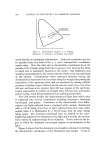
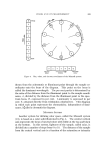
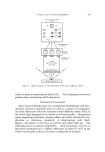
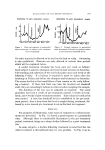
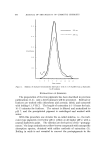
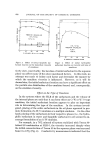
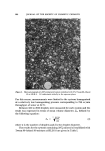
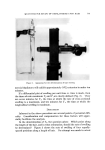
EFFECT OF SURFACTANT LOCATION ON EMULSIONS 685 transfer were high. Conceivably, slow surfactant migration may be one of the reasons why some emulsions exhibit time-dependency of the rheological properties. In this work, systems initially containing varying proportions of sur- factants in each phase were emulsified under carefully controlled condi- tions and the viscosities of the freshly formed emulsions were determined immediately after homogenization. In addition to the viscosity, effects of the initial surfactant location on the particle size distribution, emulsion type, and emulsion stability were also investigated. The main purpose of this work was not to examine the causes of time-dependency, but rather, an attempt was made to explore the ways by which initial sur- factant locations affected the properties of the freshly prepared emul- sions. EXPERIMENTAL Since the viscosity of an emulsion is strongly dependent on the pre- parative variables, efforts were made to control all variables to insure the reproducibility of the experiments. In most instances, coarse emulsions were prepared in a 2-1. rectangular clear plastic vessel shown in Fig. 1. The mixing equipment used was Model ELB Experimental Agitator Kit* designed for bench-scale experi- mental purposes. The kit consists of 3• hp motor, variable speed drive, and various types of calibrated impellers. The impeller chosen for most of the experiments was a 2•-in. flat 6-blade turbine. The location of the impeller was 3• in. from the bottom of the vessel and, unless stated otherwise, the mixer speed was set at 400 rpm. In more viscous systems two 2•-in. impellers set apart by 3• in. were used. The mixing time used was mostly 3 minutes but in some viscous systems a longer mixing time was used. To keep the emulsion reasonably stable, the coarse emulsion prepared in the vessel was immediately passed through an ultrasonic homogenizer once. The homogenizer used was a laboratory size Minisonic IV Ultra- sonic Emulsifiert which operates on the mechanical cavitation principle. The valve setting used was such that the rate of discharge of water at 24øC was 1960 cc/min. Prior to emulsification, emulsifiers were dissolved or dispersed in each phase with a laboratory propeller mixer at 600 rpm. These liquids were * Manufactured by Chetnineer Inc., Dayton, Ohio. p Manufactured by Sonic Engineering Corporation, Norwalk, Conn.
Purchased for the exclusive use of nofirst nolast (unknown)
From: SCC Media Library & Resource Center (library.scconline.org)