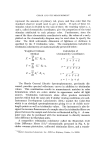
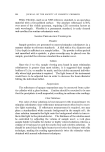
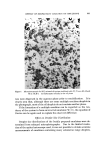
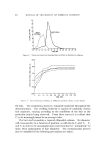
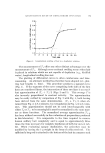
686 JOURNAL OF THE SOCIETY OF COSMETIC CItEMISTS then placed in a constant temperature bath until the temperature reached 24 =• 0.1 øC. The water phase was first placed in the emulsification ves- sel and the oil phase was then slowly placed on the top of it. This opera- tion was done very carefully to avoid emulsification prior to turning on the mixer. All viscosity measurements were done with Brookfield Synchrolectric Viscometer Model LVT,* and particle size distributions were determined from the enlarged photographs taken through a microscope. Emulsion stability was judged by placing the emulsion in a graduated cylinder and determining the degree of separation with time. The oil used for the experiments is a light mineral oilt and deionized water was used for the water phase. Surfactants used include: Tween 80©,• Arlacel 80©,t, Amerchol L-101©,õ and Solulan 98©.õ These surfactants are commercial grades and they were used without further purification. The following HLB values suggested by the manufacturers were used for computing the HLB of the surfactant mixtures: Tween 80 15 Ariaeel 80 4.3 Amerchol L-101 8 Solulan 98 13 RESULTS AND DISCUSSION Effect on Emulsion Viscosity The effect of initial locations of the hydrophilic surfactant on the im- mediate viscosities of emulsions stabilized with Tween 80-Ariaeel 80 is shown in Fig. 2. The total surfactant concentration was kept at 5% by weight in all cases but the HLB values for each system varied from 6 to 14. The amount of the hydrophilic surfactant (Tween 80) originally present in the aqeuous phase was varied from 0 to 100% of the total amount employed. All the lipophilic surfactant (Arlacel 80) was placed in the oil phase prior to emulsification in this series of experiments. The emulsions contained 30% mineral oil and the coarse emulsion prepared in the emulsification vessel was passed through the homogenizer once. * Manufactured by Brookfield Engineering Lab., Stoughton, Mass. t Carnation P-I oil, Witco Chemical Co., Sonneborn Division, New York, N. ¾. $ Tween 80 (polyoxyethylene sorbitan monooleate) and Arlacel 80 (sorbitan monooleate), Atlas Chemical Industries, Wihnington, Del. õ Amerchol L-101 (multisterol) and Solulan 98 (ethoxylated lanolin), American Cholesterol Products, Edison, N. J.

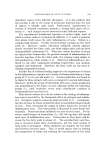
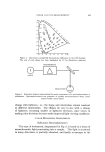
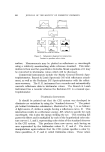
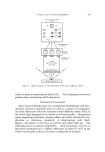
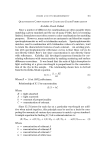
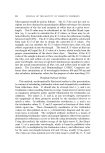
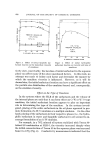
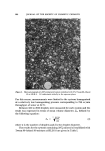
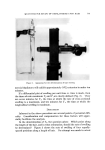
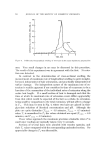
EFFECT OF SURFACTANT LOCATION ON EMULSIONS 687 I •THERMOMETER80ARLACEL80-TWEEN LEVEL - RBINE • IMPELLER 5" Figure 1. Emulsification vessel (5% TOTAL) o o I I I I 0 20 40 60 80 moo % TWEEN 80 IN AQUEOUS PHASE Figure 2. Effect of initial hydrophilic sur- factant location on the immediate viscosity of emulsions The emulsions obtained showed pseudoplastic behavior. Since the main interest was to determine the relative effects of the initial surfactant locations on emulsion viscosity, Brookfield viscometer readings on 100 scales were used rather than the absolute viscosity units. The viscom- eter readings were obtained with the No. 1 spindle at 30 rpm. As indicated in Fig. 2, for the emulsions having relatively low HLB values, the immediate viscosity following homogenization increases with the amount of Tween 80 initially present in the aqueous phase. As the HLB value increases beyond 8, this effect appears to become smaller and finally at HLB 14, the initial location of Tween 80 has no appreciable effect on the immediate viscosity of the emulsion. In Fig. 3, the systems studied were identical to the corresponding sys- tems given in Fig. 2. However, instead of varying Tween 80, the ratio of the lipophilic surfactant, Arlacel 80, in the oil phase and the aqueous phase was varied. All the hydrophilic surfactant was placed in the aqueous phase before emulsification. The data show that the effect of varying Arlacel 80 in the oil phase was not as pronounced as the effect of varying Tween 80 in the aqueous phase. And again, virtually no effect was observed in the high HLB systems. As pointed out by a number of authors ($-7), emulsion viscosity is a very complex function of the viscosity of the external phase, volume fraction of the dispersed phase, viscosity of the internal phase, particle size distribution, nature of the interfacial film, emulsifier concentration, the extent of flocculation, etc. If the rate of surfactant migration is rela-
Purchased for the exclusive use of nofirst nolast (unknown)
From: SCC Media Library & Resource Center (library.scconline.org)