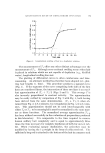
PATHOGENESIS OF ACNE VULGARIS 647 values observed in normal individuals (10), and plasma testosterone values have been reported as normal in girls with acne (11). Further- more, both plasma estradiol and plasma estrone levels were significantly higher in the acne group (10). In other words, these findings were just the opposite from what one would have expected if acne were an endo- crine disorder characterized by an androgen preponderance. Thus, there is no evidence that acne is due to hormonal imbalance, at least in so far as sex steroid hormones are concerned. This, however, does not pre- clude the use of estrogens in the therapy of this disease and, as previously stated, estrogens do reduce sebum production. Unfortunately, the dose levels that are required are sufficient to produce feminizing effects in males. For this reason, while estrogens are of use in acne, we use them only in women. In women, if the required dose is given without inter- ruption, irregular menses are likely to occur. Therefore, we currently employ the estrogen-progestogen anovulatory drugs and use those agents which have 100 •g of ethynyl estradiol or its 3-methyl ester (12- 14). The great majority of women will manifest a decrease in sebum production on this dosage of estrogen. However, approximately 2 to 5 months may be required for this effect to occur, and even estrogen, there- fore, is not an ideal agent for the therapy of this disease. The answers to the questions that we have posed provide a basis for developing a simplified concept for the pathogenesis and therapy of acne. Acne is a disease in which there is a specific fuel namely, sebum. More specifically, it is the free fatty acids of sebum that are responsible for the onset of the inflammatory process. It is the control of this fuel which is our primary aim in the therapy of this disease. Ache is a disease in which subjective changes are difficult to follow. On the other hand, in the search for agents which can decrease sebum production or inhibit liberation of free fatty acids we have objective end points to measure. While these measurement techniques are available, we still do not have available the ideal therapeutic agents. REFERENCES (1) Strauss, J. S., and Kligman, A.M., Arch. Derre., 82, 779 (1960). (2) Strauss, J. S., and Poehi, P. E., Ibid., 92,448 (1965). (8) Kellum, R. E., Ibid., 93, 610 (1966). (4) Nicolaides, N., J. Am. Oil Chemists' Soc., 42,691 (1965). (5) Poehi, P. E., and Strauss, J. S., J. Invest. Derre., 43,888 (1964). (6) Strauss, J. S., Kligman, A.M., and Poehi, P. E., Ibid., 39, 189 (1962). (7) Strauss, J. S., and Poehi, P. E., Recent Progr. Hormone Res., 19,885 (1968). (8) Freinkel, R. K., Strauss, J. S., Yip, S. Y., and Poehi, P. E., New Eng. J. Med., 273,850 (1965).

648 JOURNAL OF THE SOCIETY OF COSMETIC CHEMISTS (9) Hamilton, J. B., J. Clin. Endocrin., 1, 570 (1941). (10) Poehi, P. E., Strauss, J. S., Rao, G. S., Sarda, I. R., Forchielli, E., and Dorfman, R. I., Ibid., 25, 1660 (1905). (11) S½oggins, R. B., Briefer, C, Jr., and Kliman, B., Clin. Research, 13,282 (1905). (12) Strauss, J. S., and Poehi, P. E., Arch. Derre., 87, 86• (18) Strauss, J. S., and Poehi, P. E., JAMA, 190, 815 (14) Strauss, J. S., and Pochi, P. E., in Greenblatt, R. B., Ovulation, J. B. Lippin½ott, Phila- delphia, 1900.
Purchased for the exclusive use of nofirst nolast (unknown)
From: SCC Media Library & Resource Center (library.scconline.org)