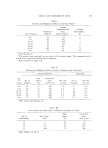
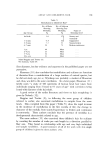
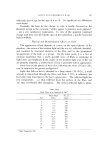
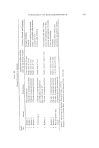
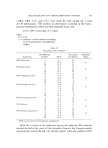
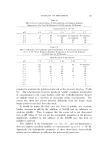
ADULT AND CHILDRENS' HAIR 169 cortex (11, 27). The presence of the diffuse red material gives rise to reddish tones varying from true reds in the absence of much melanin through strawberry blonds, chestnut browns, to reddish blacks. With the diffuse red component absent, ash and drab hair color is seen, tending to the blue- black as the melanin granule content increases. Flesch et al. (31, 32) have discussed an iron-containing nonmelanin pigment found in red hair. With regard to the subject of aging and hair appearance, the morphologi- cal changes are likely to influence the mode by which light is reflected on the hair and hence its appearance. If "young" hair exhibits a lower density of melanin, is less frequently medullated, and is composed of a larger fraction of nonpigmented cuticle, one would expect children's hair to be more transparent than adults'. This might be construed as giving children's hair a quality of depth, softness, and transparency. Some measurements with the Den Beste reflectometer (33), which can partition the light reflected from the surface and internally, are consistent with this speculation. In Table IX, data are given for hair taken from four people at different ages. The column headed "Transparency" gives the ratio of light reflected after penetrating the hair to that believed to come from the hair surface. The transparency does decrease with age for all four subjects. The pigment density may be expected to affect the hue, since melanin is brown. Thus age should increase the reflectance in the lower wavelengths. The data in Table IX show that the dominant wavelength, computed from tristimulus values, increases slightly but consistently with age. Thus, younger hair might be thought of as cooler and calmer in appearance, i.e., less red. Table IX Reflectometer Measurements of Hair of Individuals at Several Ages Hue, Trans- Dominant Purity, Subject Hair Color Age parency a Wavelength % Lavonne Blonde 5 1.26 578 17 10 1.12 581 20 Lynette Reddish-Blonde 10 1.05 580 51 14 0.69 584 28 Becky Brown 3 « 0.76 579 24 7 0.66 585 20 Vivian Black 8 0.85 589 20 21 0.55 604 11 "Ratio of rcfiection after passagc through hair to that reflected from the surface.

170 JOURNAL OF THE SOCIETY OF COSMETIC CHEMISTS The significance of the purity values given is not clear. The data suggest a trend to less purity with age, purity being the degree of closeness with which a color resembles a true spectrum color. Low purity colors are closer to white, gray, or black, and thus younger hair may be more truly colored, less drab, perhaps from the smaller amount of pigment present. (Received August 1, 1968) REFERENCES (1) Danforth, C. H., Hair, Amcr. Med. Assn., Chicago, II1., 1925. (Out of print.) (2) Garn, S. M., Types and distribution of hair in man, Ann. N.Y. Acad. Sci., 53, 498 (March 27, 1951). (3) Montagna, W., and Van Scott, E. J., Chap. 3, in Montagna, W., and Ellis, R. A., The Biology of Hair Growth, Academic Press, New York, 1958. (4) Wynkoop, E. M., Study of the age correlations of the cuticular scales, medullas and shaft diameters of human head hair, Am. J. Phys. Anthropol., 13, 177 (July- Sept., 1929). Trotter, M., The form, size and color of head hair in American whites, Ibid., 14• 433 (July-Sept., 1930). Trotter, M., and Dawson, H. L., The hair of French Canadians, Ibid., 18• 443 (Jan.-March, 1934). Trotter, M., Duggins, O. H., and Setzler, F. M., Hair of Australian aborigines, Ibid., U.S., 14, 649 (1956). Trotter, M., and Duggins, O. H., Index and size of hair of children, Ibid., 6• 489 (Dec., 1948). Duggins, O. H., and Trotter, M., Medullation in hair of children, Ibid., 8• 399 (Sept., 1950). Hausman, L. A., Recent studies of hair structure relationships, Sci. Monthly, 30• 258 (1930). Hausman, L. A., Applied microscopy of hair, Ibid., 59• 195 (1944). Noback, C. R., Morphology and phylogeny of hair, Ann. N.Y. /lead. Sci., 53• 476 (March, 1951 ). Trotter, M., and Duggins, O. H., Cuticular scale counts of hair of children, Am. ]. Phys. Anthropol., U.S., 8, 467 (Dec., 1950). Duggins, O. H., and Trotter, M., Changes in morphology of hair during childhood, Ann. N.Y. Acad. Sci., 53, 569 (March, 1951). Fourt, Lyman, private communication unpublished data. Rutherford, T. A., and Hawk, P. B., A study of comparative chemical composition of the hair of different races, ]. Biol. Chem., 3, 459 (1907). Wilson, R. H., and Lewis, H. B., The cystine content of hair and other epidermal tissues, Ibid., 73, 543 (1927). Clay, R. C., Cook, K., and Routh, J. I., Studies in the composition of human hair, J. Am. Chem. Soc., 62, 2709 (1940). Koyanagi, T., and Takanohashi, T., Cystine content in hair of children, Nature, 12, No. 4801, 457 (Nov. 4, 1961). Block, R. D., and Lewis, H. B., The amino acid content of cow and chimpanzee hair, J. Biol. Chem., 125, 561 (1938). Flesch, P., The cystine content in colored and white hair of mottled animals, J. Invest. Dermatol., 14, 157 (1950). (5) (6) (7) (8) (9) (lO) (11) (12) (13) (14) (15) (16) (17) (18) (19) (20) (21)
Purchased for the exclusive use of nofirst nolast (unknown)
From: SCC Media Library & Resource Center (library.scconline.org)